Introduction to Guard Recovery
Jeff Patterson introduces a comprehensive series of open guard recovery drills designed to counter various passing strategies. These techniques focus on footwork, hip positioning, and hand framing to maintain guard control when opponents attempt to pass.
Basic Lateral Recovery with Hip Control
When an opponent throws the legs to one side to initiate a crossbody pass, the defender places their foot on the opponent's hip or knee during the turn. The defender then frames with their hands and uses a shrimping motion to recover guard with feet positioned between them and their opponent.
Shin Frame and Knee Recovery Progression
As the opponent advances further into the passing attempt, the defender frames off the shin with both hands to create space. The defender then places their foot on the knee or shoulder and recovers guard, adapting their leg placement based on the opponent's hand position.
North-South Position Recovery
When an opponent achieves a north-south position with chest pressure, the defender uses a hip bump to create separation. The defender places one foot and one knee inside, then pushes and spins through to return to guard position.
Shoulder Stack Defense and Arm Trap
Against a shoulder stack attempt, the defender catches the opponent's arm by placing one hand on the wrist and one on the elbow before a lapel grip is secured. The defender then pushes with the opponent's momentum, shrimps out, and pulls the opponent back into guard.
Alternative Shoulder Stack Solutions
For stronger opponents applying pressure from underneath, the defender can use a can opener technique with the elbow or utilize knee pressure to create space. These variations provide options when traditional pushing power is insufficient.
Monkey Foot Sensitivity Drill
The defender uses a monkey foot position by grabbing the opponent's wrist while controlling their arm movement. This drill develops sensitivity and reactivity by allowing the defender to follow the opponent's wrist wherever it moves, transitioning inside or outside as needed.
Spider Guard and Toriondo Recovery
From spider guard position, when the opponent swims an arm inside and throws the legs, the defender pushes off the opponent's knee and shrimps out to recover. For the Toriondo grip, the defender meets the opponent's push with a palm strike and regains control to transition to any desired position.
Wrist Lock Defense Against Strong Grips
When facing a strong grip on the pants, the defender wraps and traps the wrist by pulling it tightly into the body. This creates a wrist lock position that can result in submission while simultaneously opening opportunities for sweeps, triangles, or transitions to mount or back control.
Rolling Recovery from Stack Position
When an opponent begins to stack the defender, the defender rolls with the momentum and immediately repositions their feet between them and their opponent to prevent the pass. This final drill emphasizes reactive movement and quick foot placement to neutralize the stacking pressure.
11 Guard Recovery Drills in Learn How to Make your Guard Unbeatable.
Key Takeaways
- •Introduction to Guard Recovery
- •Basic Lateral Recovery with Hip Control
- •Shin Frame and Knee Recovery Progression
- •North-South Position Recovery
Jiu-Jitsu Techniques 11 Open Guard recovery drills everyone should know. This series will give you some great options for maintaining guard control from the bottom and changing to a dominant position. Great basics to learn to improve your foundation and if you are a more seasoned practitioner there are endless ways to put them together. https://nwfighting.com/ Thanks for watching, I hope you enjoyed watching the information, please like, share, and don't forget to subscribe to this channel for more great videos each week!! JOIN OUR COMMUNITY INSTAGRAM - https://www.instagram.com/northwest_fighting_arts/?hl=en FACEBOOK - https://www.facebook.com/NWfighting/ TWITTER - https://twitter.com/nwfighting?lang=en
Frequently Asked Questions
What does this video teach about standard inversion recovery?
This video covers introduction to guard recovery, basic lateral recovery with hip control, shin frame and knee recovery progression. It provides detailed instruction from Northwest Fighting Arts.
How long does it take to learn standard inversion recovery?
The basic mechanics can be understood in a single session, but developing reliable execution requires consistent drilling over weeks of practice. This 10-part breakdown helps structure your training by isolating each phase of the technique.
What are the key details for finishing standard inversion recovery?
When facing a strong grip on the pants, the defender wraps and traps the wrist by pulling it tightly into the body. This creates a wrist lock position that can result in submission while simultaneously opening opportunities for sweeps, triangles, or transitions to mount or back control.
Related videos
A SIMPLE tip for ADVANCED Guard Retention - BJJ Analysis
Less Impressed More Involved BJJ
3 Arm Positions // 3 Submissions from Cross-Side (No Gi BJJ)
Brian Glick
BJJ Fundamentals Warm Up - Reverse Shrimp
Otomi Martial Arts | Caio Terra Association
How To Shrimp In BJJ (A.K.A. Elbow Escape)
Michael Foley's Academy of Martial Arts
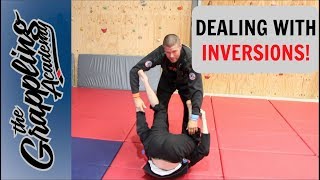
Dealing With Inversion!
The Grappling Academy