Introduction to Pflug
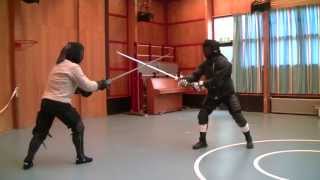
Pflug, German for 'plow,' is a foundational defensive guard position in Historical European Martial Arts (HEMA) that provides both protection and offensive opportunity. This guard stance positions the sword with the point aimed forward and upward, creating a natural barrier against incoming attacks while maintaining multiple response options.
Stance and Body Positioning
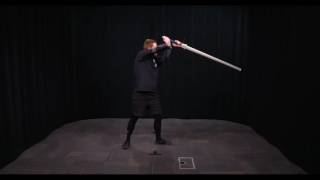
The practitioner assumes a shoulder-width stance with weight distributed evenly between both feet, knees slightly bent for mobility. The sword arm extends at approximately 45 degrees, with the blade held vertically or slightly angled, positioning the defender to react quickly to threats from multiple angles.
Hand and Grip Placement
The sword is gripped firmly but without tension, with the hilt held at waist to chest height depending on the specific variant. This hand placement allows for rapid transitions into attacks, blocks, or parries while maintaining control over the weapon's centerline.
Defensive Applications
From Pflug, the defender can effectively parry attacks from above by angling the blade to deflect incoming strikes. The elevated point creates a natural threat that discourages direct forward attacks, forcing opponents to commit to wider or more committed approaches.
Offensive Transitions
The Pflug position is uniquely suited for immediate counterattacks, as the blade's forward orientation allows for quick thrusts or cuts without requiring repositioning. Practitioners can exploit an opponent's committed attack by flowing directly into offensive strikes while remaining protected.
Common Variations
Pflug exists in several regional and temporal variations, including high-point and low-point versions. The specific angle and height of the blade depend on the sword style, opponent distance, and tactical situation, with each variant offering distinct advantages for different combat scenarios.
Training Progression
Beginners should first master holding the Pflug position statically before practicing dynamic transitions to other guards and attacks. Drill partner work is essential to develop timing, distance management, and the ability to smoothly flow from defense to offense.
Nerd to Knight: Using Pflug
Key Takeaways
- •Introduction to Pflug
- •Stance and Body Positioning
- •Hand and Grip Placement
- •Defensive Applications
Using the guard Pflug, or plough. Offences, defences, and a couple of cool closes.
Frequently Asked Questions
What does this video teach about pflug?
This video covers introduction to pflug, stance and body positioning, hand and grip placement. It provides detailed instruction from Adelaide Sword Academy.
How long does it take to learn pflug?
The basic mechanics can be understood in a single session, but developing reliable execution requires consistent drilling over weeks of practice. This 7-part breakdown helps structure your training by isolating each phase of the technique.
What are the key details for finishing pflug?
Pflug exists in several regional and temporal variations, including high-point and low-point versions. The specific angle and height of the blade depend on the sword style, opponent distance, and tactical situation, with each variant offering distinct advantages for different combat scenarios.