Understanding the Bind
The bind is the engagement point where the instructor begins applying pressure after the initial brush contact. This moment signals the start of active engagement and establishes the foundation for subsequent techniques. The practitioner must be prepared to respond immediately once pressure is applied to the bind.
Communicating Through Pressure
Light pressure applied to the bind serves as tactile communication between partners. The initiating practitioner signals their intent while the responding partner reads and interprets this pressure. This feedback mechanism allows both parties to develop sensitivity and timing in the exchange.
Response Options from the Bind
From the bind position, the defending practitioner has multiple options available: they may push back against the pressure, redirect the blade, or execute alternative techniques. The key is recognizing the bind as a moment of decision rather than a fixed endpoint. Practitioners should explore various responses rather than committing to a single predetermined action.
Joint Alignment and Tension
Proper joint positioning creates structural integrity during the bind. The instructor emphasizes maintaining correct arm alignment while managing tension in the wrists and elbows. This structural foundation prevents the bind from collapsing and allows techniques to flow effectively.
Taking the Bind
Taking control of the bind involves securing the opponent's blade through proper blade contact and body positioning. The practitioner must establish dominance while maintaining balance and readiness for counterattack. Smooth transitions in blade control facilitate the progression to the next technique.
Avoiding Overcommitment
A common error is anticipating the opponent's response too early or committing fully to a single technique. The instructor cautions against excessive expectation of predetermined touches or attacks. Remaining responsive and adaptable to the actual development of the exchange is essential for effective practice.
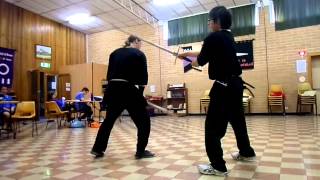
Marcos & Matthys - Longsword simple binding exercise
Key Takeaways
- •Understanding the Bind
- •Communicating Through Pressure
- •Response Options from the Bind
- •Joint Alignment and Tension
Starting point is binding in pflug, first from the right, then the left, with alternating right-of-way between white and black, with attack and single counter and reset. This drill for developing fühlen is from Kristian Ruokonen / EHMS Summer training 11/07/2013 Recorded for personal evaluation
Frequently Asked Questions
What does this video teach about pflug?
This video covers understanding the bind, communicating through pressure, response options from the bind. It provides detailed instruction from Marcos Ariño.
How long does it take to learn pflug?
The basic mechanics can be understood in a single session, but developing reliable execution requires consistent drilling over weeks of practice. This 6-part breakdown helps structure your training by isolating each phase of the technique.
What are the key details for finishing pflug?
Taking control of the bind involves securing the opponent's blade through proper blade contact and body positioning. The practitioner must establish dominance while maintaining balance and readiness for counterattack. Smooth transitions in blade control facilitate the progression to the next technique.