Learn the Art of Combat: Longsword Guards - Beginners Guide
0
Vom Tag·Björn Rüther
Knowing the guards in the long sword, knowing which techniques and concepts to apply from each posture, and being able t…
Translation: vom tag (from the roof)
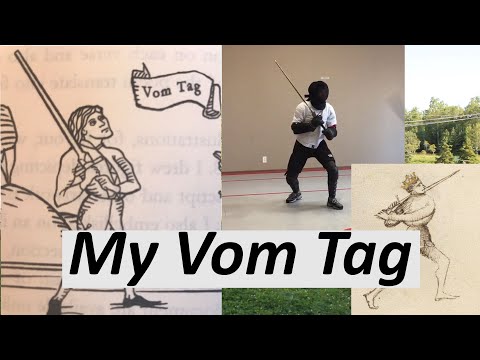
Vom Tag ('from the roof' or 'from the day') is the high guard that raises the longsword above or behind the head, poised to deliver powerful descending cuts. [1] Vom Tag is the most aggressive of the four principal guards, threatening devastating Oberhau and Zornhau cuts with maximum gravitational and rotational force. [1],[2] The guard has several variants — with the sword held over the right shoulder, directly overhead, or behind the head — each offering slightly different tactical properties. [2],[3]
Vom Tag (From the Roof / From the Day) is one of the four primary guards (Huten) in Liechtenauer's system, positioning the sword above or behind the shoulder in preparation for powerful descending cuts. [1] Its strength is offensive readiness — it threatens the opponent with the most powerful cut trajectories (Oberhau, Zornhau) and forces defensive reactions. [2] Its weakness is that the blade is withdrawn from the centre line, leaving the fencer temporarily exposed to thrusts and the Zwerchhau. [3]
Vom Tag (from the roof) is the most commonly used starting guard in HEMA longsword competition, providing a strong position for powerful downward cuts. [1]
No images yet for this technique.
Sign in to suggest an image.
Knowing the guards in the long sword, knowing which techniques and concepts to apply from each posture, and being able t…
Here we start our series on the guards of German Longsword. We start with Vom Tag, explain its uses and walk you through…
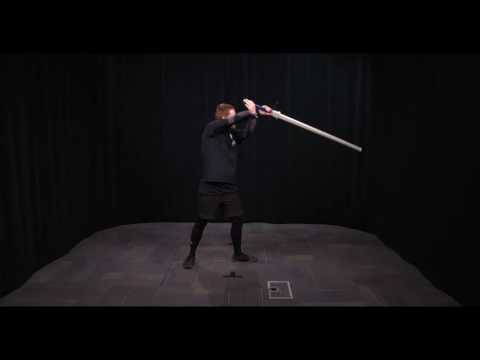
Loose/Relaxed Shoulder leading Cross to armpit Elbows close Wrists In line Sword sloped Balls of the feet Loaded front …
Vom Tag ("Day" guard) is one of the four principal guards in German longsword fencing, alongside Fool, Plow, and Ox, as documented in late medieval sources and perpetuated through Joachim Meyer's 16th-century manuscript. The guard positions the sword held back over the shoulder at approximately 45 degrees, with elbows tucked close to the body and hands kept high and in line with the torso (SuperiorHEMA, VCU HEMA). Practitioners should maintain a relaxed, comfortable posture with bent legs, weight distributed roughly 60/40 toward the front foot, and one shoulder leading to enable full body rotation during cuts (SuperiorHEMA). The guard serves as both an excellent starting position for attacks and a defensive posture, making it among the most frequently used in sparring contexts (SuperiorHEMA, VCU HEMA). From Vom Tag, three principal cuts are executed: the Oberhau (overhead diagonal cut), Middelhau (horizontal sweeping cut), and Unterhau (rising cut from below), all performed with passing steps and full arm extension to maximize reach (VCU HEMA). Björn Rüther notes that Meyer specifically recommends fencing primarily from Vom Tag rather than from Plow, contrary to modern HEMA practice preferences. The guard's effectiveness derives from combining offensive threat with defensive capability while maintaining the fencer's ability to transition fluidly between positions without telegraphing movement through excessive sword repositioning.
Synthesized from 3 instructors
No instructional courses yet for this technique.
Sign in to suggest a course.
Risk of injury to the person this technique is applied to
Edged weapons cause fatal lacerations; historical battlefield mortality rates >30% (Amberger 1999)
Skill level needed to execute this technique reliably
Whether this technique is allowed under major competition rule sets
The Art of Combat (Joachim Meyer, 1570)
Alias sources — [1] Sigmund Ringeck's Knightly Arts of Combat [2] Sigmund Ringeck's Knightly Arts of Combat [3] Sigmund Ringeck's Knightly Arts of Combat
Effectiveness sources — [1] Forgeng, J., The Art of Combat (Palgrave Macmillan, 2003) [2] Tobler, C., In Saint George's Name (Freelance Academy Press, 2010) [3] Tobler, C., Fighting with the German Longsword (Freelance Academy Press, 2004)
Standard katakana transliteration of Western martial arts terminology (外来語) — used in Japanese MMA, boxing, and BJJ communities
Alias sources — [1] Sigmund Ringeck's Knightly Arts of Combat [2] Sigmund Ringeck's Knightly Arts of Combat [3] Sigmund Ringeck's Knightly Arts of Combat
Effectiveness sources — [1] Forgeng, J., The Art of Combat (Palgrave Macmillan, 2003) [2] Tobler, C., In Saint George's Name (Freelance Academy Press, 2010) [3] Tobler, C., Fighting with the German Longsword (Freelance Academy Press, 2004)
wrist control for edge alignment, grip endurance, footwork precision
quick wrists, strong forearms, good posture
forearm extensors/flexors, deltoids, core, calves
You need to be comfortable, relaxed and loose rather than tense or strained. A tense body needs to untense before it can extend out for the cut, so being loose means you can hold the position longer and make faster cuts.
Keep both wrists in line so that both your hands and arms are an active part of the cut from the first motion. If your bottom wrist is oriented off to the side, your top hand does most of the work and your bottom hand can't fully help until later in the cut.
This is probably one of the most common guards that you'll see people using during sparring because it can be used to defend from a wide variety of things.
Never change your guard without an idea or intention behind it—otherwise your opponent has many more options to attack openings while you needlessly expose yourself.
Vom Tag ('from the roof' or 'from the day') is the high guard that raises the longsword above or behind the head, poised to deliver powerful descending cuts. Vom Tag is the most aggressive of the four principal guards, threatening devastating Oberhau and Zornhau cuts with maximum gravitational and rotational force.
Vom Tag is one of Liechtenauer's four principal guards and the starting position for the most powerful attacks in the German longsword system. The glossators describe it as the primary offensive guard from which the five master cuts are most naturally delivered.
Traditional martial arts: legal — Practiced in traditional kata/forms and weapon-specific competition under var…; IWUF: legal — Legal in wushu taolu if applicable; HEMA: legal — Legal in applicable historical weapon categories
Danger rating 9/10. Extreme — edged weapons cause fatal lacerations; historical battlefield mortality rates >30% (Amberger 1999)
The standard setup chain: Assume Guard (Kamae/Hut) → Measure Distance (Ma-ai) → Initiate Cut/Thrust → Follow Through (Zanshin).
Standard counters include: Parry (Absetzen) — deflect the incoming blade with a counter-displacement / Void (Step Back) — withdraw from measure to avoid the cutting arc / Counter-Cut (Nachreisen) — strike into the opponent's opening during their attack.
Common variants: Standard cut (primary cutting angle from the ready stance); Thrust (tsuki) (straight thrust targeting the throat, chest, or face); Rising cut (kiri-age) (upward diagonal cut from low to high); Diagonal cut (kesa-giri) (downward diagonal cut following the kimono line).
Vom Tag (from the roof) is the most commonly used starting guard in HEMA longsword competition, providing a strong position for powerful downward cuts.
Top errors to watch for: Holding Vom Tag with the sword too far behind the head — the sword should be ready to strike, not wound up excessively / Telegraphing the cut by raising the sword too high — the elevation should be sufficient but not exaggerated / Not transitioning quickly from Vom Tag to the cut — the power of Vom Tag is in the speed of the descending strike / Using only Vom Tag for overhead cuts — the guard also loads diagonal and horizontal cuts depending on the variant.
The Vom Tag is also known as Fon Tāku, Day Guard, Roof Guard, From the Roof.