Introduction and Source Materials
Josh and Chris from SwordCarolina present the next installment of their Do-Bringer 2.0 series, drawing exclusively from three primary historical manuscripts: the NS3227A (Do-Bringer manuscript), the Pseudo Peter von Danzig, and the Ring-A. These three sources provide the foundation for all techniques covered in this instructional series.
Context from Previous Instruction
The previous lesson covered the Krumkau, the fundamental sword-to-flat contact and subsequent attack. While those techniques led practitioners into the Edelkrieg (high war), this outcome depends entirely on distance and positioning. Understanding this conditional nature prevents rigid application of techniques.
Distance-Dependent Responses
When the opponent attempts a head cut following a Krumkau bind, the response varies based on proximity. At proper distance, the defender may retreat into left Ox to facilitate the high war. When both fighters close distance, the defender can execute any of the three woundings by leveraging the stronger portion of their blade against the opponent's weaker section.
Principle Over Paradigm
Practitioners must avoid rigid adherence to singular outcomes. Rather than assuming techniques must follow a predetermined path, students should understand that all techniques are built upon foundational principles. This flexibility allows adaptation to varying distances, heights, and tactical situations.
The Oberhapt Foundation in Crump
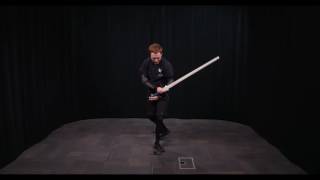
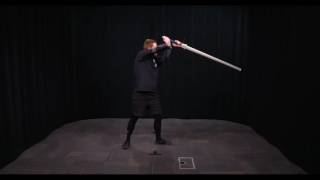
The Crump to the hands begins identically to an Oberhapt, with the sword extended as defense. The crooked action that defines the Crump emerges only when the pommel begins its characteristic pushing motion. This principle of Oberlaffin (overreaching with the point) must be clearly understood before attempting the technique against an opponent in Ox.
Geometric Vulnerability of Thrusting Response
When an opponent attempts to thrust in response to an Oberhapt cut, they expose both their hands and head regardless of reach or stature. This exposure violates foundational principles evident throughout all three manuscripts. The geometric reality of the thrust creates this defensive liability independent of physical differences between fighters.
Lateral Displacement Strategy
Rather than Crumping directly forward toward the hands, the practitioner must step decisively to the side while cutting with the point. This lateral displacement removes the attacker from the centerline, forcing the opponent to choose between absorbing a hand strike or exposing themselves through a thrusting counter. The wide step is essential; a shallow displacement fails to create the necessary advantage.
Tactical Adaptations to Opponent Response
When the opponent responds defensively to the Crump attempt, three primary options exist: the practitioner may withdraw and reset, shift the bind to the opponent's sword and re-establish distance, or adjust footwork to maintain superior range. These alternatives ensure the attacker retains initiative and defensive integrity throughout the exchange.
Lesson 6, Krump: Thoughts on Ochs
Key Takeaways
- •Introduction and Source Materials
- •Context from Previous Instruction
- •Distance-Dependent Responses
- •Principle Over Paradigm
Here Josh gives us some great insights into how the Krumphau breaks Ochs. And thanks to Chris for volunteering to work with him.
Frequently Asked Questions
What does this video teach about ochs?
This video covers introduction and source materials, context from previous instruction, distance-dependent responses. It provides detailed instruction from Sword Carolina.
How long does it take to learn ochs?
The basic mechanics can be understood in a single session, but developing reliable execution requires consistent drilling over weeks of practice. This 8-part breakdown helps structure your training by isolating each phase of the technique.
What are the key details for finishing ochs?
Rather than Crumping directly forward toward the hands, the practitioner must step decisively to the side while cutting with the point. This lateral displacement removes the attacker from the centerline, forcing the opponent to choose between absorbing a hand strike or exposing themselves through a thrusting counter. The wide step is essential; a shallow displacement fails to create the necessary advantage.