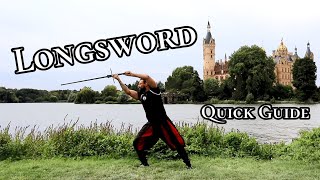
Historical Context: Longsword Guard Systems
Late medieval sources traditionally recognize four primary longsword guards: Fool, Plow, Ox, and Day. Joachim Meyer's 16th-century manuscript expands this system to fourteen total guards—four primary and ten secondary—organizing them as both starting positions and transitional endpoints. Meyer's pedagogical approach differs significantly from earlier sources by concentrating instruction around individual guards rather than techniques, demonstrating multiple applications from each posture.
The Upper Guard (Oberhut)
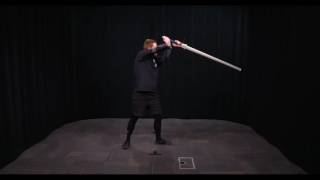
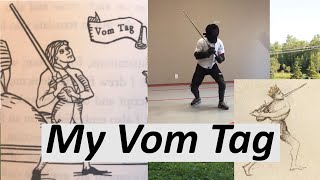
The Upper Guard positions the sword directly above the head without exception, maintaining a permanent thrust threat toward the opponent. All principal strikes and twere strikes execute effectively from this position, making it foundational for comprehensive offensive repertoire. Meyer emphasizes this guard as primary in his teaching system, contrary to modern practitioners who favor the Plow.
The Ox Guard (Ochs)
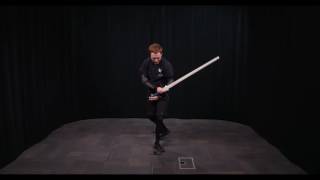
The Ox Guard directs the point toward the opponent's face while simultaneously protecting the head. This medium-distance guard enables execution of all primary strikes, twere strikes, and thrusts without restriction. The Ox functions as a natural follow-up position when engaged in blade binding, providing both defensive coverage and offensive threat.
The Plow Guard (Pflug)
The Plow Guard proves exceptionally versatile, combining threat, defense, and rapid counterattack capabilities. Primary threats from this position include direct thrusts and quick cuts targeting the hands and arms. The guard excels at rapid parrying of incoming strikes, establishing it as a universal position favored in modern sparring contexts.
The Fool Guard (Alber)
The Fool Guard intentionally exposes high openings, inviting opponent attacks that practitioners quickly parry with upward strikes using long or short edge. While uncommon in contemporary practice, this guard remains tactically effective through deceptive positioning. Once opponents recognize the parrying response, they adopt more cautious approach patterns.
The Wrath Guard (Zornhut) and The Change (Wechsel)
The Wrath Guard generates powerful strikes and functions primarily as dynamic transitional posture rather than static position. From Wrath, practitioners transition into The Change, executing rising motions with the short edge that enable powerful cross-strikes and upper guard transitions. This combination develops into a primary striking sequence within Meyer's system.
Secondary Guards: Side Guard and Unicorn
The Side Guard follows naturally from upper strikes executed into The Change, particularly excelling at executing crooked strikes. The Unicorn Guard, named for its upward-pointing tip position, serves as the ending position for under-strikes while providing excellent positioning for distance and powerful crooked cuts. Both positions maintain offensive capability comparable to the Ox Guard.
The Key Guard (Schlüssel) and Hanging Point
The Key Guard theoretically counters all other guards through central thrusting that forces opponent reaction and repositioning. The Hanging Point, with its downward-pointing blade, resembles the Ox while exposing hands and head, thereby inviting opponent attack and enabling reactive principle strike responses. Both guards operate on principle of forcing opponent movement.
The Iron Gate (Eisenpforte)
The Iron Gate serves as a fundamentally protective guard with the blade positioned above the knee and point directed toward the opponent. This guard appears in both medieval manuscripts and Meyer's rapier section, emphasizing its historical significance across weapon systems. It provides comprehensive defense while maintaining forward intention through point orientation.
Learn the Art of Combat: Longsword Guards - Beginners Guide
Key Takeaways
- •Historical Context: Longsword Guard Systems
- •The Upper Guard (Oberhut)
- •The Ox Guard (Ochs)
- •The Plow Guard (Pflug)
Knowing the guards in the long sword, knowing which techniques and concepts to apply from each posture, and being able to make our fencing dynamic and intuitive. 0:27 Intro (What is a guard?) 2:34 Upper Guard (Vom Tag) 3:12 Ox (Ochs) 4:00 Plow (Pflug) 4:44 Fool (Alber) 5:31 Wrath Guard (Zornhut) 6:20 Change Guard (Wechsel) 7:16 Side Guard (Nebenhut) 7:54 Unicorn (Eynhorn) 8:30 Key (Schlüssel) 9:14 Hanging Point (Hangetort) 9:55 Iron Gate (Eysenport) 11:12 Middle Guard (MIttelhut) 12:00 Longpoint (Langenort) 12:58 Break Window (Brechfenster)
Frequently Asked Questions
What does this video teach about ochs?
This video covers historical context: longsword guard systems, the upper guard (oberhut), the ox guard (ochs). It provides detailed instruction from Björn Rüther.
How long does it take to learn ochs?
The basic mechanics can be understood in a single session, but developing reliable execution requires consistent drilling over weeks of practice. This 9-part breakdown helps structure your training by isolating each phase of the technique.
What are the key details for finishing ochs?
The Key Guard theoretically counters all other guards through central thrusting that forces opponent reaction and repositioning. The Hanging Point, with its downward-pointing blade, resembles the Ox while exposing hands and head, thereby inviting opponent attack and enabling reactive principle strike responses. Both guards operate on principle of forcing opponent movement.