Introduction to Ochs Guard
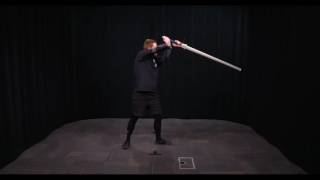
Ochs is the second fundamental guard in German longsword training. The sword is positioned high with the point directed upward, creating a strong defensive posture against overhead attacks while simultaneously threatening the opponent's face.
Hand Position and Arm Configuration
In Ochs, the dominant hand remains on top of the sword. For right-handed practitioners, this creates a crossed-arm position on the right side, while left-handed practitioners maintain uncrossed arms. The thumb placement on the sword's guard is critical, providing enhanced sensory feedback and precise tip control during both offensive and defensive movements.
Defensive Applications
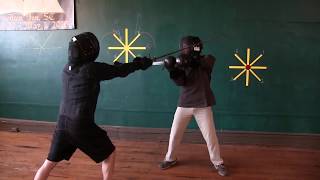
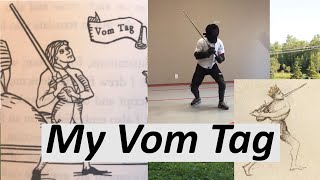
Ochs serves as a primary defense against Vom Tag descending cuts, using the sword's blade to block incoming attacks. The high guard position naturally counters vertical strike trajectories while maintaining offensive threat through the elevated point.
Middle Howl Transfer
The Middle Howl transitions from one Ochs position to the opposite side by unwinding the arms as the sword tip traces a circular path behind the head. Practitioners should use the dominant hand as a pivot point on the head to establish proper muscle memory and maintain consistent blade positioning throughout the movement.
Thrust Transfer
The thrust transfer extends the sword point forward to actively threaten the opponent during the vulnerable stepping phase. As the practitioner steps, the sword rotates with the thumb transitioning from top to bottom position, then returns to Ochs with renewed defensive positioning.
Unter Howl Transfer
The Unter Howl is a low cut that transitions Ochs by dropping the sword tip downward and cutting upward with the true edge. Due to anatomical wrist limitations, practitioners should not force a 45-degree angle but instead adopt the most comfortable cutting trajectory available to their body mechanics.
Sequential Training Progression
Practitioners combine all three transfers in sequence: Middle Howl, thrust, and Unter Howl, repeated bilaterally in both forward and backward directions. Large oblique passing steps should be used during solo training to develop practical footwork patterns applicable to actual combative scenarios.
Weight Distribution and Posture
Ochs requires higher knee positioning and more upright posture compared to Vom Tag due to the elevated sword position. Weight distribution remains relatively balanced, with adjustments made based on the specific application and transition being executed.
Ochs guard
Key Takeaways
- •Introduction to Ochs Guard
- •Hand Position and Arm Configuration
- •Defensive Applications
- •Middle Howl Transfer
Here we discuss the Ochs guard and how it can be used in sparring, as well as the various transfers associated with it. The official channel of the HEMA Club @ VCU. Our videos are: Produced by: Mick Murphy, Dan Thomas Presented by: Nick Allen, Tom Wagamon Edited by: Dan Thomas
Frequently Asked Questions
What does this video teach about ochs?
This video covers introduction to ochs guard, hand position and arm configuration, defensive applications. It provides detailed instruction from VCU HEMA.
How long does it take to learn ochs?
The basic mechanics can be understood in a single session, but developing reliable execution requires consistent drilling over weeks of practice. This 8-part breakdown helps structure your training by isolating each phase of the technique.
What are the key details for finishing ochs?
Practitioners combine all three transfers in sequence: Middle Howl, thrust, and Unter Howl, repeated bilaterally in both forward and backward directions. Large oblique passing steps should be used during solo training to develop practical footwork patterns applicable to actual combative scenarios.