Blade Awareness Fundamentals
The bo stick maintains blade awareness, with an imaginary centerline running through the length of the weapon that corresponds to the edge of a blade. This centerline, extending through the fighter's fist, determines the contact point during all striking techniques. Maintaining this awareness ensures proper weapon alignment and maximum striking efficiency.
Downward Figure Eight Strike
The downward figure eight is the foundational striking pattern, executed by striking downward while maintaining blade awareness, then inverting the grip and striking downward again in a continuous figure eight motion. The centerline of the stick must contact the target on each strike. This technique develops the rhythmic flow essential to Kali practice.
Horizontal Strike
The horizontal strike targets multiple levels—head, elbows, and knees—by swinging the weapon side to side across the body's centerline. The practitioner must rotate the wrist to maintain blade awareness on each pass, ensuring the blade edge makes contact as it travels. This strike combines directional variation with consistent blade alignment.
Upward Figure Eight Strike
The upward figure eight mirrors the downward pattern but travels upward from low to high positions. The striker alternates between palm-up and palm-down positions while maintaining blade awareness on each upward swing. This technique can be executed at varying speeds while preserving controlled, deliberate motion.
Partnered Combination Drill
Practitioners execute all three figure eight patterns—downward, horizontal, and upward—in sequence against a stationary target stick held by a partner. The emphasis remains on slow, controlled movements with the non-striking hand active and elevated. This drills the foundational patterns while establishing proper flow and hand positioning.
Hit and Retract Technique
Hit and retract involves striking a target with either a forehand or backhand motion, then immediately withdrawing the weapon to its starting position without follow-through. The technique can target any level of the opponent's body and develops explosive striking with rapid recovery. This method contrasts with full-motion strikes by emphasizing speed and defensive positioning.
Follow-Through Strike
The follow-through strike extends completely through the target, similar to a tennis or baseball swing, with both forehand and backhand variations. The weapon's momentum carries it fully across the body, requiring the striker to account for the stick's ending position. Proper execution demands careful partner work to prevent contact beyond the initial strike.
Trajectory Control in Follow-Through Motion
Follow-through strikes conclude in predictable positions determined by the direction of the initial attack. A forehand follow-through strike originates high and terminates low beneath the striking arm, while a backhand follows the opposite path, rising to a high position. Understanding these ending positions is critical for maintaining control and transitioning to subsequent techniques.
Weapons | Black Belt Training | Kali - Basic Striking Techniques
Key Takeaways
- •Blade Awareness Fundamentals
- •Downward Figure Eight Strike
- •Horizontal Strike
- •Upward Figure Eight Strike
Weapons, Black Belt Training, Kali Striking Techniques, http://www.premiermartialarts.com
Related Techniques
Frequently Asked Questions
What does this video teach about bo thrust?
This video covers blade awareness fundamentals, downward figure eight strike, horizontal strike. It provides detailed instruction from Premier Martial Arts.
How long does it take to learn bo thrust?
The basic mechanics can be understood in a single session, but developing reliable execution requires consistent drilling over weeks of practice. This 8-part breakdown helps structure your training by isolating each phase of the technique.
What are the key details for finishing bo thrust?
The follow-through strike extends completely through the target, similar to a tennis or baseball swing, with both forehand and backhand variations. The weapon's momentum carries it fully across the body, requiring the striker to account for the stick's ending position. Proper execution demands careful partner work to prevent contact beyond the initial strike.
Related videos
Quarterstaff Lesson 1 - Introduction
Skyline Drama
Basic Knife Thrust Techniques - Kali Arnis Eskrima
Kali Center
Behind The Head Staff Catch | Martial Arts Tutorial
Modern Ninja
Ultimate Bo | SHORT LESSON: Troubleshooting the Overhead Front Strike
Global Martial Arts University
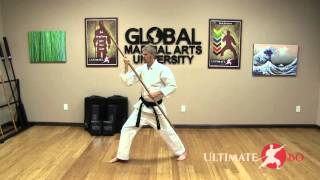
Bōjutsu Basics - Overhead Front Strike
Global Martial Arts University