Bōjutsu Basics - Overhead Front Strike
0
Overhead Bo Strike·Global Martial Arts University
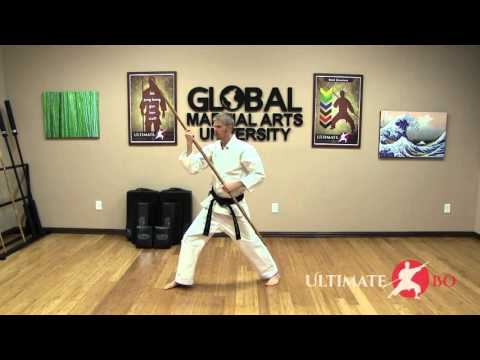
Sensei Michael Hodge, head instructor of the Ultimate Bo course of the Global Martial Arts University takes you through …
Translation: High-Level Strike
Vertical downward strike delivered by raising the bo overhead and driving it straight down onto the target.
The overhead bo strike (jodan uchi or shomen uchi) is the most powerful single blow in bojutsu, driving the staff straight down from above using gravity and full-body mechanics. [1] This technique is a defining movement in Okinawan kobudo kata, appearing prominently in Shushi no Kon, Sakugawa no Kon, and Choun no Kon. [2] The overhead trajectory mirrors the shomen-uchi of Japanese swordsmanship, reflecting the historical relationship between staff and blade arts in Okinawan martial culture. [1],[2]
The overhead strike is the most fundamental bō technique, found in virtually all staff-fighting traditions worldwide. [1]
Overhead bō strikes are featured in kobudō kata competition as a fundamental striking technique. [1]
No images yet for this technique.
Sign in to suggest an image.
Sensei Michael Hodge, head instructor of the Ultimate Bo course of the Global Martial Arts University takes you through …
Lets get tricking with the bo staff, learning a more advanced trick for you guys that have been following this searie fo…
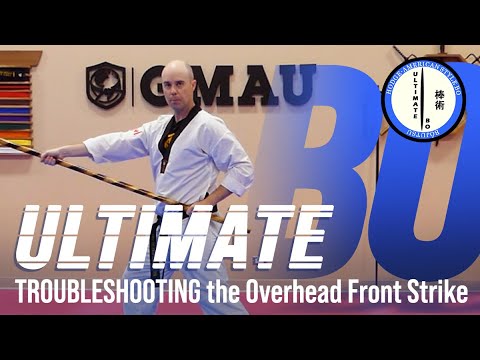
In this short lesson Ultimate Bo head instructor, Nathan Douglas, provides key details to improve your overhead front st…
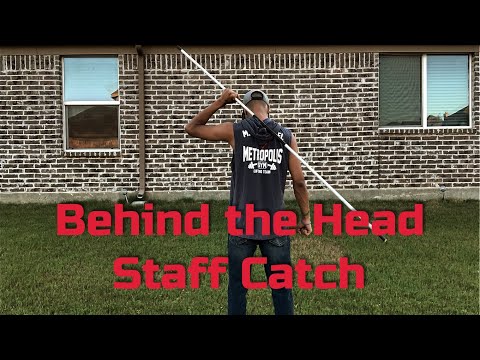
The overhead bo strike is a diagonal downward strike delivered from an overhead chamber position, commonly used in bojutsu kata and practical application. Global Martial Arts University emphasizes a structured three-step execution: chambering the bo horizontally on the shoulder, executing a half-step to prepare hip rotation, then stepping fully into a front stance while striking diagonally downward toward the neck or shoulder, finishing at chest level. The strike incorporates coordinated mechanics: the rear hand pulls back to the hip while the front hand pushes outward, creating leverage; simultaneously, the striking wrist rotates at the moment of impact to increase power through pronation. Both Global Martial Arts University instructors stress proper body mechanics—maintaining a straight back, strong forward stance with feet aligned, and synchronized push-pull action between both hands to maximize force generation. The second Global Martial Arts University video troubleshoots common errors, emphasizing full chambering (bow perfectly horizontal on shoulder) to achieve realistic combat power, proper landing posture with simultaneous foot and bow contact, and the snapping wrist motion executed concurrently with the push-pull mechanics. Modern Ninja's contribution addresses a distinct but related skill—the behind-the-head bo catch using wrist flicking motion—which represents a circus/XMA application rather than traditional striking mechanics. The traditional instruction converges on precise footwork, hip rotation, and bilateral hand coordination as essential to effective overhead bo strikes.
Synthesized from 3 instructors
No instructional courses yet for this technique.
Sign in to suggest a course.
Risk of injury to the person this technique is applied to
Staff/bo/jo weapons generate significant blunt force; fracture risk
Skill level needed to execute this technique reliably
Whether this technique is allowed under major competition rule sets
The Essence of Okinawan Karate-Do (Shoshin Nagamine, 1976)
Alias sources — [1] Kobudo: Okinawan Weapons (Demura, 1976) [2] Comprehensive Asian Fighting Arts (Draeger & Smith, 1969) [3] Comprehensive Asian Fighting Arts (Draeger & Smith, 1969)
History sources — [1] Bishop, M., Okinawan Kobudo (Tuttle, 1999) [2] Draeger, D. & Smith, R., Comprehensive Asian Fighting Arts (Kodansha, 1969)
Established Japanese martial arts naming convention — native Japanese term (和語/漢語)
Alias sources — [1] Kobudo: Okinawan Weapons (Demura, 1976) [2] Comprehensive Asian Fighting Arts (Draeger & Smith, 1969) [3] Comprehensive Asian Fighting Arts (Draeger & Smith, 1969)
History sources — [1] Bishop, M., Okinawan Kobudo (Tuttle, 1999) [2] Draeger, D. & Smith, R., Comprehensive Asian Fighting Arts (Kodansha, 1969)
wrist snap speed, sliding grip coordination, hip rotation
long reach and strong wrists for staff manipulation
forearms, wrist rotators, core rotators, shoulders
You want to land in a strong forward stance with your back nice and straight, avoiding dipping down into the strike. According to Global Martial Arts University, your feet should both be pointed forward with proper body alignment, and you should land your foot and the bo at the same time.
Position the bo so it's perfectly horizontal on your shoulder to get a proper chamber and adequate power. Global Martial Arts University emphasizes bringing your arm up with the bo nice and horizontal before coming down into the strike.
Push and pull the bo simultaneously—your lead hand pushes the bo down while your rear hand pulls the bo up—while also snapping your wrist. Global Martial Arts University stresses that these three motions (pushing, pulling, and wrist snap) work together for proper body mechanics.
Your striking hand should snap and be positioned just in front of your chest, while your other hand should be pulled back to your hip. Global Martial Arts University notes that checking your hand position helps ensure you've executed all the mechanics correctly.
Vertical downward strike delivered by raising the bo overhead and driving it straight down onto the target.
The overhead bo strike (jodan uchi or shomen uchi) is the most powerful single blow in bojutsu, driving the staff straight down from above using gravity and full-body mechanics. This technique is a defining movement in Okinawan kobudo kata, appearing prominently in Shushi no Kon, Sakugawa no Kon, and Choun no Kon.
FIE Sabre: legal — Legal cutting technique to upper body target area; FIK Kendo: legal — Legal if targeting valid area with correct form; WEKAF: legal — Legal striking technique; HEMA: legal — Legal in applicable weapon categories
Danger rating 7/10. Very High — staff/bo/jo weapons generate significant blunt force; fracture risk
The standard setup chain: Ready Position → Distance Control → Execute Technique → Return to Guard.
Standard counters include: Guard Position — return to a defensive ready stance / Distance Management — control the measure to avoid being in range / Counter-Attack — strike during the opponent's recovery or between movements.
Common variants: Overhead strike (bringing the staff down from above in a vertical arc); Lateral strike (horizontal sweep targeting the ribs or head); Thrust (straight thrust with the end of the staff); Butt-end strike (striking with the rear end of the staff at close range).
Overhead bō strikes are featured in kobudō kata competition as a fundamental striking technique.
Top errors to watch for: Raising the staff too slowly — the overhead chamber is visible; raise and strike in one continuous motion / Not stepping into the strike — the step adds body weight and forward momentum to the downward force / Keeping the body upright — the hips should drop slightly during the strike to add body weight to the impact / Striking with the arms only — the hips and core must drive the motion; the arms guide the staff.
The Overhead Bo Strike is also known as Shomen Bo Uchi, Overhead Staff Strike, Jodan Bo Uchi.