Kung Fu Staff Tutorial - Side Staff Spin
0
Lateral Bo Strike·Sifu Kuttel
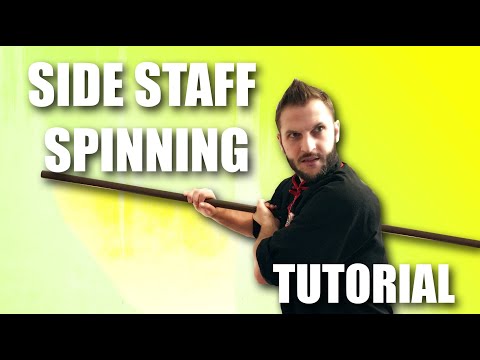
This kung fu staff spinning technique is actually easier than it looks! Once you get the hang of it, let the staff carry…
Translation: Side Strike
Horizontal or sweeping strike delivered from the side, targeting the ribs, head, or legs.
The lateral bo strike (yoko uchi) delivers a horizontal sweeping blow, typically targeting the opponent's ribs, arms, or head from the side. [1] This striking angle is documented in both Okinawan kobudo kata and Japanese koryu bojutsu, with the technique exploiting the bo's full reach to attack outside the opponent's peripheral vision. [2] In Okinawan tradition, the lateral strike was considered particularly effective against swordsmen, as the horizontal arc could bypass a vertical sword guard. [1]
The lateral bō strike uses a horizontal swinging motion to attack the opponent's torso or head from the side, using the staff's full length for maximum force. [1]
Lateral striking with the bō was part of multi-directional attack training in Okinawan and Japanese staff arts. [1]
Lateral bō strikes appear in kobudō kata performed at competition and demonstration events. [1]
No images yet for this technique.
Sign in to suggest an image.
This kung fu staff spinning technique is actually easier than it looks! Once you get the hang of it, let the staff carry…
This Product is Available for Instant Download to your Computer! In order to download this product, please click the lin…
This Product is Available for Instant Download to your Computer! In order to download this product, please click the li…
The lateral bo strike is a horizontal striking technique executed from the side of the body using a double-ended staff. Sifu Kuttel emphasizes the foundational mechanics: beginning with a double-end grip (thumbs pointing inward) at shoulder or hip distance, the striker crosses hands overhead, then pulls the staff to one side in a chopping motion before returning to center and unwinding. Sifu Kuttel details a progression from simple side extensions to flowing overhead spins that generate momentum, with the strike arriving horizontally rather than vertically. Master Wong, across two instructional videos, focuses on targeting and control, identifying the shoulder blade as the primary strike zone—described as controlling the entire arm—with secondary targets including the back of the arm, ribs, and kneecap depending on opponent position and distance. Master Wong emphasizes maintaining proper distance to avoid striking the face unintentionally and stresses that power must be developed during training to be effective in application. Both instructors agree on the importance of hand positioning and smooth transitions; Sifu Kuttel highlights grip-slide-grip mechanics for fluidity in motion, while Master Wong prioritizes precision targeting and controlled power application over random striking.
Synthesized from 3 instructors
No instructional courses yet for this technique.
Sign in to suggest a course.
Risk of injury to the person this technique is applied to
Staff/bo/jo weapons generate significant blunt force; fracture risk
Skill level needed to execute this technique reliably
Whether this technique is allowed under major competition rule sets
The Essence of Okinawan Karate-Do (Shoshin Nagamine, 1976)
Alias sources — [1] Kobudo: Okinawan Weapons (Demura, 1976) [2] Comprehensive Asian Fighting Arts (Draeger & Smith, 1969) [3] Comprehensive Asian Fighting Arts (Draeger & Smith, 1969)
History sources — [1] Bishop, M., Okinawan Kobudo (Tuttle, 1999) [2] Draeger, D. & Smith, R., Comprehensive Asian Fighting Arts (Kodansha, 1969)
Established Japanese martial arts naming convention — native Japanese term (和語/漢語)
Alias sources — [1] Kobudo: Okinawan Weapons (Demura, 1976) [2] Comprehensive Asian Fighting Arts (Draeger & Smith, 1969) [3] Comprehensive Asian Fighting Arts (Draeger & Smith, 1969)
History sources — [1] Bishop, M., Okinawan Kobudo (Tuttle, 1999) [2] Draeger, D. & Smith, R., Comprehensive Asian Fighting Arts (Kodansha, 1969)
wrist snap speed, sliding grip coordination, hip rotation
long reach and strong wrists for staff manipulation
forearms, wrist rotators, core rotators, shoulders
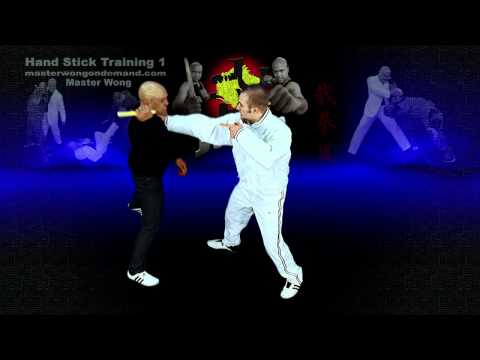
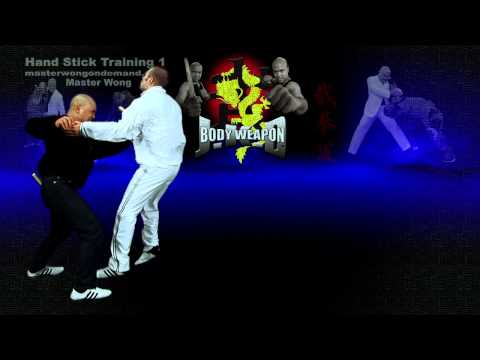
Master Wong teaches that the rib side and shoulder blade are primary targets for lateral strikes, while strikes to the front of the body require less distance to be effective. The kneecap is also a valid target when striking downward.
Sifu Kuttel emphasizes that you must make sure the weapon is high enough during the unwind so that you don't strike yourself in the head as the hands come over your head.
Master Wong explains that once the strike lands on the shoulder blade, you should use your body to push the opponent, then move up and walk away while keeping control of the weapon.
Horizontal or sweeping strike delivered from the side, targeting the ribs, head, or legs.
The lateral bo strike (yoko uchi) delivers a horizontal sweeping blow, typically targeting the opponent's ribs, arms, or head from the side. This striking angle is documented in both Okinawan kobudo kata and Japanese koryu bojutsu, with the technique exploiting the bo's full reach to attack outside the opponent's peripheral vision.
FIE Sabre: legal — Legal cutting technique to upper body target area; FIK Kendo: legal — Legal if targeting valid area with correct form; WEKAF: legal — Legal striking technique; HEMA: legal — Legal in applicable weapon categories
Danger rating 7/10. Very High — staff/bo/jo weapons generate significant blunt force; fracture risk
The standard setup chain: Ready Position → Distance Control → Execute Technique → Return to Guard.
Standard counters include: Guard Position — return to a defensive ready stance / Distance Management — control the measure to avoid being in range / Counter-Attack — strike during the opponent's recovery or between movements.
Common variants: Overhead strike (bringing the staff down from above in a vertical arc); Lateral strike (horizontal sweep targeting the ribs or head); Thrust (straight thrust with the end of the staff); Butt-end strike (striking with the rear end of the staff at close range).
Lateral bō strikes appear in kobudō kata performed at competition and demonstration events.
Top errors to watch for: Swinging with the arms without hip rotation — the horizontal strike derives power from hip rotation, not arm swing / Striking too high or too low — the lateral strike should target the specific midsection level / Not using both hands — one hand pulls while the other pushes, creating the rotational force / Winding up too far behind the body — the preparation should be compact; excessive wind-up telegraphs the strike.
The Lateral Bo Strike is also known as Yoko Bo Uchi, Side Staff Strike, Chudan Yoko Uchi.