Course Overview
This series introduces fundamental quarterstaff techniques designed for solo practice. Students will film and submit video demonstrations of each technique via Canvas for instructor review.
Three Quarterstaff Forms
The curriculum covers three distinct quarterstaff forms: short form, long form, and pike form. Each form emphasizes different hand positioning and tactical applications.
Short Form Hand Positioning
In short form, hands should divide the staff into approximate thirds—neither too close nor too far apart. This balanced positioning provides optimal control and leverage for techniques.
Palm Grip Variations
Practitioners may employ both palms down, one palm up with one palm down, or reverse configurations. However, both palms facing up should be avoided entirely, as this grip eliminates leverage and creates awkward mechanics.
Familiarization Drills: Windmills
New practitioners should begin with front windmills, rolling the staff over the backs of the hands in both directions. Progress to overhead helicopter rotations using the same rolling mechanics.
Kayak Paddle Motion
Execute single-hand paddling motions left and right, progressing to alternating hands. When transitioning to two-handed paddling, allow the staff to roll over the back of the grabbing hand during each transition.
Quarterstaff Stance
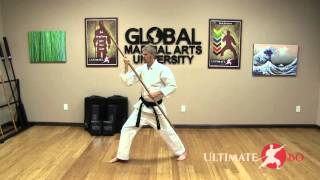
Quarterstaff employs the same wide, grounded stance as broadsword, with the front knee pointed forward, back foot at 45 degrees, bent knees, and hips and shoulders engaged forward. Maintain direct eye contact with the opponent.
Weight Shifts for Combat Clarity
Weight shifts are essential for communicating intention in quarterstaff combat. Practitioners shift weight forward when attacking and backward when defending, providing visual clarity for both partners and observers.
Assignment: Introductory Demonstration
Students must film a short video demonstrating the on-guard position in short form, followed by multiple forward and backward weight shifts. This foundational submission prepares practitioners for subsequent technique instruction.
Quarterstaff Lesson 1 - Introduction
Key Takeaways
- •Course Overview
- •Three Quarterstaff Forms
- •Short Form Hand Positioning
- •Palm Grip Variations
Related Techniques
Frequently Asked Questions
What does this video teach about bo thrust?
This video covers course overview, three quarterstaff forms, short form hand positioning. It provides detailed instruction from Skyline Drama.
How long does it take to learn bo thrust?
The basic mechanics can be understood in a single session, but developing reliable execution requires consistent drilling over weeks of practice. This 9-part breakdown helps structure your training by isolating each phase of the technique.
What are the key details for finishing bo thrust?
Weight shifts are essential for communicating intention in quarterstaff combat. Practitioners shift weight forward when attacking and backward when defending, providing visual clarity for both partners and observers.
Related videos
Weapons | Black Belt Training | Kali - Basic Striking Techniques
Premier Martial Arts
Basic Knife Thrust Techniques - Kali Arnis Eskrima
Kali Center
Behind The Head Staff Catch | Martial Arts Tutorial
Modern Ninja
Ultimate Bo | SHORT LESSON: Troubleshooting the Overhead Front Strike
Global Martial Arts University
Bōjutsu Basics - Overhead Front Strike
Global Martial Arts University