Introduction to Foil Fencing
Foil is one of three fencing weapons and serves as the primary training weapon for beginners before progressing to épée or sabre. It is a lightweight thrusting weapon where points are scored exclusively with the tip of the blade. The foil blade is reflexive, bending slightly when contact is made, and features a small guard and handle.
Target Areas and Right of Way
In foil, valid target areas are limited to the torso, including the front, back, and sides of the body. Fencing employs rules of right of way, wherein the referee determines which fencer has priority to score when contact occurs. The fencer with right of way—typically the one initiating the attack—will receive the point if both combatants make contact.
The On-Guard Position: Stance and Foot Placement
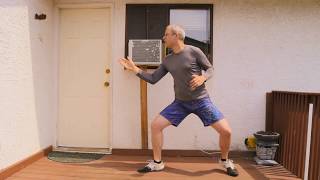
The on-guard position is the foundational stance maintained throughout fencing movement. The dominant foot points straight forward while the non-dominant foot points perpendicular to the side, with heels touching and feet positioned at a right angle. After establishing foot placement, the fencer steps forward two full foot-lengths, landing each new step where the previous toe pointed.
On-Guard Position: Lower Body and Knee Alignment
In the on-guard position, the knees must be bent to lower the center of gravity and act as shock absorbers. The front knee should align directly above or slightly past the ankle, while the back knee positions itself approximately above the back foot's toe. This flexed posture increases stability and reduces the likelihood of losing balance during movement or attacks.
On-Guard Position: Upper Body and Arm Placement
The fencer maintains a side-facing stance with the dominant shoulder positioned forward of the non-dominant shoulder, minimizing the target area presented to the opponent. The non-weapon arm extends to the side, neither forward nor behind the back, to maintain proper posture and avoid penalty for target coverage. The weapon-side arm is held with the elbow slightly away from the ribs and forearm bent forward, positioning the blade for attacks and parries.
On-Guard Conditioning Drills
Two foundational drills develop on-guard proficiency: the first involves bending and rising from the stance 15 times with locked knees, followed by a 30-second rest and repetition. The second drill performs full squats from the on-guard position—descending fully, rising with locked knees, resetting to on-guard, and repeating 15 times before resting and repeating the set.
Linear Movement in Fencing
Fencing is a linear sport where movement occurs primarily forward and backward rather than side-to-side, especially during early learning stages. Maintaining the on-guard stance during movement is essential, as the front foot's direction determines the line of advance. The back foot must not shift sideways, as doing so causes the fencer to wander off the linear path and lose positional control.
The Advance: Forward Movement Mechanics
The advance is the primary forward movement in foil, executed by stepping forward with the front foot while maintaining contact with the floor. The front foot lands on the heel at a shallow distance (approximately one foot-length), with toes remaining pointed forward. The back foot then recovers forward a similar distance before the front foot is repositioned, maintaining floor contact throughout and ensuring balance and control.
Introduction to Beginners Foil - Part I. Footwork
Key Takeaways
- •Introduction to Foil Fencing
- •Target Areas and Right of Way
- •The On-Guard Position: Stance and Foot Placement
- •On-Guard Position: Lower Body and Knee Alignment
Introduction to Fencing: Beginners Foil OSM Fencing Intro to Fencing series provides an overview of what fencing is like as well as instruction and drills to help get ready for learning this amazing Olympic sport! Part I. Footwork: What is Foil - 00:32 The "En Garde" - 01:31 -Drill I. (Descending En Garde) - 04:33 -Drill II. (Squat En Garde) - 05:06 Movement - 05:55 Advance - 06:34 -Drill III. (Advance Half Step) - 07:33 -Drill IV. (Advance Full Step) - 08:19 Retreat - 09:00 -Drill V. (Retreat Half Step) - 09:30 -Drill VI. (Retreat Full Step) - 10:13 Drill Combinations - 10:57 -Drill VII. (Half Steps) - 11:27 -Drill VIII. (Forward Back) - 11:54 -Drill IX. (Three Step Set) - 12:18 -Drill X. (Advance Retreat) - 12:51 -Drill XI. (Retreat Advance) - 13:09 -Drill XII. (Tempo Acceleration) - 13:30 Annex Note - 13:54 Note: Introduction to Fencing series are not meant to be taken in place of actual lessons but in conjunction with fencing lessons. Coaches are invaluable to learning any sport! www.osmfencing.com [email protected]
Related Techniques
Frequently Asked Questions
What does this video teach about foil footwork?
This video covers introduction to foil fencing, target areas and right of way, the on-guard position: stance and foot placement. It provides detailed instruction from OSM Fencing.
How long does it take to learn foil footwork?
The basic mechanics can be understood in a single session, but developing reliable execution requires consistent drilling over weeks of practice. This 8-part breakdown helps structure your training by isolating each phase of the technique.
What are the key details for finishing foil footwork?
Fencing is a linear sport where movement occurs primarily forward and backward rather than side-to-side, especially during early learning stages. Maintaining the on-guard stance during movement is essential, as the front foot's direction determines the line of advance. The back foot must not shift sideways, as doing so causes the fencer to wander off the linear path and lose positional control.