Triangle Progression Overview
This final progression step focuses on applying finishing pressure to a successfully locked triangle. The practitioner has already established control by locking both hands on the opponent's head while maintaining a secure ankle grip. The upcoming technique addresses how to transition from positional control to effective submission mechanics.
Establishing the Perpendicular Angle
Moving to a perpendicular angle eliminates the opponent's ability to generate pressure or improve their posture. From this superior position, the practitioner becomes extremely heavy, preventing the opponent from using their hips to stand or escape. This geometric advantage is achieved by securing the legs under the opponent's body—either under the near leg, far hip, or arm.
Identifying the Pressure Problem
Most practitioners incorrectly apply finishing pressure by squeezing their knees while square, relying on weak adductor muscles. The adductors are small muscles that fatigue quickly and lack the strength of larger leg muscles. When positioned squarely, knee squeezing also directs pressure away from the carotid arteries, making the choke inefficient.
Muscle Mechanics and Alignment
From the perpendicular angle, the leg press and leg curl muscles align directly with the opponent's neck. These are significantly stronger muscles than the adductors and provide superior mechanical advantage for the choke. At this angle, squeezing the knees sends pressure sideways, missing the target entirely.
The Stomp and Curl Finish
Rather than squeezing, the practitioner presses the top leg (over the neck) into the side of the opponent's neck while curling with the bottom leg. This 'stomp and curl' motion engages the powerful leg press and leg curl muscles simultaneously. The technique produces a sharp, efficient choke that requires minimal effort compared to traditional knee squeezing.
Hand Positioning and Upper Body
The free hand can grab the shin or assume any comfortable position without significantly impacting the choke's effectiveness. When using large, strong leg muscles, hand placement becomes largely irrelevant. The focus should remain on generating pressure through the legs rather than arm positioning.
Pressure Application and Dominance
Gentle, constant pressure applied from this dominant position will render the opponent unconscious without risk of injury or position loss. The practitioner should never need to squeeze with maximum force, as doing so only wastes energy and risks fatigue. Controlled pressure maintains superiority indefinitely unless external constraints (such as time limits) demand urgency.
Avoiding Common Mistakes
Squeezing the knees while perpendicular causes pressure to rotate into the opponent's shoulder, missing the target completely. The stomp and curl motion with leg press and curl muscles must be executed at the correct angle to be effective. The choke fails when pressure deviates from direct contact with the side of the neck.
Ryan Hall The Triangle - Stomp And Curl BJJ
Key Takeaways
- •Triangle Progression Overview
- •Establishing the Perpendicular Angle
- •Identifying the Pressure Problem
- •Muscle Mechanics and Alignment
Check out our latest instructional DVD from World Martial Arts at http://www.groundfighter.com. This Brand New DVD features Ryan Hall and the extremely dominant Triangle Position. Ryan Hall has proven himself to be one of the most successful and influential competitors using the triangle today with over 200 triangle submissions in competition. Ryan Hall breaks wide open the secrets of his Triangle success with over 4 hours of step by step instruction and nearly 50 technique. A World Martial Arts Exclusive. This Scene is taken from DVD 1- Chapter 4 - Finishing The Choke: Stomp And Curl. For information on this DVD and the other techniques taught on this DVD check out http://www.groundfighter.com/Ryan-Hall-The-Triangle/
Related Techniques
Frequently Asked Questions
What does this video teach about new stomp?
This video covers triangle progression overview, establishing the perpendicular angle, identifying the pressure problem. It provides detailed instruction from WorldMartialArts.
How long does it take to learn new stomp?
The basic mechanics can be understood in a single session, but developing reliable execution requires consistent drilling over weeks of practice. This 8-part breakdown helps structure your training by isolating each phase of the technique.
What are the key details for finishing new stomp?
Gentle, constant pressure applied from this dominant position will render the opponent unconscious without risk of injury or position loss. The practitioner should never need to squeeze with maximum force, as doing so only wastes energy and risks fatigue. Controlled pressure maintains superiority indefinitely unless external constraints (such as time limits) demand urgency.
Related videos
Mounted Rubber Guard - 10th Planet Jiu Jitsu
Brandon Mccaghren
10th Planet Fundamentals Half Guard Stomp & Super Stomp 2 of 2 Heather
10th Planet Denver Jiu Jitsu
Ways to use Mini Stomp, 10th Planet Orange Park Jiu Jitsu
10th Planet Orange Park
The Zombie Pass Principle | The Machado Method | Jiu Jitsu
Hayabusa
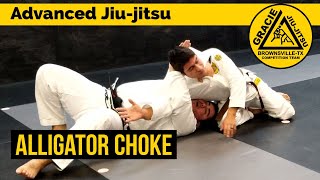
Advanced Jiu-jitsu - Alligator Choke
Gracie Humaita Jiujitsu in Brownsville