Understanding the Corner Guard Position
The corner guard clench is a powerful defensive position that occurs when the opponent locks their legs tightly around the passer's hips. This position can effectively prevent leg separation and must be addressed before attempting the no-hand pass to side control.
Establishing the Underhook and Shoulder Pressure
The passer secures an underhook while maintaining dominant shoulder pressure against the opponent's upper body. This foundation enables the windshield wiper motion necessary to set up the no-hand pass.
Executing the Initial Slice
With the underhook and shoulder pressure established, the passer begins to slice through the opponent's guard. The opponent will typically respond by reinforcing their corner clench, creating the challenge that requires tactical adjustment.
Recognizing Strong Corner Clench Defense
A strong corner clench combines the underhook with powerful leg compression around the passer's hips. When this defense is properly executed, simple leg separation becomes impossible and requires a different technical approach.
Eliminating Space by Tightening the Knee Position
Rather than attempting to kick the leg out against strong compression, the passer must bring their knee tight against the opponent's ribs. Maintaining distance with the knee actually increases the opponent's pinching power, so proximity is essential.
The Critical Knee Placement
The passer's knee must be positioned directly against the opponent's ribcage with no gap between them. This eliminates the leverage the opponent needs to maintain the corner clench, making it impossible for them to pinch effectively.
Combining Pressure Elements for the Pass
With the knee tight to the ribs, underhook engaged, and shoulder pressure applied simultaneously, the passer can now kick the leg out with minimal resistance. When these three elements are properly coordinated, the leg separation should feel effortless, indicating correct positioning.
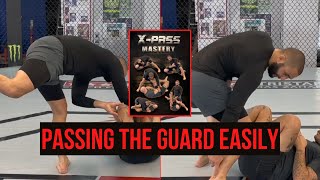
Jeremy Fields shows a No hand pass from half guard .
Key Takeaways
- •Understanding the Corner Guard Position
- •Establishing the Underhook and Shoulder Pressure
- •Executing the Initial Slice
- •Recognizing Strong Corner Clench Defense
No hand pass from under hook half guard. Here I’m showing a detail that a lot of people miss. Taking the space away from your partners hips so he can’t separate.
Frequently Asked Questions
What does this video teach about no hand pass to side control?
This video covers understanding the corner guard position, establishing the underhook and shoulder pressure, executing the initial slice. It provides detailed instruction from Jeremy Fields.
How long does it take to learn no hand pass to side control?
The basic mechanics can be understood in a single session, but developing reliable execution requires consistent drilling over weeks of practice. This 7-part breakdown helps structure your training by isolating each phase of the technique.
What are the key details for finishing no hand pass to side control?
The passer's knee must be positioned directly against the opponent's ribcage with no gap between them. This eliminates the leverage the opponent needs to maintain the corner clench, making it impossible for them to pinch effectively.
Related videos
No-Gi Guard Passing Concepts Course - Against Half Guard Dog Fight With Elbow Post by JT Torres
The Grapplers Guide by Jason Scully
Half Guard: No Hands Pass
Brandon Quick
Luis Azeredo vs Tony DeSouza
amtuncurich
X Pass Basics and Control Principles
Aaron Benzrihem bjj
How I use X-Pass to crush my opponent's guard
Tristar Gym