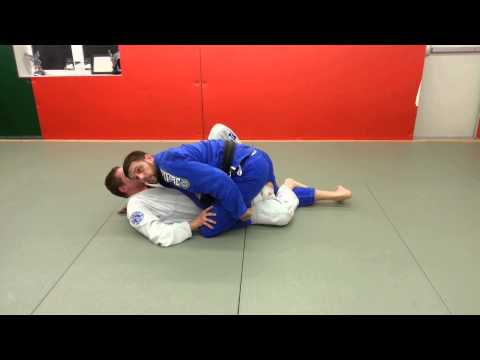
Jeremy Fields shows a No hand pass from half guard .
0
No Hand Pass to Side Control·Jeremy Fields
No hand pass from under hook half guard. Here I’m showing a detail that a lot of people miss. Taking the space away from…
Translation: no hand pass to side control
The No Hand Pass to Side Control is the side control variant of the no-hands passing concept, using pressure and hip movement to clear the half guard. [1]
No Hand Pass to Side Control is a technique documented in BJ Penn's comprehensive MMA system. [1]
Proven in UFC-level competition by BJ Penn and training partners. [1]
Modern MMA methodology; BJ Penn / Greg Jackson lineage. [1]
Used in UFC and professional MMA competition
No images yet for this technique.
Sign in to suggest an image.
No hand pass from under hook half guard. Here I’m showing a detail that a lot of people miss. Taking the space away from…
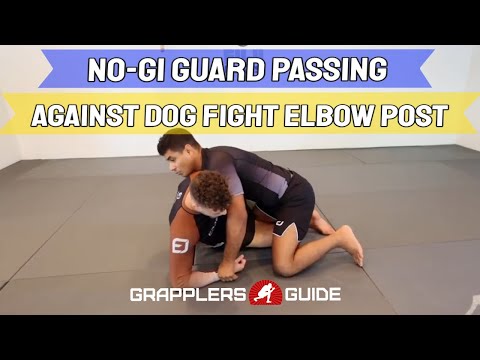
The most basic & world known Half Guard Pass
The Grapplers Guide is the longest running and most recommended premium BJJ and grappling learning site ever created. L…
The no-hand pass to side control is a fundamental guard-passing technique executed from half guard using body weight and positioning rather than hand control on the opponent's legs. All three instructors—Jeremy Fields, Brandon Quick, and The Grapplers Guide (Jason Scully)—emphasize the critical importance of the underhook and tight knee positioning against the opponent's hip or ribs. Jeremy Fields stresses that when the opponent has a strong corner clench, the passer must bring the knee extremely tight to eliminate separation and facilitate clean leg extraction through kicking. Brandon Quick details the mechanics of foot placement, advocating for toes dug in close to the body and the knee kept low on the mat to prevent hip escape, while positioning the head six to eight inches above the opponent's head and driving forward with flared underhook to reach side control or mount. The Grapplers Guide addresses a variation when the opponent builds a strong elbow post: the passer sits back, peels the opponent's wrist inward to break their structure, passes the wrist control to the far-side hand, then walks the knee progressively closer to the opponent's hip before driving the knee through and transitioning to cross-face control in side control. All instructors agree on keeping weight low, maintaining the underhook, and using knee pressure as the primary mechanism for passing rather than hand control.
Synthesized from 3 instructors
No instructional courses yet for this technique.
Sign in to suggest a course.
Risk of injury to the person this technique is applied to
Positional technique
Skill level needed to execute this technique reliably
Whether this technique is allowed under major competition rule sets
Mixed Martial Arts: The Book of Knowledge (Penn, Cordoza & Krauss, 2007)
description, historyOrigin: sourced from Penn, B
description, historyOrigin: sourced from Penn, B
MMA-specific body control and pressure
Sitting back gives you a better chance to avoid the underhook getting stronger, since pressing down from above puts your weight already far over their shoulder. According to JT Torres on The Grapplers Guide, sitting back allows you to peel their hand in and knock them off their base more effectively.
Jeremy Fields emphasizes that it's very important to bring your knee nice and tight to the ribs to take away all that space. When you apply shoulder pressure with the underhook and keep the knee tight, it should be very easy to kick their foot out with no resistance.
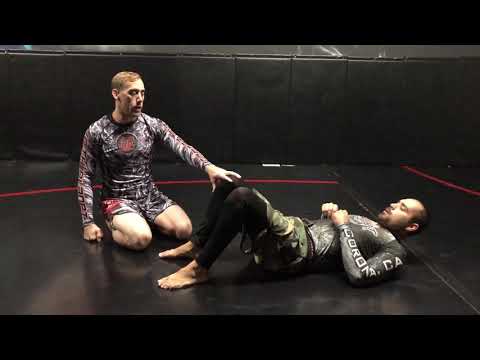
Brandon Quick stresses that digging your toes in is a real important detail to prevent your opponent from pushing your leg off and escaping. Keep your head positioned about six to eight inches above their head, maintain the underhook, and keep your knee on the mat as much as possible to prevent the hip escape.
According to JT Torres, once you've peeled them in and walked your knee underneath, drop your hip, walk your knee up, then drive it across, let the arm go, switch to a cross face, step off to the side, and kick and pull right to side control.
The No Hand Pass to Side Control is the side control variant of the no-hands passing concept, using pressure and hip movement to clear the half guard.
No Hand Pass to Side Control is a technique documented in BJ Penn's comprehensive MMA system.
IBJJF: legal — Legal, guard pass scores 3 points; IJF: legal — Legal — transitioning past opponent's legs is part of newaza; ADCC: legal — Legal, guard pass scores 3 points; Unified MMA: legal — Legal; FIAS Sport Sambo: legal — Legal
Danger rating 3/10. Positional technique
The standard setup chain: Engagement → No Hand Pass to Side Control → Advance position.
Standard counters include: Guard retention / Frame and escape / Submission counter.
Common variants: Standard No Hand Pass to Side Control; Modified No Hand Pass to Side Control.
Used in UFC and professional MMA competition
Top errors to watch for: Losing base / Not maintaining control / Poor transitions.
The No Hand Pass to Side Control is also known as No Hand Pass to Side Control, No-Hands Half Guard Pass.