Introduction to Mount Escapes
The bridge and roll, knee elbow escape, and hip bump escape form the foundational trilogy of mount escapes for beginners in Brazilian Jiu-Jitsu. While these techniques require significant skill to execute against advanced opponents, they provide the most reliable paths to escape mount position when rolling with fellow beginners.
Bridge and Roll: Hand Trapping Options
The bridge and roll begins with trapping the opponent's arm on one side of their body. The defender can pin the hand while collecting the elbow, use both hands to secure the trap, or apply an overhook if the opponent has wrapped around the head. The non-trapping arm should remain tucked tight against the body to minimize exposure on the opposite side.
Bridge and Roll: Foot Trap Mechanics
Proper foot positioning is critical for an effective trap. Rather than trapping from the center where the opponent can maintain a low position, the defender should shift their hips laterally, turn their knees inward, and pull their heel to their buttock. The foot trap only needs to be maintained long enough to establish momentum toward the top position.
Bridge and Roll: Execution and Timing
The defender looks back over their shoulder and executes a backward bridge at an angle, avoiding a sideways roll. Combining the bridge and roll into one fluid motion rather than two separate movements significantly increases success rate and momentum through the transition.
Knee Elbow Escape: Frame and Positioning
The knee elbow escape is most effective when the opponent's weight is positioned high and they attack the defender's hand. The defender must shift their upper body inward, tucking the elbow to create frames on both the opponent's opposite hip and inside position, without pushing the opponent away.
Knee Elbow Escape: Hip Movement and Leg Positioning
By moving the hips away from the opponent's leg trap, the defender flattens their own leg between the opponent's legs. This positioning allows the defender to place their foot under the opponent's ankle and execute the escape by pulling the knee and elbow together while dropping into half guard.
Hip Bump Escape: Hand and Elbow Placement
The hip bump escape maintains the same survival posture as other escapes, with frames across the far hip and the elbow positioned on the inside. The underhook must remain hidden to prevent the opponent from transitioning into an arm triangle choke.
Hip Bump Escape: Execution and Guard Recovery
The defender initiates the escape by bumping the opponent forward with the bottom knee while rolling backward over the shoulder and pulling the top knee inward to recover guard position. Depending on the space created, the defender can establish double butterfly hooks for an offensive position or transition directly into leg lock attacks.
The First 3 Mount Escapes You Need To Know in BJJ
Key Takeaways
- •Introduction to Mount Escapes
- •Bridge and Roll: Hand Trapping Options
- •Bridge and Roll: Foot Trap Mechanics
- •Bridge and Roll: Execution and Timing
When you first start Jiu Jitsu, you're gonna be getting stuck in the bottom of mount. A lot. Even by people who aren't very good yet lol Take these 3 simple movements and add them to your game so you can give yourself a better chance of getting back to a winning position. If you need more in depth instruction and coaching, on this topic or any other in BJJ, from myself and a team of killer black belts visit https://bit.ly/3PqO348 Join this channel to get access to Members Only Perks such as: - Members Only Chat - Exclusive Members Only Videos - Custom Badges and Emojis and more! https://www.youtube.com/channel/UCr7VU0Cnef4AhQk7Pe_9nTA/join
Related Techniques
Frequently Asked Questions
What does this video teach about two on one hand fighting?
This video covers introduction to mount escapes, bridge and roll: hand trapping options, bridge and roll: foot trap mechanics. It provides detailed instruction from Brandon Mccaghren.
How long does it take to learn two on one hand fighting?
The basic mechanics can be understood in a single session, but developing reliable execution requires consistent drilling over weeks of practice. This 8-part breakdown helps structure your training by isolating each phase of the technique.
What are the key details for finishing two on one hand fighting?
The hip bump escape maintains the same survival posture as other escapes, with frames across the far hip and the elbow positioned on the inside. The underhook must remain hidden to prevent the opponent from transitioning into an arm triangle choke.
Related videos
HANDFIGHT for 2 on 1!!
TeachMeGrappling Coach Brian
Your Second Martial Arts Lesson...Front Kicks, High Blocks, and Knife hand Strikes!
Tiger Rock North Louisiana
Ankle Lock Defense Part 2 - Freeing Our Hip From Strong Side Standard Ashi
RVV BJJ
How to Break the Collar Grip and Win the Hand Fight in BJJ
Stephan Kesting
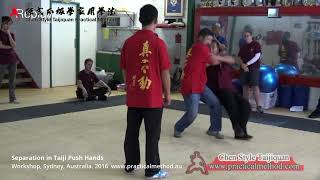
Separation in Taiji Push Hands Training - Master Chen Zhonghua
Practical Method Sydney