Strike & defenceLocksClose rangeFighting multiple people
Distance
CloseMiddleLong
Body target
Upper bodyMiddle bodyLower body
Overview
The Standard Rear Waist Lock secures a locked grip specifically around the opponent's waist from behind, with the hands clasped at or below the navel line. [1] The attacker maintains chest-to-back contact with hips tight against the opponent's buttocks, creating a unified base from which to execute lifts and returns. [1],[2] The standard rear waist lock is the starting position for gut wrenches (rolling the opponent over the locked arms), mat returns (driving the opponent to the mat), and rear lifts (elevating the opponent before depositing them). [2],[3]
Also known as
Basic Rear Waist Lock[1]Standard Back Waist Grip[2]Rear Midsection Lock[3]
The standard rear waist lock is one of wrestling's oldest and most universal positions, appearing in virtually every wrestling tradition worldwide. [1] In Greco-Roman wrestling, mastery of the rear waist lock and its associated attacks is considered essential for competitive success at all levels. [2],[3]
The rear waist lock is the standard finish position for go-behind takedowns in wrestling, and in Greco-Roman wrestling it is the primary position for the gut wrench and mat return sequences. [1] Petrov describes the rear waist lock as 'the single most advantageous position in Greco-Roman wrestling' because scoring from the rear waist is almost guaranteed. [1]
Lineage
The foundational par terre position in Greco-Roman wrestling. [1]
Competition Record
The standard rear waist lock is a foundational grip in Greco-Roman wrestling used to execute lifts and returns in competition. [1]
Images
No images yet for this technique.
Sign in to suggest an image.
Biomechanical Mechanism
Primary Action — Establishing a controlling connection with the opponent at close range
Joints Involved — Upper body contact points — head, arms, and torso used for control and balance disruption
Force Vector — Varies by clinch type — downward (collar tie), lateral (arm drags), or forward (chest pressure)
Control Mechanic — Inside position and head control are the dominant factors in clinch superiority
Position & Entry
From behind the opponent — Secure both arms around the waist, clasping hands at the front — used for lifts and returns
From clinch (pummelling through) — Swim both arms through to lock around the waist, establishing rear waist control
Variants
Standard variation — primary clinch configuration from the most common entry
Gi variation — adapted with collar and sleeve grips for gi-based grappling
No-gi / MMA variation — modified for no-gi or cage fighting conditions
Offensive variation — configured to set up strikes, takedowns, or submissions from the clinch
Train with me in Singapore►http://bit.ly/FightTIPSinSingapore
I had the honor of taking a private training lesson with P…
1 / 2
3 videos
What Instructors Say
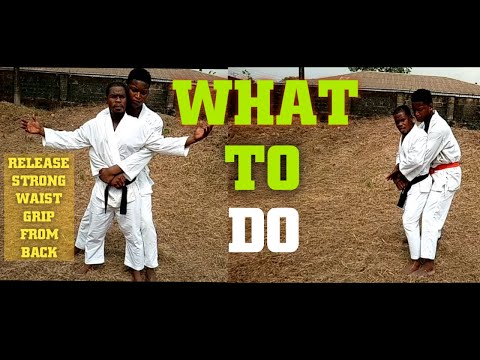
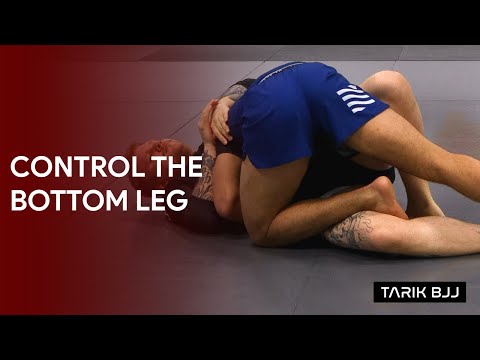
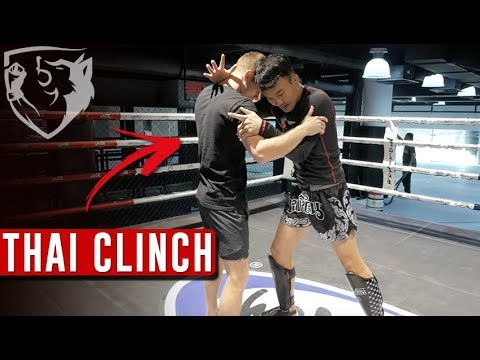
The standard rear waist lock is a foundational clinch control position taught across self-defense, striking, and grappling contexts. Self Defense Classes emphasizes escape mechanics from rear waist grips, focusing on psychological and postural elements: maintaining a firm stance to prevent being lifted, feigning discomfort to mislead the attacker's intentions, and executing systematic escapes including shimmy techniques, palm strikes to the waist bone, foot stomps to weaken the attacker's base, wrist locks, and hip throws. FightTIPS (via Petchboonchu) approaches the waist lock as part of broader Thai clinch domination, stressing hand positioning on the inside (triceps control or steering wheel grip) to prevent elbow strikes, maintaining a wide stance with lowered center of gravity, and using the rear waist lock (or low body lock variant) as a setup for sweeps via knee bumps, hip rotation, and head control. Tarik BJJ treats the body lock as a passing mechanism in grappling, where the grip is maintained while transitioning through positional sequences—isolating the opponent's leg, moving the head to the opposite side, and converting into knee slide or mount positions. All three instructors agree that controlling the opponent's posture through hip positioning and body weight distribution is essential, though their tactical applications diverge: self-defense emphasizes escape, striking emphasizes dominant control and offensive positioning, and grappling emphasizes transitional passing.
Synthesized from 3 instructors
Self Defense Classes — Self-defense moves for release of strong waist grip from the back: Detailed five-part escape system from rear waist locks: (1) shimmy with firm stance, (2) palm strikes to waist bone, (3) foot stomps followed by step-through, (4) wrist lock and swing escape, (5) hand lock with backward stretch and leg strike. Emphasizes psychological composure and postural stability as foundation.
fightTIPS — Dominate the Muay Thai Clinch with Petchboonchu: Positions rear/low body lock as dominant clinch control tool within Thai boxing framework. Teaches high-back versus low-back lock variations (low-back more secure), sweep mechanics using knee bumps and hip rotation, hip positioning to prevent opponent's posture breakage, and integration with knees and elbows. Stresses control over escape.
Tarik BJJ — Bodylock Passing Stapling One Leg: Demonstrates body lock as grappling pass in no-gi/BJJ context. Shows how to maintain rear waist lock while isolating opponent's leg through hip weight distribution, head positioning, and transition into knee slide or mount. Illustrates when to release grip for continued positional advancement.
Learn This Technique
No instructional courses yet for this technique.
Sign in to suggest a course.
Ratings
Danger Rating
Risk of injury to the person this technique is applied to
4
Moderate4/10
Body clinch positions enable throws and takedowns; rib compression risk
Difficulty
Skill level needed to execute this technique reliably
Intermediate
Competition Legality
Whether this technique is allowed under major competition rule sets
Restricted
WBC/Boxing — Holding is technically a foul — referee breaks clinch, excessive holding results in point deduction {src— WBC Rules of Boxing}
K-1/GLORY — One attack from clinch allowed, then referee breaks {src— K-1/GLORY Kickboxing Rules}
— WAKO — Clinch generally broken by referee — limited or no...
1Close Distance — bridge the gap using footwork, strikes, or a level change
2Establish Primary Grip — secure the initial controlling grip on the opponent
3Position the Hips — align hips to maximize leverage and control angle
4Apply Pressure — use the grip to control posture and create offensive opportunities
Sources & References
Primary Source
Freestyle Wrestling: A Complete Guide for Coaches and Wrestlers (Petrov, 1977)
1BookMuay Thai: The Art of Fighting (Kraitus, 2002)
Alias sources — [1] Wrestling Physical Conditioning Encyclopedia (Welker, 2010) [2] Greco-Roman Wrestling (Petrov, 1987) [3] UWW Technical Terminology (UWW, 2018)
2BookFreestyle Wrestling (Petrov, 1977)
Effectiveness sources — [1] Greco-Roman Wrestling (Petrov, 1987)
3OtherJapanese Martial Arts Hybrid Terminology
Mixed Japanese-Western terminology — combines traditional Japanese terms with katakana loanwords
4CitationMuay Thai: The Art of Fighting (Kraitus, 2002)
Alias sources — [1] Wrestling Physical Conditioning Encyclopedia (Welker, 2010) [2] Greco-Roman Wrestling (Petrov, 1987) [3] UWW Technical Terminology (UWW, 2018)
5CitationFreestyle Wrestling (Petrov, 1977)
Effectiveness sources — [1] Greco-Roman Wrestling (Petrov, 1987)
Community
Athletics
Requires
grip strength, upper body endurance, balance under pressure
Favours
strong arms and shoulders, stable base
Key muscles
forearms, deltoids, core, hip muscles
Frequently Asked Questions
Where should I place my arms when establishing a rear waist lock?
Instead of keeping your arms on the high back, go for the low back and push on the lat—this makes it much harder for your opponent to escape (fightTIPS — Petchboonchu).
How do I escape from a rear waist lock?
Keep your hips in tight and your head up, then reach your arm around and pop your shoulder through to create an opening for your other arm to swim out (fightTIPS — Petchboonchu).
What's an effective self-defense escape from a rear waist grip?
Take a firm stance, stomp on your attacker's feet to weaken their leg, then step in to break free from the grip (Self defense Classes).
How does the Standard Rear Waist Lock work?
The Standard Rear Waist Lock secures a locked grip specifically around the opponent's waist from behind, with the hands clasped at or below the navel line. The attacker maintains chest-to-back contact with hips tight against the opponent's buttocks, creating a unified base from which to execute lifts and returns.
Where does the Standard Rear Waist Lock come from?
The standard rear waist lock is one of wrestling's oldest and most universal positions, appearing in virtually every wrestling tradition worldwide. In Greco-Roman wrestling, mastery of the rear waist lock and its associated attacks is considered essential for competitive success at all levels.
Is the Standard Rear Waist Lock legal in competition?
Unified MMA: legal — Legal — clinching is integral to MMA; IJF: legal — Legal — kumi-kata (grip fighting) is fundamental to judo; IBJJF: legal — Legal — standing grip fighting and clinch work permitted; IFMA: legal — Legal — the clinch is a core element of Muay Thai, clinch dominance is highly…; WBC/Boxing: restricted — Holding is technically a foul — referee breaks clinch, excessive holding resu…; K: restricted — 1/GLORY — One attack from clinch allowed, then referee breaks; WAKO: restricted — Clinch generally broken by referee — limited or no clinch fighting in most fo…; UWW: legal — Legal — clinch is fundamental to wrestling, the primary position in Greco-Roman
How dangerous is the Standard Rear Waist Lock?
Danger rating 4/10. Moderate — body clinch positions enable throws and takedowns; rib compression risk
How do I set up the Standard Rear Waist Lock?
The standard setup chain: Close Distance → Establish Primary Grip → Position the Hips → Apply Pressure.
How do I defend against the Standard Rear Waist Lock?
Standard counters include: Pummeling — fight for inside position by swimming arms under opponent's grips / Frame and Push — create distance using forearm frames against the chest or neck / Grip Break — systematically strip the opponent's controlling grips / Posture Up — straighten the spine and drive the hips forward to break clinch control.
What are the variants of the Standard Rear Waist Lock?
Common variants: Standard variation (primary clinch configuration from the most common entry); Gi variation (adapted with collar and sleeve grips for gi-based grappling); No-gi / MMA variation (modified for no-gi or cage fighting conditions); Offensive variation (configured to set up strikes, takedowns, or submissions f…).
How effective is the Standard Rear Waist Lock in competition?
The standard rear waist lock is a foundational grip in Greco-Roman wrestling used to execute lifts and returns in competition.
What are common mistakes when doing the Standard Rear Waist Lock?
Top errors to watch for: Sitting directly behind the opponent instead of slightly offset — the angle determines your throwing direction / Locking hands above the hips — at the hip bones gives maximum lifting leverage / Pressing weight onto the opponent with your upper body while your hips are disengaged — hips must drive into their back / Not popping the hips before attacking — the hip displacement initiates every par terre technique.
What are other names for the Standard Rear Waist Lock?
The Standard Rear Waist Lock is also known as Sutandādo Ushiro Koshi-gatame, Basic Rear Waist Lock, Standard Back Waist Grip, Rear Midsection Lock.