Learning to Throw Shuriken with no Experience
0
Standard Hira-Shuriken·SkilLeo
Want to call me to talk about learning this or other skills? - https://clarity.fm/leobigio I try learning a new skill e…
Translation: Basic Star Shuriken
Fundamental star-shuriken throwing technique using a horizontal spinning release, effective for distraction and surface-cutting at range.
The standard hira-shuriken technique employs a horizontal or overhand throw that sends the flat, multi-pointed blade spinning toward the target. [1] Unlike bo-shuriken, hira-shuriken are thrown with deliberate rotation — the spinning motion ensures that one of the points will strike the target regardless of distance, eliminating the need for precise distance calibration. [2] This ease of use made hira-shuriken accessible to less trained practitioners, but at the cost of reduced penetration compared to the direct-throw bo-shuriken method. [3] The throwing method is preserved in schools such as Togakure-ryu, which includes hira-shuriken (senban shuriken) as part of its ninjutsu curriculum. [1]
The standard hira-shuriken throwing technique uses a sidearm or overarm release, with the flat shape allowing point-first impact at various distances. [1]
Hira-shuriken techniques were transmitted within koryū schools alongside bō-shuriken and other throwing weapons. [1]
Standard hira-shuriken throwing is demonstrated at koryū events and Japanese budo demonstrations. [1]
No images yet for this technique.
Sign in to suggest an image.
Want to call me to talk about learning this or other skills? - https://clarity.fm/leobigio I try learning a new skill e…
If you are interested in my Shuriken-Art, please send a mail to a person of the next site. They makes Shuriken which I…
When you are interested in my Shuriken, please send a mail to a person of the next account. They makes Shuriken which…
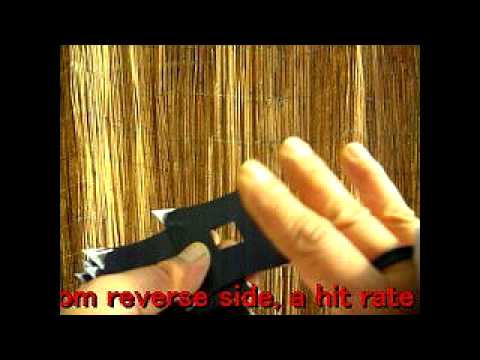
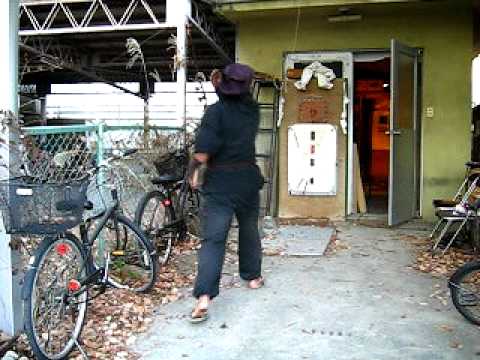
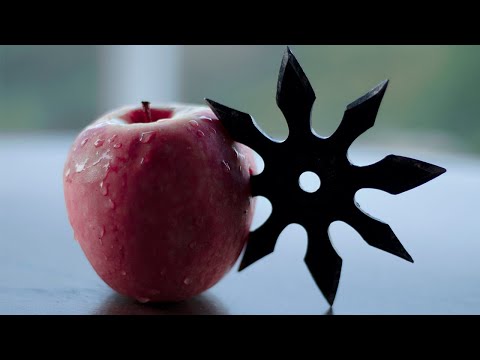
The standard hira-shuriken throw requires precise grip, arm mechanics, and release timing to achieve consistent target penetration. SkilLeo's detailed pedagogical account demonstrates two primary grip variations: the trigger grip, which mimics finger-trigger positioning but sacrifices aiming accuracy, and the pinch grip, wherein the thrower holds one point between thumb and index finger while aligning another point to the thumb. Regardless of grip selection, proper form involves raising the shuriken to ear level before executing a straight forward motion analogous to pointing. Critical to success is the shuriken's forward rotation during flight; insufficient rotation causes the point to strike at oblique angles, resulting in deflection rather than penetration. SkilLeo emphasizes release timing as essential to consistent accuracy and notes that straight-line throwing motion with maintained momentum improves penetration probability. The technique demands substantial practice for proficiency; SkilLeo documents progression from stationary wooden targets at 10 feet to moving targets (apples) at 15 feet. While Houzan01Shuriken and HouzanSuzuki videos were provided, their transcripts lack substantive instructional content beyond title references. SkilLeo's account remains the primary detailed source for standard hira-shuriken mechanics and progressive skill development.
Synthesized from 3 instructors
No instructional courses yet for this technique.
Sign in to suggest a course.
Risk of injury to the person this technique is applied to
Projectile weapons including shuriken, throwing knives; high penetration risk
Skill level needed to execute this technique reliably
Whether this technique is allowed under major competition rule sets
Bubishi: The Classic Manual of Combat (Patrick McCarthy, 2008)
Alias sources — [1] Secrets of the Samurai (Ratti & Westbrook, 1973) [2] Secrets of the Samurai (Ratti & Westbrook, 1973) [3] Secrets of the Samurai (Ratti & Westbrook, 1973)
History sources — [1] Hatsumi, M. & Chambers, Q., Stick Fighting: Techniques of Self-Defense (Kodansha, 1971) [2] Ratti, O. & Westbrook, A., Secrets of the Samurai (Tuttle, 1973) [3] Shirakami, E., Shuriken-Do: My Study of the Way of Shuriken (2001)
Established Japanese martial arts naming convention — native Japanese term (和語/漢語)
Alias sources — [1] Secrets of the Samurai (Ratti & Westbrook, 1973) [2] Secrets of the Samurai (Ratti & Westbrook, 1973) [3] Secrets of the Samurai (Ratti & Westbrook, 1973)
History sources — [1] Hatsumi, M. & Chambers, Q., Stick Fighting: Techniques of Self-Defense (Kodansha, 1971) [2] Ratti, O. & Westbrook, A., Secrets of the Samurai (Tuttle, 1973) [3] Shirakami, E., Shuriken-Do: My Study of the Way of Shuriken (2001)
precision, wrist snap, hand-eye coordination
strong wrists and forearms, excellent proprioception
forearm extensors, wrist flexors, deltoids, core
According to SkilLeo, a common issue is the angle of approach—the best way to penetrate a target with a sharpened object is going straight rather than at an angle, so ensure your throw is perpendicular to the target surface.
Fundamental star-shuriken throwing technique using a horizontal spinning release, effective for distraction and surface-cutting at range.
The standard hira-shuriken technique employs a horizontal or overhand throw that sends the flat, multi-pointed blade spinning toward the target. Unlike bo-shuriken, hira-shuriken are thrown with deliberate rotation — the spinning motion ensures that one of the points will strike the target regardless of distance, eliminating the need for precise distance calibration.
Traditional martial arts: legal — Practiced in traditional kata/forms and weapon-specific competition under var…; IWUF: legal — Legal in wushu taolu if applicable; HEMA: legal — Legal in applicable historical weapon categories
Danger rating 8/10. Very High — projectile weapons including shuriken, throwing knives; high penetration risk
The standard setup chain: Ready Position → Distance Control → Execute Technique → Return to Guard.
Standard counters include: Parry (Absetzen) — deflect the incoming blade with a counter-displacement / Void (Step Back) — withdraw from measure to avoid the cutting arc / Counter-Cut (Nachreisen) — strike into the opponent's opening during their attack.
Common variants: Standard technique (primary execution from the most common grip and stance); Competition variation (adapted for sport-specific rules and scoring); Traditional variation (classical execution as taught in the traditional art); Combination variation (chained with preceding or following techniques in a flow).
Standard hira-shuriken throwing is demonstrated at koryū events and Japanese budo demonstrations.
Top errors to watch for: Throwing with a vertical wrist motion — the release must be horizontal; vertical release causes the shuriken to fly e… / Using too much arm and not enough wrist — the throw is a wrist technique; the arm positions, the wrist delivers / Gripping too tightly — the shuriken must spin freely off the hand; a tight grip delays release and reduces spin / Releasing at the wrong point in the wrist rotation — the release timing determines the flight direction; consistency ….
The Standard Hira-Shuriken is also known as Basic Star Throw, Standard Shaken Technique, Flat Shuriken Throw.