Bo Shuriken jutsu for dummies :)
0
Shuriken-Jutsu·Przemysław Tesla
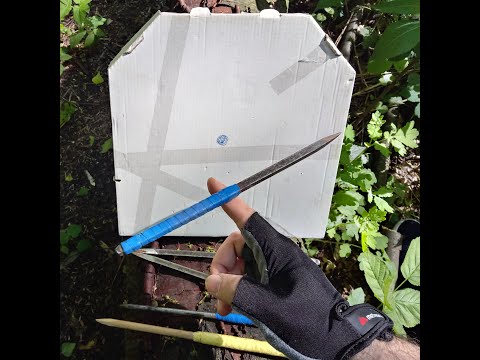
Don't waste your money on expensive throwing knives if you're a beginner, make yourself a metal throwing spike and I'll …
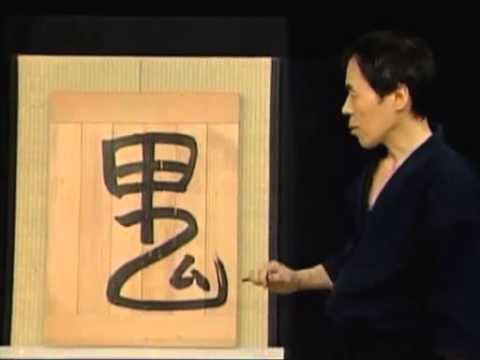
Translation: Hidden-Hand Blade Art
Japanese art of throwing bladed projectiles, divided into bo-shuriken (spike-type) and hira-shuriken (star-type) methods.
Shuriken-jutsu (throwing blade art) developed as a supplementary combat discipline within Japanese koryu bujutsu, with the earliest documented references dating to the Sengoku period (1467–1615). [1] The art was practised as a secondary skill in schools whose primary focus was swordsmanship or spear work, including Tenshin Shoden Katori Shinto-ryu, Negishi-ryu, and Meifu Shinkage-ryu. [2] Shirakami Eizo, author of Shuriken-Do (2001), documents that shuriken were designed primarily as distraction and harassment weapons rather than killing implements — thrown to create a momentary opening for a follow-up sword attack or to cover a retreat. [3] The two main categories are bo-shuriken (spike-type) and hira-shuriken (flat, star-type), each with distinct throwing mechanics. [1],[2]
Shuriken-jutsu (throwing blade techniques) served primarily as a supplementary combat art — shuriken were used to distract, harass, or create openings rather than as primary killing weapons. [1] The effective range for shuriken is limited to approximately 5–10 metres, and their penetration depth is generally insufficient for lethal wounds against armoured opponents. [2] Their primary tactical value was in creating momentary distraction to enable a follow-up sword attack or retreat. [2]
Shuriken-jutsu was practised as a supplementary art within many koryu schools, including Tenshin Shoden Katori Shinto-ryu, Meifu Shinkage-ryu, and Negishi-ryu. [1] Meifu Shinkage-ryu, founded by Someya Chikatoshi (a student of Naruse Kanji of Negishi-ryu), is the most active surviving school dedicated primarily to shuriken-jutsu. [2]
Shurikenjutsu is practised within classical Japanese martial arts schools and demonstrated at koryū embu events. There is no standardised competitive format. [1]
No images yet for this technique.
Sign in to suggest an image.
Don't waste your money on expensive throwing knives if you're a beginner, make yourself a metal throwing spike and I'll …
Shuriken jutsu by Master Kono Yoshinori http://www.martialtv.org
No instructional courses yet for this technique.
Sign in to suggest a course.
Risk of injury to the person this technique is applied to
Projectile weapons including shuriken, throwing knives; high penetration risk
Skill level needed to execute this technique reliably
Whether this technique is allowed under major competition rule sets
Bubishi: The Classic Manual of Combat (Patrick McCarthy, 2008)
Alias sources — [1] Kodokan Judo (Kano, 1986) [2] Kodokan Judo (Kano, 1986) [3] Kodokan Judo (Kano, 1986)
Effectiveness sources — [1] Draeger, D., Classical Bujutsu (Weatherhill, 1973) [2] Draeger, D. & Smith, R., Comprehensive Asian Fighting Arts (Kodansha, 1969)
Established Japanese martial arts naming convention — native Japanese term (和語/漢語)
Alias sources — [1] Kodokan Judo (Kano, 1986) [2] Kodokan Judo (Kano, 1986) [3] Kodokan Judo (Kano, 1986)
Effectiveness sources — [1] Draeger, D., Classical Bujutsu (Weatherhill, 1973) [2] Draeger, D. & Smith, R., Comprehensive Asian Fighting Arts (Kodansha, 1969)
precision, wrist snap, hand-eye coordination
strong wrists and forearms, excellent proprioception
forearm extensors, wrist flexors, deltoids, core
Every move, in any martial art, shares a few universal traits. Mix and match below to pinpoint the right tool — or compare equivalents across styles.
Straight, spike-shaped throwing blades propelled with a direct-throw or half-spin technique for penetrating impact.
Flat, multi-pointed throwing blades designed to be thrown with a spinning release for slashing impact.
Shuriken appear in 505 passages across 33 books. Throwing stars/blades used by shinobi (ninja) and some samurai schools. Shuriken-jutsu was a supplementary art, not a primary combat skill — used to distract, create distance, or set up sword attacks. (33 books; Draeger, Classical Budo; ninjutsu texts)
Japanese art of throwing bladed projectiles, divided into bo-shuriken (spike-type) and hira-shuriken (star-type) methods.
Shuriken-jutsu (throwing blade art) developed as a supplementary combat discipline within Japanese koryu bujutsu, with the earliest documented references dating to the Sengoku period (1467–1615). The art was practised as a secondary skill in schools whose primary focus was swordsmanship or spear work, including Tenshin Shoden Katori Shinto-ryu, Negishi-ryu, and Meifu Shinkage-ryu.
Traditional martial arts: legal — Practiced in traditional kata/forms and weapon-specific competition under var…; IWUF: legal — Legal in wushu taolu if applicable; HEMA: legal — Legal in applicable historical weapon categories
Danger rating 8/10. Very High — projectile weapons including shuriken, throwing knives; high penetration risk
The standard setup chain: Ready Position → Distance Control → Execute Technique → Return to Guard.
Standard counters include: Guard Position — return to a defensive ready stance / Distance Management — control the measure to avoid being in range / Counter-Attack — strike during the opponent's recovery or between movements.
Common variants: Standard technique (primary execution from the most common grip and stance); Competition variation (adapted for sport-specific rules and scoring); Traditional variation (classical execution as taught in the traditional art); Combination variation (chained with preceding or following techniques in a flow).
Shurikenjutsu is practised within classical Japanese martial arts schools and demonstrated at koryū embu events. There is no standardised competitive format.
Top errors to watch for: Expecting shuriken to be lethal at range — historically, shuriken were used to distract and harass, not to kill at di… / Throwing shuriken like darts — the technique is specific and must be learned properly; casual throwing is inaccurate / Not respecting the art's cultural context — shuriken-jutsu has a specific place in Japanese martial tradition; removi… / Using any sharp object as a shuriken — proper shuriken are balanced for throwing; random objects do not perform the same.
The Shuriken-Jutsu is also known as Shurikenjutsu, Throwing Star Art, Ninja Stars.