Longsword Beginners Guide #4 - Parry and Riposte
0
Sixte Parry·Federico Malagutti HEMA
Follow me on: PATREON - https://www.patreon.com/MalaguttiFederico Instagram - https://www.instagram.com/federicom…
Translation: sixte parry
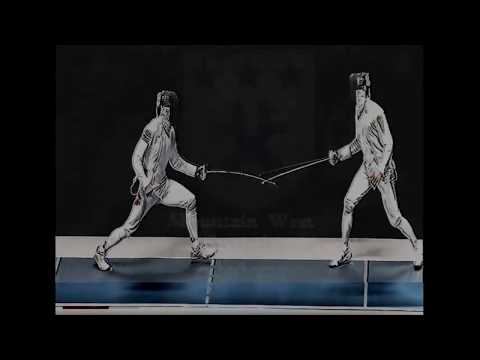
The Sixte Parry (6th parry) defends the high outside line by moving the blade to the outside (right side for a right-handed fencer), with the hand in supination (palm up) and the point slightly higher than the hand, deflecting attacks directed at the outside of the torso. [1] Sixte is paired with quarte as the two dominant high-line parries in foil — together they cover the entire high-line target area. [1],[2] Sixte is particularly important for defending against disengages that change from the inside to the outside line, and it is the standard defensive position from which many fencers operate in the en garde stance. [2],[3]
Sixte (parry 6) protects the high outside line and is one of the most commonly used parries in modern foil and épée fencing. [1]
Sixte is the default guard position in modern foil and épée, making it the most frequently used parry in Olympic fencing competition. [1]
No images yet for this technique.
Sign in to suggest an image.
Follow me on: PATREON - https://www.patreon.com/MalaguttiFederico Instagram - https://www.instagram.com/federicom…
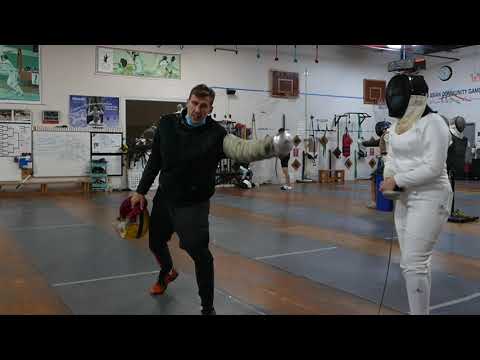
This video covers the circular 6 parry, and the riposte from a parry 5 position, and a version of the stop thrust I lear…
Very basic actions to free yourself from opponent's blade. There are couple more ways that we will do in future videos W…
The sixte parry is a fundamental defensive position in foil fencing that protects the outside line of the body. RecSport Education provides the most direct instruction on sixte parry mechanics, explaining that it can be executed as a circular parry—accomplished when a defender makes a small circle under the opponent's blade in response to a lunge, moving the blade to parry the opposite line from the original attack. The instructor demonstrates sixte parry drills where the defender responds to an attacker's primary attack and remise with consecutive circular sixte parries and ripostes, emphasizing that regular practice is essential for effectiveness. RecSport Education also covers parry five, a related but distinct high parry executed by reverse lunge or diving under the opponent's blade with the arm raised above the head, angling the tip toward the opponent. Tim's Fencing Academy approaches blade work from a different angle, focusing on offensive techniques to circumvent defensive positions—including disengages and cut-overs—which are complementary to understanding parry mechanics. While Federico Malagutti HEMA addresses parrying in the context of longsword rather than foil, his emphasis on varied parry mechanics, body positioning, timing development, and deliberate practice progression provides foundational principles applicable across weapon systems.
Synthesized from 3 instructors
No instructional courses yet for this technique.
Sign in to suggest a course.
Risk of injury to the person this technique is applied to
Modern sport fencing uses blunted weapons and full protective gear; injury rate ~2.5 per 1000 exposures (Harmer 2008)
Skill level needed to execute this technique reliably
Whether this technique is allowed under major competition rule sets
The Art of Fencing (Luigi Barbasetti, 1932)
Alias sources — [1] FIE Rules of Competition [2] Classical Fencing (Rogers, 2014) [3] Classical Fencing (Rogers, 2014)
Effectiveness sources — [1] Czajkowski, Z., Understanding Fencing (SKA Swordplay Books, 2005) [2] Barbasetti, L., The Art of the Sabre and the Epée (E.P. Dutton, 1936)
Mixed Japanese-Western terminology — combines traditional Japanese terms with katakana loanwords
Alias sources — [1] FIE Rules of Competition [2] Classical Fencing (Rogers, 2014) [3] Classical Fencing (Rogers, 2014)
Effectiveness sources — [1] Czajkowski, Z., Understanding Fencing (SKA Swordplay Books, 2005) [2] Barbasetti, L., The Art of the Sabre and the Epée (E.P. Dutton, 1936)
explosive lunge speed, finger/wrist dexterity, cardiovascular endurance
long reach (tall, long arms), fast-twitch legs
quadriceps (lunge), calves, forearm/finger flexors, core
A disengage goes under the opponent's blade, while a cut over means you raise up and go over the top of the blade to make a hit. According to Tim's Fencing Academy, when you disengage and go under, you should raise up right away and stay there as much time as possible.
Tim's Fencing Academy emphasizes that you should feint and not rush your legs, making sure the opponent actually parries before executing your disengage or cut over. You also want to avoid coming in at huge angles, as if you miss you have nowhere to go.
Tim's Fencing Academy stresses that when you disengage and go under, you must raise up right away—this is a common mistake many students make by not raising up quickly enough after the initial disengage.
The Sixte Parry (6th parry) defends the high outside line by moving the blade to the outside (right side for a right-handed fencer), with the hand in supination (palm up) and the point slightly higher than the hand, deflecting attacks directed at the outside of the torso. Sixte is paired with quarte as the two dominant high-line parries in foil — together they cover the entire high-line target area.
The sixte parry derives from the French 'sixieme' (sixth) and has been a core defensive position in fencing since the classical period. In modern foil, sixte is often the default blade position in the en garde stance, making it the most natural parry to execute from the ready position.
FIE: legal — Legal fencing technique — governed by FIE rules for foil, épée, and sabre; HEMA: legal — Legal in historical fencing competition
Danger rating 2/10. Low — modern sport fencing uses blunted weapons and full protective gear; injury rate ~2.5 per 1000 exposures (Harmer 2008)
The standard setup chain: En Garde → Advance/Lunge Preparation → Attack → Recovery.
Standard counters include: Guard Position — return to a defensive ready stance / Distance Management — control the measure to avoid being in range / Counter-Attack — strike during the opponent's recovery or between movements.
Common variants: Simple attack (single blade action (disengage, beat, or direct) to score); Compound attack (multiple blade actions (feint then disengage) to create a…); Riposte (immediate counter after a successful parry); Counter-attack (attacking into the opponent's attack with priority or rig…).
Sixte is the default guard position in modern foil and épée, making it the most frequently used parry in Olympic fencing competition.
Top errors to watch for: Moving the hand too far to the right — the parry should be minimal to cover the outside line / Lifting the hand during the sixte parry — the hand stays at chest height / Not transitioning to the riposte immediately — the right of way advantage is temporary / Only using sixte without developing quarte — the two parries must work as a pair.
The Sixte Parry is also known as Shikusuto Uke, Parade de Sixte, Sixth Parry, Sesta.