Fencing 101: Skills to Win: Circular 6, Parry 5 & Riposte, The Stop Cut
0
Septime Parry·RecSport Education
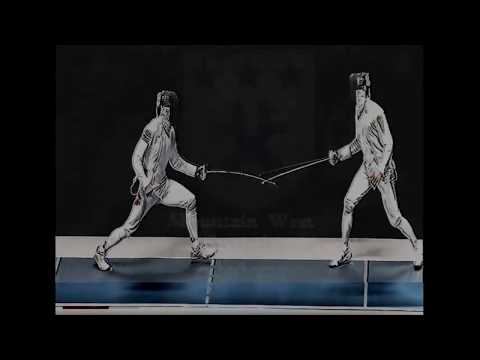
This video covers the circular 6 parry, and the riposte from a parry 5 position, and a version of the stop thrust I lear…
Translation: septime parry
The Septime Parry (7th parry) defends the low inside line by dropping the blade downward and to the inside, with the point lower than the hand and the blade angled to deflect attacks directed at the lower torso on the non-weapon side. [1] Septime covers the low-line attacks that pass under the arm, protecting the belly and lower ribs. [1],[2] The septime parry is important against opponents who use low-line feints and attacks to draw the defender's blade high before attacking below. [2],[3]
Septime was established as part of the classical eight-parry system in European fencing tradition. [1]
Septime parries are used in Olympic épée and foil to defend low-line attacks. [1]
No images yet for this technique.
Sign in to suggest an image.
This video covers the circular 6 parry, and the riposte from a parry 5 position, and a version of the stop thrust I lear…
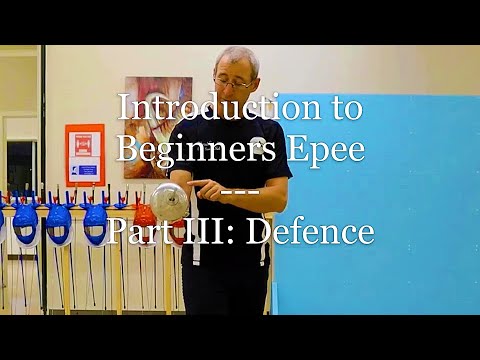
Introduction to Fencing: Beginners Epee (controlling distance and making parries in inside, outside, and low lines: parr…
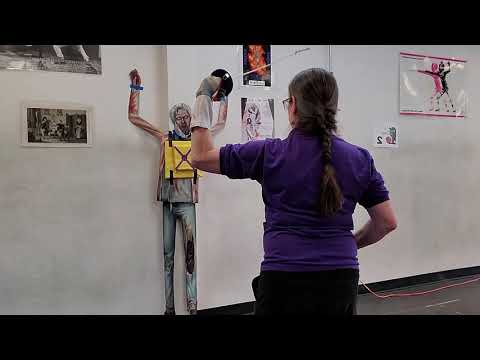
Explanation and demonstration of the Parry 5, an exoteric parry that is great for shorter fencers. And, how taller fence…
The septime parry is a high-line parry executed by dropping the point and lifting the opponent's blade upward and over the head, positioning the defender's hand above the head with the tip angled toward the opponent. Cyrano's Place emphasizes the parry's tactical value for shorter fencers facing taller opponents, noting that it creates unpredictability compared to more common parries like four or six, as opponents typically anticipate those defenses and can drop their point to evade. The parry five is executed by lifting the attacking blade vertically while rotating the hand to angle the point inward, then extending into a riposte. RecSport Education describes the septime as a fairly difficult and risky maneuver best practiced regularly, particularly noting caution in épée where the head is a valid target. Execution involves anticipating the attacker's lunge and performing a reverse lunge or diving under the opponent's blade while bringing the blade arm above the head. Both Cyrano's Place and RecSport Education recommend drilling the technique extensively with targets, advances, and lunges to develop consistency. Cyrano's Place suggests using the parry five selectively rather than frequently, while RecSport Education stresses regular practice if employing it in bouts. The technique is less commonly taught in OSM Fencing's épée instruction, which focuses on fundamental parries like four, six, and two.
Synthesized from 3 instructors
No instructional courses yet for this technique.
Sign in to suggest a course.
Risk of injury to the person this technique is applied to
Modern sport fencing uses blunted weapons and full protective gear; injury rate ~2.5 per 1000 exposures (Harmer 2008)
Skill level needed to execute this technique reliably
Whether this technique is allowed under major competition rule sets
The Art of Fencing (Luigi Barbasetti, 1932)
Alias sources — [1] FIE Rules of Competition [2] Classical Fencing (Rogers, 2014) [3] Classical Fencing (Rogers, 2014)
Effectiveness sources — [1] The Art and Science of Fencing (Evangelista, 1996) [2] FIE technical guidelines
Mixed Japanese-Western terminology — combines traditional Japanese terms with katakana loanwords
Alias sources — [1] FIE Rules of Competition [2] Classical Fencing (Rogers, 2014) [3] Classical Fencing (Rogers, 2014)
Effectiveness sources — [1] The Art and Science of Fencing (Evangelista, 1996) [2] FIE technical guidelines
explosive lunge speed, finger/wrist dexterity, cardiovascular endurance
long reach (tall, long arms), fast-twitch legs
quadriceps (lunge), calves, forearm/finger flexors, core
In epee, parries are critical for actual defense since both fencers can score simultaneous touches, whereas in foil the focus is on winning right-of-way. Because of this, epee parries need to be stronger, maintain more control, and go deeper to ensure your opponent can't land the touch (OSM Fencing).
Your forearm, wrist, hand, and elbow are all valid target areas in epee. If you don't keep them camouflaged behind the guard, your opponent can hit them, and you'll have to work much harder to make effective parries in any direction (OSM Fencing).
Controlling distance is the first line of defense—your opponent can't hit you if you control the distance. You can do this by using point in line while retreating or advancing to keep your opponent at a safe distance and limit their free attacking opportunities (OSM Fencing).
By picking up a tall opponent's attack and taking their point over your head, you can choose your target area and finish your touch, giving you more control compared to parries like four or six where your opponent can simply drop their point to avoid you (Cyrano's Place).
The Septime Parry (7th parry) defends the low inside line by dropping the blade downward and to the inside, with the point lower than the hand and the blade angled to deflect attacks directed at the lower torso on the non-weapon side. Septime covers the low-line attacks that pass under the arm, protecting the belly and lower ribs.
The septime parry was codified as the seventh position in the classical system, derived from Italian fencing terminology. It has been part of the standard parry curriculum since the 18th century.
FIE: legal — Legal fencing technique — governed by FIE rules for foil, épée, and sabre; HEMA: legal — Legal in historical fencing competition
Danger rating 2/10. Low — modern sport fencing uses blunted weapons and full protective gear; injury rate ~2.5 per 1000 exposures (Harmer 2008)
The standard setup chain: Ready Position → Distance Control → Execute Technique → Return to Guard.
Standard counters include: Guard Position — return to a defensive ready stance / Distance Management — control the measure to avoid being in range / Counter-Attack — strike during the opponent's recovery or between movements.
Common variants: Simple attack (single blade action (disengage, beat, or direct) to score); Compound attack (multiple blade actions (feint then disengage) to create a…); Riposte (immediate counter after a successful parry); Counter-attack (attacking into the opponent's attack with priority or rig…).
Septime parries are used in Olympic épée and foil to defend low-line attacks.
Top errors to watch for: Dropping the hand too low — septime should cover the low line without overextending downward / Not training septime regularly — the low parry is often neglected; it must be comfortable and automatic / Moving the blade too far from the body — septime should stay close to protect the torso / Not transitioning from quarte to septime smoothly — the high-to-low transition must be fluid.
The Septime Parry is also known as Seputimu Uke, Parade de Septime, Seventh Parry, Settima.