Renaissance Fencing Tutorial 2 Stoccata Thrust
0
Octave Parry·Edinburgh Renaissance Fencing Academy
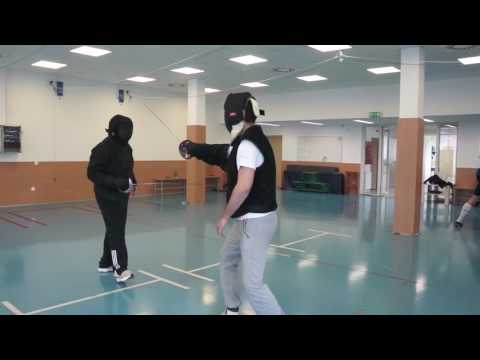
The second ERFA online tutorial video - now with better resolution! This time we look at how to practise the stoccata th…
Translation: octave parry
The Octave Parry (8th parry) defends the low outside line by moving the blade downward and to the outside, with the hand in supination (palm up) and the point lower than the hand, deflecting attacks directed at the lower torso on the weapon-arm side. [1] Octave is the mirror of septime, covering the low line on the opposite side, and is used to parry low-line attacks that target the flank or lower ribcage area. [1],[2] The octave parry is less frequently used in modern foil than quarte or sixte but is essential for defending against opponents who attack the low line. [2],[3]
The octave position was codified as part of the eight classical parry positions developed by French and Italian fencing masters. [1]
Octave parries are commonly used in Olympic épée competition to defend against attacks to the lower body. [1]
No images yet for this technique.
Sign in to suggest an image.
The second ERFA online tutorial video - now with better resolution! This time we look at how to practise the stoccata th…
FIE Coaching Academy 2017
By request from Nancy Vargas from Fencing Academy of Boston, we explain low line use of the parry 8 as well as drill the…
The octave parry is a low-line defensive action in foil fencing that protects the lower target area. According to Cyrano's Place, the octave parry (parry eight) is executed by taking the opponent's blade with a rotational motion of the defender's blade toward the incoming attack, closing it out to deflect the threat. The technique emphasizes minimal hand action with maximum finger movement to avoid telegraphing intentions to the opponent. Cyrano's Place recommends practicing the parry eight across multiple distances—extension, advance-extension, and lunge—with approximately 20 repetitions at each distance to develop consistency. The instructor notes that the octave parry protects against attacks in the low line (as opposed to the high line parry six) and can be combined with ripostes for more complex defensive sequences. Proper positioning and aim of the point before committing footwork ensures precision during actual fencing. The available transcripts from Beth Speedy and Edinburgh Renaissance Fencing Academy do not contain substantive material on the octave parry specifically, focusing instead on other techniques and historical systems.
Synthesized from 3 instructors
No instructional courses yet for this technique.
Sign in to suggest a course.
Risk of injury to the person this technique is applied to
Modern sport fencing uses blunted weapons and full protective gear; injury rate ~2.5 per 1000 exposures (Harmer 2008)
Skill level needed to execute this technique reliably
Whether this technique is allowed under major competition rule sets
The Art of Fencing (Luigi Barbasetti, 1932)
Alias sources — [1] FIE Rules of Competition [2] Classical Fencing (Rogers, 2014) [3] Classical Fencing (Rogers, 2014)
Effectiveness sources — [1] The Art and Science of Fencing (Evangelista, 1996) [2] FIE technical guidelines
Mixed Japanese-Western terminology — combines traditional Japanese terms with katakana loanwords
Alias sources — [1] FIE Rules of Competition [2] Classical Fencing (Rogers, 2014) [3] Classical Fencing (Rogers, 2014)
Effectiveness sources — [1] The Art and Science of Fencing (Evangelista, 1996) [2] FIE technical guidelines
explosive lunge speed, finger/wrist dexterity, cardiovascular endurance
long reach (tall, long arms), fast-twitch legs
quadriceps (lunge), calves, forearm/finger flexors, core
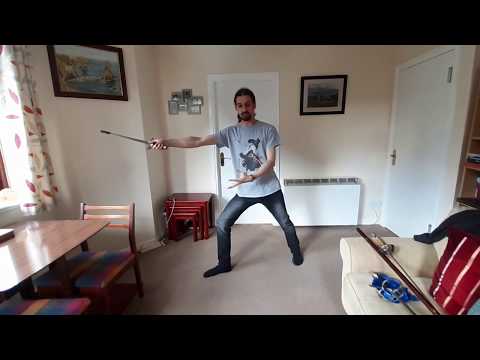
Your movements should be smooth and springy rather than sharp and jagged, similar to how a resistance band stretches and contracts. Keep your limbs relaxed and unlocked throughout the motion.
Cyrano's Place emphasizes that you should minimize hand action and maximize finger action for moving your blade, as more hand motion will telegraph your intentions to your opponent.
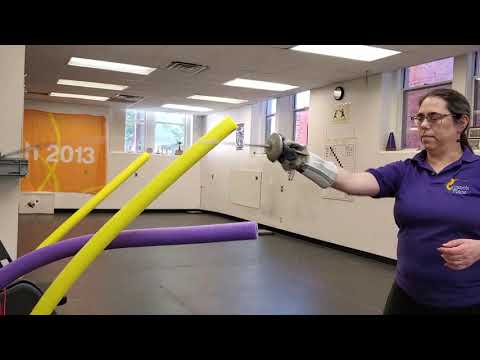
You can use pool noodles as training tools, positioning them creatively to allow yourself to practice the parry motions. You may need to lift or adjust them to suit your training needs.
Ensure the cleanliness of your technique by aiming your point exactly where it needs to go before you start your footwork, which trains precision for actual fencing situations.
The Octave Parry (8th parry) defends the low outside line by moving the blade downward and to the outside, with the hand in supination (palm up) and the point lower than the hand, deflecting attacks directed at the lower torso on the weapon-arm side. Octave is the mirror of septime, covering the low line on the opposite side, and is used to parry low-line attacks that target the flank or lower ribcage area.
The octave parry was codified as the eighth and final position in the classical parry system, completing the coverage of all four defensive quadrants. While less commonly used than the high-line parries, octave remains a required skill in competitive foil fencing.
FIE: legal — Legal fencing technique — governed by FIE rules for foil, épée, and sabre; HEMA: legal — Legal in historical fencing competition
Danger rating 2/10. Low — modern sport fencing uses blunted weapons and full protective gear; injury rate ~2.5 per 1000 exposures (Harmer 2008)
The standard setup chain: En Garde → Advance/Lunge Preparation → Attack → Recovery.
Standard counters include: Guard Position — return to a defensive ready stance / Distance Management — control the measure to avoid being in range / Counter-Attack — strike during the opponent's recovery or between movements.
Common variants: Simple attack (single blade action (disengage, beat, or direct) to score); Compound attack (multiple blade actions (feint then disengage) to create a…); Riposte (immediate counter after a successful parry); Counter-attack (attacking into the opponent's attack with priority or rig…).
Octave parries are commonly used in Olympic épée competition to defend against attacks to the lower body.
Top errors to watch for: Neglecting octave in training — it is the least practised parry and therefore often the weakest / Dropping the hand too far — octave should cover the low outside without over-extending / Not riposting from octave — the riposte should travel upward to the exposed chest / Confusing octave with septime — octave covers the outside low, septime covers the inside low.
The Octave Parry is also known as Okutābu Uke, Parade d'Octave, Eighth Parry, Ottava.