HOW to FINISH a FIGHT in 3 SECONDS || Nick Drossos
0
Disengage Attack·Nick Drossos Defensive Tactics
LEARN DEFENSIVE TACTICS: https://www.nickdrossos.com Realtor Safety Training: https://www.nickdrossoscourses.com/courses…
Translation: disengage attack
The Disengage Attack is an indirect attack where the fencer passes the blade under or around the opponent's blade to change the line of engagement and deliver a thrust to the newly opened line. [1] The disengage is executed with a small, tight circular or semi-circular movement of the point (using finger control, not arm movement), deceiving the opponent's parry or blade position and arriving in the opposite line. [1],[2] The disengage is the most common indirect attack in foil because it is fast, deceptive, and can be used as a single action or compounded into sequences (one-two, double disengage). [2],[3]
The disengage (degagement) is a cornerstone technique of French fencing theory, codified in the classical period and taught as the primary indirect attack since the 18th century. [1] Its execution — small, finger-controlled movements rather than arm-driven actions — reflects the refinement of French foil technique. [2],[3]
The disengage is the most common indirect attack in foil and epee because it is fast, deceptive, and mechanically efficient — requiring only finger-controlled blade movement rather than full-arm actions. [1] Execution time for a well-trained disengage is under 150 milliseconds, making it extremely difficult to parry on reaction alone. [2]
The disengage (dégagement) was developed by French fencing masters as a way to pass around the opponent's parry by changing the line of attack. [1]
The disengage and its compound variants (one-two, double disengage) collectively represent the most frequently scoring indirect actions in FIE World Championship competition across foil and epee. [1]
No images yet for this technique.
Sign in to suggest an image.
LEARN DEFENSIVE TACTICS: https://www.nickdrossos.com Realtor Safety Training: https://www.nickdrossoscourses.com/courses…
📥 ACCESS THE CLASSIFIED ARCHIVES: 📂 VOL. I // STRUCTURAL NEGATION (Bone & Joint) Break the hardware. Learn how to dis…
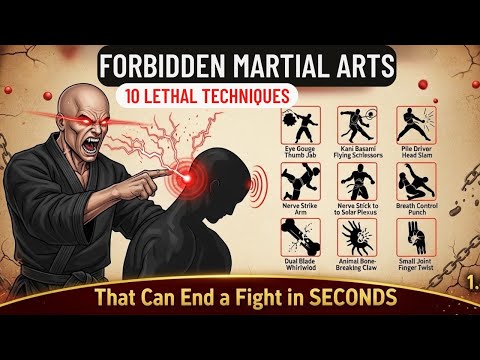
Are these martial arts myths—or forbidden secrets too deadly to teach? 🥋 In this video, we reveal 10 forbidden martial …
The transcripts provided do not contain instructional content on the disengage attack as taught in sport fencing. Nick Drossos Defensive Tactics focuses on street self-defense principles including distance management, preemptive striking, and targeting vital areas for rapid incapacitation—techniques entirely outside the scope of foil fencing. Master Yourself's two videos address forbidden martial arts techniques and pressure points (dim mach, nerve strikes, eye gouging, joint manipulation, and carotid artery targeting) sourced from various combat systems including karate, jujutsu, hapkido, and Hawaiian warrior arts. While these videos discuss tactical concepts like targeting specific anatomical points and creating openings through strikes, they provide no instruction in fencing footwork, blade mechanics, parry-riposte sequences, or the angular disengagement movements that characterize the disengage attack in foil. The disengage attack—a fundamental offensive technique in sport fencing involving circular blade evasion of an opponent's parry followed by a touch on the opposite line—is not addressed in any of the three transcripts. These materials cover self-defense and martial arts violence rather than the codified sport technique requested.
Synthesized from 3 instructors
No instructional courses yet for this technique.
Sign in to suggest a course.
Risk of injury to the person this technique is applied to
Modern sport fencing uses blunted weapons and full protective gear; injury rate ~2.5 per 1000 exposures (Harmer 2008)
Skill level needed to execute this technique reliably
Whether this technique is allowed under major competition rule sets
The Art of Fencing (Luigi Barbasetti, 1932)
Alias sources — [1] FIE Rules of Competition [2] Classical Fencing (Rogers, 2014) [3] Classical Fencing (Rogers, 2014)
Effectiveness sources — [1] Czajkowski, Z., Understanding Fencing (SKA Swordplay Books, 2005) [2] Roi, G.S. & Bianchedi, D., 'The Science of Fencing', Sports Medicine 38.6 (2008)
Mixed Japanese-Western terminology — combines traditional Japanese terms with katakana loanwords
Alias sources — [1] FIE Rules of Competition [2] Classical Fencing (Rogers, 2014) [3] Classical Fencing (Rogers, 2014)
Effectiveness sources — [1] Czajkowski, Z., Understanding Fencing (SKA Swordplay Books, 2005) [2] Roi, G.S. & Bianchedi, D., 'The Science of Fencing', Sports Medicine 38.6 (2008)
explosive lunge speed, finger/wrist dexterity, cardiovascular endurance
long reach (tall, long arms), fast-twitch legs
quadriceps (lunge), calves, forearm/finger flexors, core
Nick Drossos emphasizes managing your space and distance first—understanding how far or close the attacker is to you—followed by reading their body language and then setting up your preemptive strike.
Never strike and disconnect. According to Nick Drossos, if you're going to work hard to get in close, you must follow through and finish the attack inside rather than hit and move back, continuously attacking until the attacker is no longer fighting.
Nick Drossos teaches to launch a preemptive strike with all your effort and immediately follow with continuous strikes to vital targets (eyes, throat, groin) without stopping until you've created enough distance to escape.
Your hands should never be down; keep them up and ready at chest or face level so you're prepared to defend or strike preemptively when needed.
The Disengage Attack is an indirect attack where the fencer passes the blade under or around the opponent's blade to change the line of engagement and deliver a thrust to the newly opened line. The disengage is executed with a small, tight circular or semi-circular movement of the point (using finger control, not arm movement), deceiving the opponent's parry or blade position and arriving in the opposite line.
The disengage (degagement) is a cornerstone technique of French fencing theory, codified in the classical period and taught as the primary indirect attack since the 18th century. Its execution — small, finger-controlled movements rather than arm-driven actions — reflects the refinement of French foil technique.
FIE: legal — Legal fencing technique — governed by FIE rules for foil, épée, and sabre; HEMA: legal — Legal in historical fencing competition
Danger rating 2/10. Low — modern sport fencing uses blunted weapons and full protective gear; injury rate ~2.5 per 1000 exposures (Harmer 2008)
The standard setup chain: En Garde → Advance/Lunge Preparation → Attack → Recovery.
Standard counters include: Parry (Absetzen) — deflect the incoming blade with a counter-displacement / Void (Step Back) — withdraw from measure to avoid the cutting arc / Counter-Cut (Nachreisen) — strike into the opponent's opening during their attack.
Common variants: Simple attack (single blade action (disengage, beat, or direct) to score); Compound attack (multiple blade actions (feint then disengage) to create a…); Riposte (immediate counter after a successful parry); Counter-attack (attacking into the opponent's attack with priority or rig…).
The disengage and its compound variants (one-two, double disengage) collectively represent the most frequently scoring indirect actions in FIE World Championship competition across foil and epee.
Top errors to watch for: Making the disengage too large — the circle must be as tight as possible for speed / Pausing during the disengage — the arm extension must be continuous; any pause loses right of way / Disengaging before the opponent commits to their parry — too early and they can re-parry / Not maintaining arm extension throughout — the arm must keep extending during and after the disengage.
The Disengage Attack is also known as Degaje Kōgeki, Degagement, Cavazione, Disengagement.