BJJ Technique (No-Gi) - Triangle Choke - Sneaky Attack Series
0
Standard Salto·Joslin's MMA
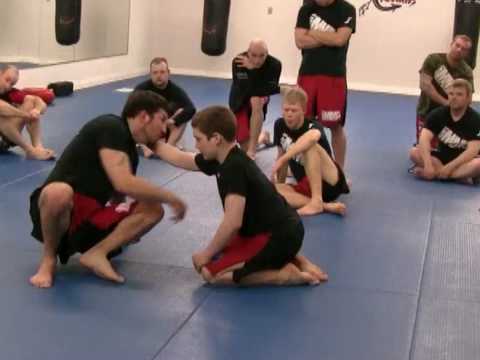
http://www.jeffjoslinmma.com/premium-shop - Here's BJJ Blackbelt & UFC Fighter Jeff Joslin teaching one of his sneakiest…
Translation: standard salto suplex
Standard Salto is the fundamental salto suplex execution in which the wrestler secures a tight body lock, explosively extends the legs and hips to launch the opponent into the air, and arches backward while rotating to bring the opponent crashing to the mat in a high-amplitude arc that maximises scoring potential. [1],[2] The throw demands a combination of explosive power, gymnastic body awareness, and wrestling technique that makes it one of the most difficult throws to master. [2],[3]
The salto suplex is the highest-amplitude throw in wrestling, requiring the thrower to launch the opponent into the air with an explosive leg and hip extension before arching backward to slam them onto the mat. [1] It scores maximum points and frequently results in a fall (pin) due to the extreme force of impact. [2]
The salto was developed within Soviet Greco-Roman wrestling programs, where gymnastic ability was integrated into wrestling training to produce athletes capable of the extreme athleticism required for the technique. [1]
No images yet for this technique.
Sign in to suggest an image.
http://www.jeffjoslinmma.com/premium-shop - Here's BJJ Blackbelt & UFC Fighter Jeff Joslin teaching one of his sneakiest…
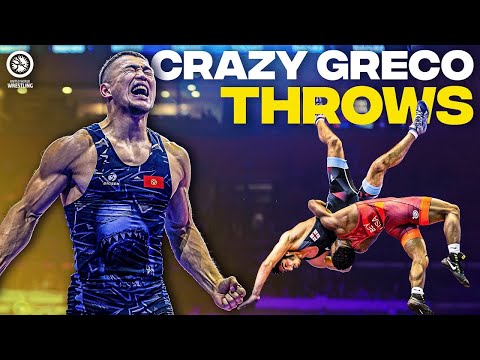
Here are 5 minutes of amazing greco-roman wrestling throws! Chek out the best throws by Victor Ciobanu, Zholaman Sharshe…
The provided transcripts do not contain substantive instructional content on the Standard Salto technique. The Judo Way of Life's video consists primarily of music cues without narrated explanation of individual throws. United World Wrestling's Greco-Roman wrestling footage provides match commentary and dynamic throws but lacks detailed technical breakdown of the Standard Salto specifically. Joslin's MMA video focuses exclusively on a flying triangle choke from the knees in no-gi BJJ, covering setup positioning, hand placement, and execution details relevant to submission grappling rather than wrestling throws or suplexes. None of the three instructors provide clear, systematic instruction on Standard Salto mechanics, entry methods, grip work, or finishing positions that would allow synthesis of collective teaching points on this throwing technique.
Synthesized from 3 instructors
No instructional courses yet for this technique.
Sign in to suggest a course.
Risk of injury to the person this technique is applied to
High-amplitude backward arch throw; severe head/neck injury risk (UWW injury data)
Skill level needed to execute this technique reliably
Whether this technique is allowed under major competition rule sets
Japanese amateur wrestling terminology
Japanese amateur wrestling terminology
Standard katakana transliteration of Western martial arts terminology (外来語) — used in Japanese MMA, boxing, and BJJ communities
Standard katakana transliteration used in Japanese wrestling (レスリング)
hip rotation speed, core strength, lower back stability
strong hips and core, good flexibility for turning entry
hip rotators, core, quadriceps, latissimus dorsi
Place your leg up opposite of your opponent's grabbing arm and position it to the side casually—don't make it obvious or place it directly in front where they can easily grab your ankle. Keep your positioning relaxed and nonchalant to avoid alerting your opponent to the setup.
When your opponent grabs your neck with one hand, they give you one free arm and their other arm becomes unavailable for defense, creating the opening for the flying triangle attack.
Standard Salto is the fundamental salto suplex execution in which the wrestler secures a tight body lock, explosively extends the legs and hips to launch the opponent into the air, and arches backward while rotating to bring the opponent crashing to the mat in a high-amplitude arc that maximises scoring potential. The throw demands a combination of explosive power, gymnastic body awareness, and wrestling technique that makes it one of the most difficult throws to master.
The standard salto has been demonstrated at the highest levels of Greco-Roman wrestling competition, most famously by Soviet and Eastern European wrestlers at the Olympic Games and World Championships.
IJF: legal — Legal throwing technique; IBJJF: legal — Legal at all belt levels; UWW: legal — Legal in both freestyle and Greco-Roman; Unified MMA: legal — Legal throwing technique; ADCC: legal — Legal; FIAS Sport Sambo: legal — Legal; FIAS Combat Sambo: legal — Legal
Danger rating 8/10. Very High — high-amplitude backward arch throw; severe head/neck injury risk (UWW injury data)
The standard setup chain: Grip Setup (Kumi-kata) → Off-Balance (Kuzushi) → Entry (Tsukuri) → Execution (Kake).
Standard counters include: Lower Centre of Gravity — bend knees and drop hips to make the throw harder to execute / Block the Hip — post hand on the thrower's hip to prevent loading / Step Around — circle away from the throw direction to avoid being loaded / Grip Break — deny the thrower their preferred gripping configuration.
Common variants: Standard hip throw (full turn-in with hip below the opponent's centre of gravity); No-gi hip throw (adapted without gi grips, using overhook and collar tie); Drop hip throw (dropping to one knee to lower the fulcrum point); Combination hip throw (chaining from a failed foot technique or hand technique).
The salto has been demonstrated at the Olympic Games and World Championships by elite Greco-Roman wrestlers, most notably by Soviet and Russian competitors. Alexander Karelin was known for executing salto throws against opponents in the super-heavyweight division.
Top errors to watch for: Insufficient hip explosion — the salto requires maximum power output from the legs and hips / Not completing the full rotation — landing on your head instead of rotating over is the primary injury risk / Loose body lock that breaks during the somersault — opponent falls unpredictably / Attempting without crash pads or spotters — reckless and dangerous.
The Standard Salto is also known as Saruto Sūpurekkusu, Classical Salto, Standard Aerial Suplex, Basic Salto Throw.