ROLLING KANI BASAMI Sambo's Approach to the Crab Scissors Throw
0
Standard Sambo Throw Technique·welcomematstevescott
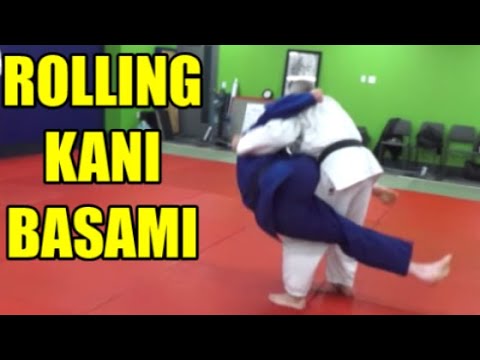
Here's one of the ways we do the scissors throw in sambo. The focus here is to get points for the throw, but just as imp…
Translation: standard Sambo throw technique
Standard Sambo Throw Technique is the foundational throwing execution in sambo in which the practitioner secures a grip on the opponent's kurtka (jacket) or belt, establishes off-balance through pushing, pulling, or circular motion, and completes the throw with an explosive hip, shoulder, or leg-driven action designed to achieve maximum amplitude on the landing. [1],[2] Sambo scoring rewards clean, powerful throws, incentivising practitioners to develop decisive throwing ability from multiple grip configurations. [2],[3]
Sambo throws combine elements from judo, wrestling, and folk grappling traditions, making them effective across multiple rulesets. [1] The sambo throwing system emphasises adaptability, with techniques designed to work with and without a jacket, giving sambo fighters versatility in MMA and no-gi competition. [2]
Sambo throwing techniques were systematised by Vasili Oshchepkov (who studied judo under Kano at the Kodokan) and Viktor Spiridonov in the Soviet Union during the 1920s-1930s. [1] The system synthesised Kodokan judo throws with folk wrestling techniques from across the Soviet republics, creating a distinctive throwing methodology. [2] Sambo was officially recognised as a sport by the USSR All-Union Sports Committee in 1938. [3]
Sambo throwing techniques are the primary scoring method in FIAS (International Sambo Federation) World Championships and international sambo competition. [1] Fedor Emelianenko, widely considered one of the greatest MMA fighters of all time, demonstrated the effectiveness of sambo throws in mixed martial arts, winning the PRIDE Heavyweight Grand Prix and maintaining an extended unbeaten record. [2]
No images yet for this technique.
Sign in to suggest an image.
Here's one of the ways we do the scissors throw in sambo. The focus here is to get points for the throw, but just as imp…
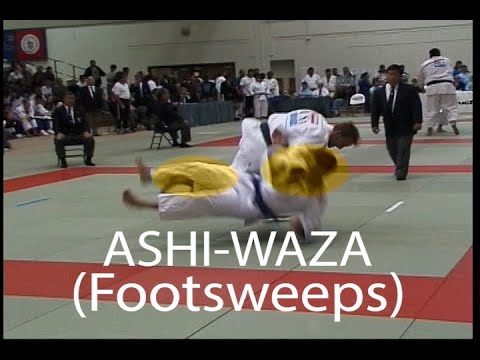
Buy DVD or Video Download at: https://em3video.com/judo-vol-25-ashi-waza-footsweeps/ JUDO - Vol-25 ASHI-WAZA (Footsweep…
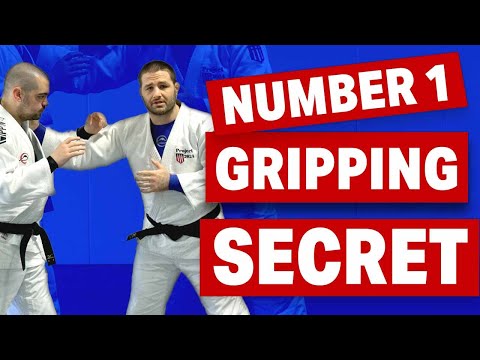
Here is an easy way you can improve your gripping and take your judo to the next level! Make sure you join my YouTube …
Standard Sambo throw technique emphasizes controlled, rolling mechanics over linear, forceful execution to minimize injury risk while maximizing point-scoring and submission opportunities. WelcomeMattStevesott instructs that practitioners maintain a rounded body position throughout the throw—particularly during the Kani Basami (crab scissors)—rather than adopting a chopping motion that invites knee, ankle, and leg injuries common in judo variants. The grip foundation requires securing the opponent's shoulder or deltoid region with a tight back grip, thumb-up positioning, creating a stable platform before leg insertion. Execution involves placing one leg high on the opponent's hip or belt line with the back of the calf clamped against the thigh, then sliding the second leg behind while immediately reaching to secure the far ankle. The practitioner rolls backward in a continuous, rounded motion while pulling, keeping the chin tucked and shoulder rolled to avoid linear impact injuries. Travis Stevens addresses grip mechanics separately, emphasizing sleeve control as superior to chest posting for preventing opponent escape and enabling throw setup, though his video focuses on grip-fighting principles rather than the throw's execution itself. MastersMagazine provides complementary footage of leg-hook variations and driving mechanics during throws, demonstrating corkscrewing hip action and continuous forward pressure. All instructors implicitly agree that control, positioning, and smooth transitions from standing to ground submissions form the technique's foundation.
Synthesized from 3 instructors
No instructional courses yet for this technique.
Sign in to suggest a course.
Risk of injury to the person this technique is applied to
Sambo throws combine judo and wrestling mechanics (Kolychev 1988)
Skill level needed to execute this technique reliably
Whether this technique is allowed under major competition rule sets
Japanese Sambo Federation terminology
Japanese Sambo Federation terminology
Mixed Japanese-Western terminology — combines traditional Japanese terms with katakana loanwords
Katakana transliteration used in Japanese Sambo (サンボ)
hip rotation speed, core strength, lower back stability
strong hips and core, good flexibility for turning entry
hip rotators, core, quadriceps, latissimus dorsi
The sambo approach emphasizes staying round and wrapping smoothly rather than chopping downward, which reduces injury risk. Welcome Mat Steve Scott notes they've never had an injury doing the crab scissors throw using the sambo approach, specifically because it avoids the more aggressive judo technique.
Stay round on the throw instead of chopping—if you chop, that's where injuries can happen. Focus on wrapping your opponent and rolling with the movement rather than using a sharp, downward motion.
Get around the shoulder so you have a solid hold, and trap the waist by coming over the top to control your opponent's base and prevent them from escaping the technique.
Standard Sambo Throw Technique is the foundational throwing execution in sambo in which the practitioner secures a grip on the opponent's kurtka (jacket) or belt, establishes off-balance through pushing, pulling, or circular motion, and completes the throw with an explosive hip, shoulder, or leg-driven action designed to achieve maximum amplitude on the landing. Sambo scoring rewards clean, powerful throws, incentivising practitioners to develop decisive throwing ability from multiple grip configurations.
Sambo throwing technique was codified during the Soviet era as part of a systematic approach to combat sports training, blending judo's kuzushi-tsukuri-kake framework with the explosive finishing mechanics of folk wrestling.
IJF: legal — Legal throwing technique; IBJJF: legal — Legal at all belt levels; UWW: legal — Legal in both freestyle and Greco-Roman; Unified MMA: legal — Legal throwing technique; ADCC: legal — Legal; FIAS Sport Sambo: legal — Legal; FIAS Combat Sambo: legal — Legal
Danger rating 6/10. High — Sambo throws combine judo and wrestling mechanics (Kolychev 1988)
The standard setup chain: Grip Setup (Kumi-kata) → Off-Balance (Kuzushi) → Entry (Tsukuri) → Execution (Kake).
Standard counters include: Lower Centre of Gravity — bend knees and drop hips to make the throw harder to execute / Block the Hip — post hand on the thrower's hip to prevent loading / Step Around — circle away from the throw direction to avoid being loaded / Grip Break — deny the thrower their preferred gripping configuration.
Common variants: Standard hip throw (full turn-in with hip below the opponent's centre of gravity); No-gi hip throw (adapted without gi grips, using overhook and collar tie); Drop hip throw (dropping to one knee to lower the fulcrum point); Combination hip throw (chaining from a failed foot technique or hand technique).
Sambo throwing techniques are the primary scoring method in FIAS (International Sambo Federation) World Championships and international sambo competition. Fedor Emelianenko, widely considered one of the greatest MMA fighters of all time, demonstrated the effectiveness of sambo throws in mixed martial arts, winning the PRIDE Heavyweight Grand Prix and maintaining an extended unbeaten record.
Top errors to watch for: Gripping and standing still — sambo throwing requires constant movement and grip fighting / Using only upper-body force without the lower-body component — sambo throws use both halves of the body / Not redirecting the opponent's force — trying to throw against their resistance wastes energy / Entering without creating the initial movement that generates the reaction.
The Standard Sambo Throw Technique is also known as Sanbo Nage-waza, Classical Sambo Throw, Fundamental Sambo Brosok.