Foundational Principle: Maintaining Roundness
The primary safety consideration in executing the rolling kani basami is maintaining a rounded body position throughout the technique. Practitioners must avoid a chopping or linear motion, as this creates injury risk. Instead, the movement should flow with continuous rolling mechanics to distribute force safely.
Sambo vs. Judo Methodology
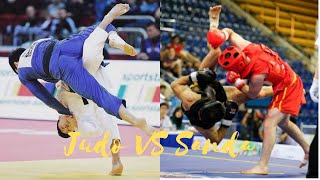
While kani basami is banned in judo competition due to injury risks including broken legs and joint damage, the sambo approach minimizes these dangers through strategic application differences. Rather than pursuing the throw as an end goal, sambo practitioners use kani basami as a transition technique to secure lower body submissions. This submission-focused approach reduces injury incidence while earning scoring points.
Upper Body Control and Grip
Secure control begins with proper grip placement around the opponent's shoulder and deltoid region. The grip must be established with the thumb positioned upward to create a solid, stable hold. This hand placement prevents the opponent from tightening their waist and maintaining defensive posture.
Leg Positioning and Clamping Mechanics
The entry requires elevating one leg while sliding the other behind the opponent's body in a controlled motion. Once both legs are positioned, the practitioner clamps them together with force. The back of the knee should align with the opponent's hip or belt line, with the heel clamping against the upper thigh to maintain control.
Rolling Motion and Ankle Capture
Immediately upon leg clamping, the practitioner rolls backward while pulling the opponent forward. Simultaneously, the far ankle is grasped, which causes the shoulder to dip naturally and facilitates the pulling action. This coordinated rolling motion is essential for both executing the throw and transitioning to submission attempts.
Preventing Injury Through Body Mechanics
A rounded body position with tucked shoulder and chin protects against impact injuries during the rolling phase. Linear or chopping motions cause the body to land directly on the shoulder, creating acute trauma. Continuous reaching and forward momentum maintains the rounded posture necessary for safe execution.
Maintaining Control Throughout the Transition
Keeping the clamping leg firmly positioned prevents the opponent from escaping laterally or backing out of the technique. A loose or floating leg allows the opponent to create distance and neutralize the attack. Firm contact with the thigh and proper clamping mechanics ensure the transition flows smoothly into ground positioning or submission applications.
ROLLING KANI BASAMI Sambo's Approach to the Crab Scissors Throw
Key Takeaways
- •Foundational Principle: Maintaining Roundness
- •Sambo vs. Judo Methodology
- •Upper Body Control and Grip
- •Leg Positioning and Clamping Mechanics
Here's one of the ways we do the scissors throw in sambo. The focus here is to get points for the throw, but just as important, to transition to the ground to secure a leg or ankle lock. Go to www.amazon.com or www.ymaa.com to get Steve Scott's books THE JUDO ADVANTAGE, SAMBO ENCYCLOPEDIA and JUJI GATAME ENCYCLOPEDIA. Join the Steve Scott Training Group on Facebook at https://www.facebook.com/groups/1094841137237608/ Donations are appreciated. To donate, use this link https://www.paypal.com/cgi-bin/webscr?cmd=_s-xclick&hosted_button_id=85EKWV8KBFASS Our channel was started in 2010 as an extension of our program at Welcome Mat. Welcome Mat was founded in 1969 by Steve Scott in Kansas City, Missouri, USA and has produced thousands of successful students, athletes and coaches in a variety of grappling sports. View over a thousand videos on the subjects of judo, freestyle judo, Shingitai Jujitsu, sambo, submission grappling and sport jujitsu are on our YouTube channel. Browse through our playlists to see what we have on our channel. If a video is listed as "private" is it because that video is still in development or scheduled for later viewing. Comments are moderated. Please keep your comments on topic and think before posting them. Comments containing profanity, racial, religious or sexual slurs and comments that are insulting will not be permitted and those posting such comments will be blocked from the channel. Criticism is okay but trolling isn't. You can subscribe for free to our channel at http://youtube.com/user/welcomematstevescott. We strive to provide fundamentally sound and technically innovative skills and information on a variety of grappling sports. We appreciate your support! Please tell others about our channel. You can help support our channel by going to our online store and purchasing items. Go to http://www.WelcomeMatStore.com. We have a variety of books, shirts and other items for sale. Music for the Freestyle Judo show provided by YouTube Copyright Free Audio featuring "Fiend" by Sting and performed by the Jingle Punks and "All This Down Time" by Sting and performed by the Jingle Punks. Visit our club web site at http://www.WelcomeMatJudoClub.com. You can support our work by joining the Judo Black Belt Association. For information on the Judo Black Belt Association, go to http://www.judoblackbelt.com. Thank you for watching our video. Please tell others about our channel. Our videos are all original material and are copyrighted. Reproduction or showing these videos without the specific permission of Steve Scott is prohibited. #KaniBasami #Sambo #ScissorsThrow
Frequently Asked Questions
What does this video teach about standard sambo throw technique?
This video covers foundational principle: maintaining roundness, sambo vs. judo methodology, upper body control and grip. It provides detailed instruction from welcomematstevescott.
How long does it take to learn standard sambo throw technique?
The basic mechanics can be understood in a single session, but developing reliable execution requires consistent drilling over weeks of practice. This 7-part breakdown helps structure your training by isolating each phase of the technique.
What are the key details for finishing standard sambo throw technique?
A rounded body position with tucked shoulder and chin protects against impact injuries during the rolling phase. Linear or chopping motions cause the body to land directly on the shoulder, creating acute trauma. Continuous reaching and forward momentum maintains the rounded posture necessary for safe execution.