Polish Throw. Zashagivanie.
0
Standard Lateral Drop·Sambo Fusion
Translation: Side Drop
The lateral drop (Polish throw) is a sacrifice throw from clinch position where the attacker drops laterally, pulling the opponent over their body to land on their back. [1] A staple technique of Greco-Roman wrestling (where all attacks must be above the waist), the lateral drop corresponds to Yoko Otoshi (side drop) in judo — one of the original 40 throws codified by Jigoro Kano, classified as yoko-sutemi-waza (side sacrifice technique). [2] The attacker positions themselves perpendicular to the opponent, plants their feet together, and swings the opponent in the direction of the trailing foot while dropping laterally and twisting mid-air to ensure the opponent lands on their back while the attacker rotates to top position.
The lateral drop is a traditional Greco-Roman wrestling technique that has been used in competition for over a century. In judo, the corresponding technique Yoko Otoshi was one of the original 40 throws codified by Jigoro Kano. [1] The name 'Polish Throw' appears in wrestling folklore but its precise etymology remains unverified. [2]
One of the most crowd-pleasing and high-scoring takedowns in Greco-Roman wrestling. In judo competition, Yoko Otoshi can score ippon (full point) when executed with control and force. In MMA, frequently used from clinch positions and cited as popular because combatants regularly find themselves in clinch exchanges. [1]
One of the original 40 throws of judo codified by Jigoro Kano. Core technique of Greco-Roman wrestling tradition. The Georgi Ivanov pinched elbow variation represents the modern competitive evolution.
Core technique in Greco-Roman wrestling at all levels — one of the most crowd-pleasing and high-scoring takedowns. Yoko Otoshi is part of the Kodokan judo curriculum and used in IJF competition. Frequently used in MMA clinch exchanges.
No images yet for this technique.
Sign in to suggest an image.
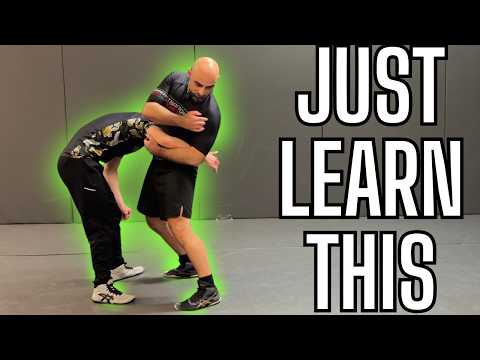
Stealing throws from wrestling is cool. If you are a BJJ or MMA athlete who wants a simple, brutal, high‑percentage uppe…
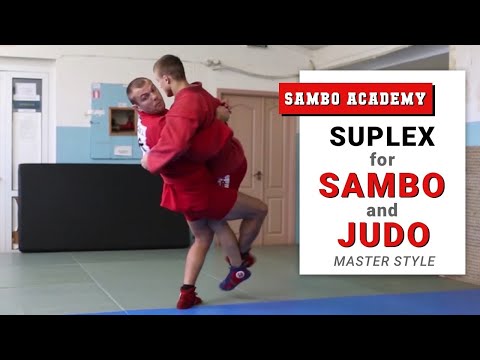
Why lateral drop is more effective than suplex for Sambo and Judo. How to do lateral drop. The difference between two th…
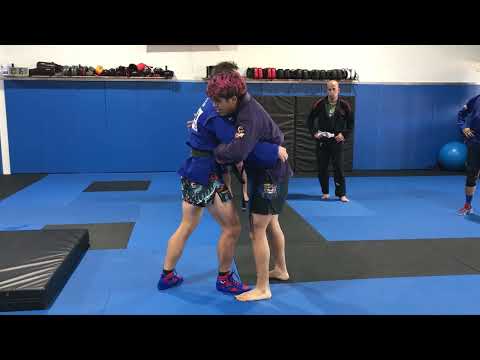
The standard lateral drop is a sacrifice throw executed from a clinching position where the attacker uses forward momentum and proper leg placement to flip an opponent onto their back. Achilles' Wrestling World emphasizes the foundational mechanics: establishing an over-under grip, pulling the opponent to create forward drive and tilt, then sitting on one heel while extending the other leg to sweep and pin. The instructor stresses that this technique works best when the opponent drives forward into the attacker, and notes critical differences between gi/judo execution (where forcing is feasible due to sleeve/collar control) and no-gi/wrestling contexts (where slip hazard and continuous movement require tighter timing). IVAN VASYLCHUK's approach focuses on the distinguishing principle: the lateral drop involves a spiral twist rather than an arch, with the working leg stepping deep between the opponent's legs while the arms control at or below the center of gravity. Vasylchuk argues this method is safer and more practical than suplex-style throws, particularly when the opponent attempts to establish their own control. Sambo Fusion (discussing the technique under regional names—Polish throw, Hacking, Soto, Shacking—emphasizes variable grip options, flexible entry angles, and multiple finishing mechanisms, including a knee-drop variant that functions between pure lateral drop and hip toss. All three instructors agree on the importance of opponent forward pressure, leg positioning between the legs, and twisting mechanics, though they diverge on terminology, grip specifics, and contextual application across different grappling rulesets.
Synthesized from 3 instructors
No instructional courses yet for this technique.
Sign in to suggest a course.
Risk of injury to the person this technique is applied to
Amplitude throw involving falling laterally with opponent's full body weight — significant risk of neck and spine injury, shoulder dislocation, and general landing trauma; wrestling neck injuries account for 1-8% of annual injuries with throws as a primary mechanism
Skill level needed to execute this technique reliably
Whether this technique is allowed under major competition rule sets
IJF — Yoko Otoshi (judo.ijf.org/techniques/Yoko-otoshi)
The Throws and Takedowns of Greco-Roman Wrestling (Thompson, archive.org) || IJF — Yoko Otoshi official technique page (judo.ijf.org) || Evolve MMA — How To Do The Polish Throw In MMA (evolve-mma.com) || Fanatic Wrestling — Pinched Elbow Lateral Drop by Georgi Ivanov
Standard Japanese martial arts terminology (kanji/hiragana)
Established Japanese martial arts naming convention — native Japanese term (和語/漢語)
Judo classification — [1] IJF official technique page — Yoko Otoshi as yoko-sutemi-waza
Wrestling reference — [2] Thompson — The Throws and Takedowns of Greco-Roman Wrestling (archive.org)
MMA application — Evolve MMA technical breakdown
commitment to the drop, good timing, ability to twist mid-air
medium to heavy build for generating momentum
core stabilizers, hip flexors, shoulders, neck muscles (for landing safety)
According to Ivan Vasylchuk, while the fundamentals are almost the same, the key difference is that a suplex requires you to arch your back, whereas a lateral drop does not. The lateral drop is more effective for sambo and judo because it prevents injury and follows better principles.
Ivan Vasylchuk emphasizes that your working leg should be in front and placed between your opponent's legs, while your back leg serves as your support leg. This positioning allows you to control your opponent and set up tripping or sweeping effectively.
Ivan Vasylchuk strongly recommends using crash pads when learning the lateral drop, as people often get hurt due to not knowing the technique properly or being afraid, which can result in head or teeth clashes.
Yes—Achilles' Wrestling World teaches a lateral drop variation that works well for those worried about limited mobility or getting caught on the ground, allowing you to stay more upright while executing the throw.
The lateral drop (Polish throw) is a sacrifice throw from clinch position where the attacker drops laterally, pulling the opponent over their body to land on their back. A staple technique of Greco-Roman wrestling (where all attacks must be above the waist), the lateral drop corresponds to Yoko Otoshi (side drop) in judo — one of the original 40 throws codified by Jigoro Kano, classified as yoko-sutemi-waza (side sacrifice technique).
The lateral drop is a traditional Greco-Roman wrestling technique that has been used in competition for over a century. In judo, the corresponding technique Yoko Otoshi was one of the original 40 throws codified by Jigoro Kano.
IJF: legal — Legal throwing technique; IBJJF: legal — Legal at all belt levels; UWW: legal — Legal in both freestyle and Greco-Roman; Unified MMA: legal — Legal throwing technique; ADCC: legal — Legal; FIAS Sport Sambo: legal — Legal; FIAS Combat Sambo: legal — Legal
Danger rating 8/10. High-amplitude throw involving falling laterally with opponent's full body weight — significant risk of neck and spine injury, shoulder dislocation, and general landing trauma; wrestling neck injuries account for 1-8% of annual injuries with throws as a primary mechanism
The standard setup chain: Establish Clinch → Position Perpendicular → Plant Feet Together → Commit to the Drop → Swing Opponent → Twist Mid-Air.
Standard counters include: Sprawl — drop hips back to deny the clinch setup / Underhook Defense — maintain strong underhook to prevent the perpendicular positioning / Overhook Counter — use the overhook to block the lateral drop entry / Lower Center of Gravity — widen base to make the lateral drop more difficult.
Common variants: Standard lateral drop from over-under clinch (the most common setup); Double underhook lateral drop (from double underhooks, almost suplex-like); Pinched elbow lateral drop (Georgi Ivanov) (from 2-on-1, trapping opponent's elbow between arm and st…); Whizzer lateral drop (entry from overhook control); High-amplitude version (throwing over shoulders for maximum impact (Greco-Roman c…); Trip variation (simpler version using a leg trip rather than full lateral…); Underhook lateral drop (single underhook entry with deep step).
Core technique in Greco-Roman wrestling at all levels — one of the most crowd-pleasing and high-scoring takedowns. Yoko Otoshi is part of the Kodokan judo curriculum and used in IJF competition.
Top errors to watch for: Not committing to the drop — hesitation results in a failed throw and giving up position / Not twisting mid-air — without the twist, the thrower lands on their back underneath the opponent / Feet too far apart — feet must be close together with heels as the throwing base / Dropping straight down instead of laterally — must swing the opponent in the direction of the trailing foot.
The Standard Lateral Drop is also known as Lateral Drop, Polish Throw, Side Drop, Yoko Otoshi, Knee Block Throw.