Yoko Sutemi Waza
0
Side Sacrifice (Yoko Sutemi)·Judokancazetto
Not yet documented
The Side Sacrifice (Yoko Sutemi Waza) family covers sacrifice throws where the thrower falls to their side while executing the throw — one of two sacrifice throw sub-categories in judo (alongside ma sutemi waza where the thrower falls on their back). [1] Yoko sutemi throws use the thrower's sideways falling momentum to lever the opponent over or around them, often creating spectacular rotational throws. [1],[2] Key yoko sutemi techniques include yoko otoshi (side drop), tani otoshi (valley drop), yoko guruma (side wheel), and yoko gake (side hook). [2],[3] These throws are particularly effective when the opponent has strong forward-backward balance but is vulnerable to lateral attacks. [3]
From Kodokan judo's original nage waza classification. [1]
Yoko sutemi waza produce ippon at international judo competitions regularly. [1]
No images yet for this technique.
Sign in to suggest an image.
No instructional courses yet for this technique.
Sign in to suggest a course.
Risk of injury to the person this technique is applied to
Sacrifice throws carry risk for both fighters from falling impact; the thrower risks landing in bottom position if the technique fails
Skill level needed to execute this technique reliably
Whether this technique is allowed under major competition rule sets
Kodokan Judo (Jigoro Kano, 1986)
Description sources — [1] Kodokan Judo (Kano, 1986) [2] Best Judo (Inokuma & Sato, 1979)
Official Kodokan ground technique classification system
Standard katakana transliteration of Western martial arts terminology (外来語) — used in Japanese MMA, boxing, and BJJ communities
Description sources — [1] Kodokan Judo (Kano, 1986) [2] Best Judo (Inokuma & Sato, 1979)
comfort with falling, grip strength, timing
agile body type, good ukemi
core (controlling the fall), grip (maintaining connection), hip flexors (hooking)
Every move, in any martial art, shares a few universal traits. Mix and match below to pinpoint the right tool — or compare equivalents across styles.
The Lateral Drop is a powerful sacrifice throw where the thrower drives sideways into the opponent, lifting them off their feet and dropping them directly to the mat on their side — one of the most high-amplitude and spectacular throws in wrestling and Greco-Roman competition. [1] The lateral drop is executed from the clinch (typically from an overhook or body lock) and uses the thrower's falling bodyweight combined with a lifting rotation to slam the opponent. [1,2]
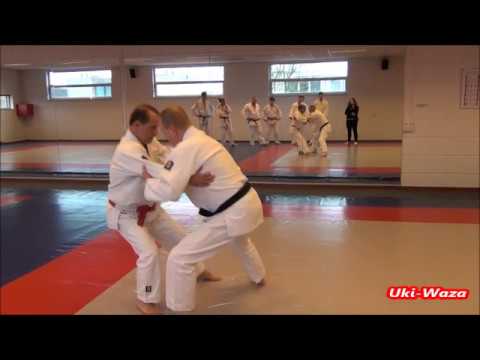
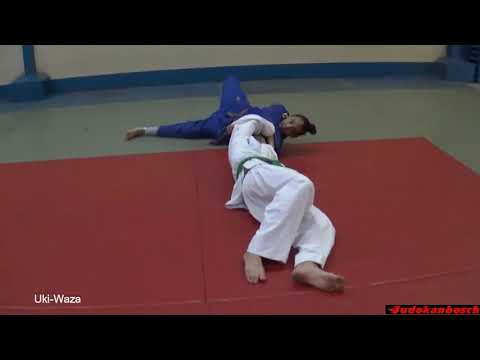
Uki Waza is a side sacrifice throw where the attacker drops to the side while pulling the opponent over their body in a floating motion. [1] The attacker falls to their side, extending one leg across the opponent's advance path, and uses a pulling motion to float the opponent over and past them. [1] It relies on timing and redirection rather than force. [1]
Yoko Gake is a side sacrifice throw where the attacker hooks the opponent's ankle with their foot while falling sideways, dragging the opponent down with them. [1] The attacker steps to the side, hooks the opponent's near ankle with the sole of the foot, and drops their body weight sideways while pulling the opponent into the fall. [1] It requires precise timing to catch the opponent mid-step. [1]
The Side Sacrifice (Yoko Sutemi Waza) family covers sacrifice throws where the thrower falls to their side while executing the throw — one of two sacrifice throw sub-categories in judo (alongside ma sutemi waza where the thrower falls on their back). Yoko sutemi throws use the thrower's sideways falling momentum to lever the opponent over or around them, often creating spectacular rotational throws.
Yoko sutemi waza are part of the original Kodokan judo nage waza curriculum, classified separately from rear sacrifice throws (ma sutemi waza).
IJF: legal — Legal throwing technique; IBJJF: legal — Legal at all belt levels; UWW: legal — Legal in both freestyle and Greco-Roman; Unified MMA: legal — Legal throwing technique; ADCC: legal — Legal; FIAS Sport Sambo: legal — Legal; FIAS Combat Sambo: legal — Legal
Danger rating 6/10. Moderate — sacrifice throws carry risk for both fighters from falling impact; the thrower risks landing in bottom position if the technique fails
The standard setup chain: Establish Grip → Off-balance Laterally → Commit to Fall → Hook or Block Legs → Project Opponent Over Body → Scramble to Top.
Standard counters include: Step over — stepping over the thrower as they fall / Base and resist — maintaining strong base against lateral pull / Counter-throw — using the thrower's fall as counter-attack opportunity.
Common variants: Tani otoshi (valley drop) (sitting behind the opponent's legs [1]); Yoko guruma (side wheel) (lateral rotation throw); Yoko otoshi (side drop) (lateral drop pull); Yoko gake (side hook) (hooking the leg while falling sideways); Uki waza (floating technique) (pulling the opponent over while falling sideways); Daki wakare (high body drop) (grasping around the torso and falling sideways [2]).
Yoko sutemi waza produce ippon at international judo competitions regularly.
Top errors to watch for: Falling without connection — must maintain grip contact with the opponent during the fall / Not committing — half-committed sacrifice throws leave both fighters in awkward positions / Ignoring the follow-through — must continue the rotation after landing.
The Side Sacrifice (Yoko Sutemi) is also known as Yoko Sutemi Waza, Side Sacrifice Throw, Lateral Sacrifice.