Ko uchi gari the Giant slayer
0
Kouchi-Gari to Ouchi-Gari Combination·FLUID JUDO JAPAN
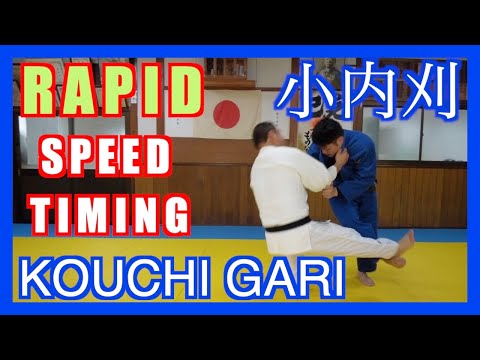
It is common knowledge in japan that ashi waza can demonstrate how softness can control hardness. A perfectly timed ashi…
Translation: kouchi-gari to ouchi-gari combination
The Kouchi-Gari to Ouchi-Gari Combination chains a small inner reap attack to the opponent's lead foot with an immediate large inner reap to the other foot when the opponent steps back. [1]
Documented across multiple grappling traditions. [1]
Proven in competition and cross-style challenge matches. [1]
Multi-style grappling tradition. [1]
Used in UFC and professional MMA competition
No images yet for this technique.
Sign in to suggest an image.
It is common knowledge in japan that ashi waza can demonstrate how softness can control hardness. A perfectly timed ashi…
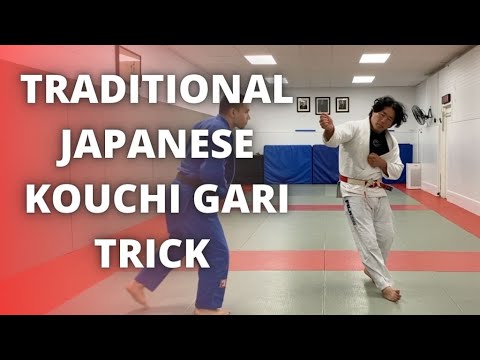
Basic Kouchi Gari Trick, The Japanese way Follow me on Instagram!!! https://www.instagram.com/judoshintaronyc/
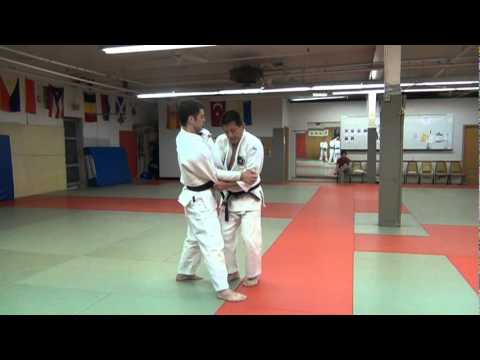
Fundamentals of the Ko Uchi Gari (Minor Inner Reaping) Throw as demonstrated by Sensei's Doug & Travis.
The Kouchi-Gari to Ouchi-Gari combination is a transitional foot-sweep sequence that exploits weight distribution shifts to execute two consecutive leg reaps. Shintaro Higashi emphasizes the preparatory hand work—pushing and pulling across horizontal and frontal planes to unload weight from the target leg's toes—before executing the initial kouchi-gari reap at an upward angle to minimize friction. FLUID JUDO JAPAN reinforces this weight-shifting principle, detailing the gripping mechanics: the hikite (sleeve hand) and tsurite (collar hand) employ wrist snap through finger-based gripping (middle, ring, and little fingers) to avoid rigidity, with the elbow pressed against the opponent's sternum to compress the upper body. Both instructors agree that timing the sweep as the opponent's foot lands or becomes weightless is critical. WINNING offers tactical variations, distinguishing between stepping into the opponent versus meeting backward momentum, and stresses maintaining chest-upright posture during weight transfer. All three instructors converge on the principle that precise hand positioning (chin pinned to shoulder, proper elbow placement) and foot trajectory (sweeping in the direction of toes rather than sideways) are prerequisites for transitioning to secondary techniques like ouchi-gari or shioe-nage.
Synthesized from 3 instructors
No instructional courses yet for this technique.
Sign in to suggest a course.
Risk of injury to the person this technique is applied to
Positional technique
Skill level needed to execute this technique reliably
Whether this technique is allowed under major competition rule sets
The Ultimate Guide to Grappling (Sattler, 2007)
description, historyOrigin: sourced from Sattler, J
description, historyOrigin: sourced from Sattler, J
Good body control and flexibility
Ko-uchi-gari to o-uchi-gari is the most fundamental judo throw combination — the small inner reap sets up the large inner reap. When the opponent resists the ko-uchi by pulling their foot back, they shift weight to the other leg — which is now vulnerable to o-uchi-gari. (Kano, Kodokan Judo; judo coaching manuals)
According to Fluid Judo Japan, grip the sleeve predominantly with your middle finger, ring finger, and little finger, while keeping your thumb relaxed and not gripping 100%. Gripping with all your fingers prevents you from snapping your wrist and exploding effectively.
Using your feet correctly is the most important aspect of kouchi-gari. Fluid Judo Japan emphasizes sweeping your foot in the direction of the opponent's toes rather than stepping sideways, and being conscious of trying to scoop with your little toes.
Keep your chest upright and do not curl your body during the technique, while looking closely at your opponent. Getting close and closing the gap is also important before executing the sweep.
Shintaro Higashi recommends going upwards at an angle rather than pulling the foot in a direction that creates friction, as friction makes the technique harder to execute.
The Kouchi-Gari to Ouchi-Gari Combination chains a small inner reap attack to the opponent's lead foot with an immediate large inner reap to the other foot when the opponent steps back.
Documented across multiple grappling traditions.
IJF: legal — Legal throwing technique; IBJJF: legal — Legal at all belt levels; UWW: restricted — Legal in freestyle, banned in Greco-Roman (no leg attacks below waist); Unified MMA: legal — Legal throwing technique; ADCC: legal — Legal; FIAS Sport Sambo: legal — Legal; FIAS Combat Sambo: legal — Legal
Danger rating 3/10. Positional technique
The standard setup chain: Position → Kouchi-Gari to Ouchi-Gari Combination.
Standard counters include: Technique-specific counters.
Common variants: Standard Kouchi-Gari to Ouchi-Gari Combination.
Used in UFC and professional MMA competition
Top errors to watch for: Poor control / Rushing.
The Kouchi-Gari to Ouchi-Gari Combination is also known as Kouchi-Gari to Ouchi-Gari Combination, Small Inner Reap to Large Inner Reap, Ko Uchi to O Uchi.