Introduction to Ko Uchi Gari
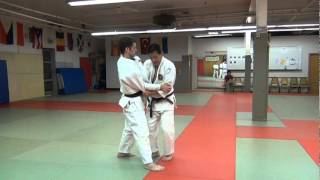
Ko uchi gari, often called the giant slayer in judo, is a fundamental inner foot sweep that leverages proper weight distribution and hand control. This technique begins with the practitioner shifting the opponent's weight onto their right foot before executing the sweep from the inside.
Weight Distribution and Foot Placement
The instructor initiates the technique by stepping forward on the left foot while simultaneously cutting the opponent's right foot from the inside with a sweeping motion. As the sweep executes, both hands push the opponent forward while simultaneously pulling them backward to destabilize their base.
Hikite Grip Mechanics
The hikite (pulling hand) must grip the sleeve using primarily the middle finger, ring finger, and little finger, while the index and thumb remain relaxed. The grip functions like a hook that relies on proper wrist action rather than full-arm tension, allowing for explosive wrist snapping essential to technique execution.
Tsurite Grip and Hand Positioning
The tsurite (pushing hand) grip mirrors the hikite, using the middle, ring, and little fingers while keeping the index and thumb relaxed. Rather than maintaining constant pressure, the grip remains flexible to prevent wrist stiffness that would inhibit the technique's effectiveness.
Balance Breaking and Upper Body Control
The instructor drives both elbows together toward the opponent's sternum while keeping the chest upright and avoiding excessive body rotation. This synchronized arm action, combined with proper hand positioning, forces the opponent's center of gravity onto their right foot and compresses their upper body.
Foot Sweep Technique and Direction
Rather than stepping sideways, the practitioner sweeps in the direction of the opponent's toes by sliding and scooping with the little toe edge of the foot. The sweep timing is crucial, executed precisely when the opponent's weight lands fully on their right foot.
Stance-Specific Application
In kenka yotsu (same-side stance), the practitioner remains conscious of the target foot and the direction the opponent's big toe faces. In ai yotsu (opposite-side stance), the practitioner takes a back step with the left foot before sweeping the opponent's right foot at the moment it lands.
Combination with O Uchi Gari
Ko uchi gari effectively pairs with o uchi nage or other follow-up techniques as the opponent instinctively counters the initial attack. Once the opponent stumbles backward and anticipates a repeat technique, they drop their center of gravity behind them, creating vulnerability to an immediate o uchi gari combination.
Ko uchi gari the Giant slayer
Key Takeaways
- •Introduction to Ko Uchi Gari
- •Weight Distribution and Foot Placement
- •Hikite Grip Mechanics
- •Tsurite Grip and Hand Positioning
It is common knowledge in japan that ashi waza can demonstrate how softness can control hardness. A perfectly timed ashi waza can take down a giant. Learn Kou chi gari an ashi waza from Sensei ISAO. #judo #kouchigari #柔道 #дзюдо
Frequently Asked Questions
What does this video teach about kouchi-gari to ouchi-gari combination?
This video covers introduction to ko uchi gari, weight distribution and foot placement, hikite grip mechanics. It provides detailed instruction from FLUID JUDO JAPAN.
How long does it take to learn kouchi-gari to ouchi-gari combination?
The basic mechanics can be understood in a single session, but developing reliable execution requires consistent drilling over weeks of practice. This 8-part breakdown helps structure your training by isolating each phase of the technique.
What are the key details for finishing kouchi-gari to ouchi-gari combination?
In kenka yotsu (same-side stance), the practitioner remains conscious of the target foot and the direction the opponent's big toe faces. In ai yotsu (opposite-side stance), the practitioner takes a back step with the left foot before sweeping the opponent's right foot at the moment it lands.