Introduction to Micro-Judo Principles
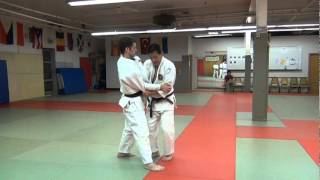
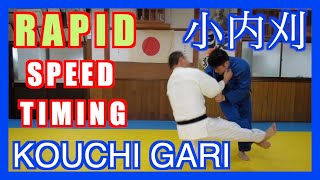
Kouchi-gari is presented as a micro-judo technique—small, subtle movements that create significant tactical advantages. The instructor emphasizes that effective execution depends on understanding weight distribution and positioning rather than raw strength.
Weight Distribution Analysis
When an opponent stands in neutral stance, their weight distributes evenly across both legs, making direct leg attacks challenging. For a 160-pound opponent, approximately 80 pounds rests on each leg, requiring the practitioner to overcome significant downward force to execute the technique.
Pre-Technique Weight Shift
Before attempting kouchi-gari, the instructor executes a preparatory hand maneuver: pushing with the left hand while pulling with the right hand in a horizontal plane. This subtle motion shifts the opponent's weight from one leg to the other, lifting the heel off the mat.
Reading the Opening
Once the opponent's weight transfers and their toe begins to leave the floor, the practitioner has created the optimal opening for the technique. This momentary reduction in weight on the target leg makes the subsequent reaping motion significantly more efficient.
Execution and Hand Positioning
The instructor executes kouchi-gari by bringing the hand to the chin to establish proper angle and posture control. The chin remains pinned to the opponent's shoulder throughout the movement, ensuring maximum mechanical advantage.
Proper Reaping Angle
The leg reap must move upward at an angle rather than horizontally to avoid increasing friction and weight on the target leg. This upward trajectory, especially when the heel is already lifted, minimizes resistance and maximizes throwing power.
Full-Body Driving Power
Once the leg is reaped and the opponent's posture is controlled, the practitioner drives through their entire body to complete the throw. This generates momentum sufficient to project the opponent onto their back.
Technique Variations and Combinations
From the same setup, the practitioner can execute multiple follow-up techniques: rolling the shoulders to control the arm, advancing forward into additional attacks, adjusting the grip, or transitioning to larger throwing techniques. This versatility makes the technique valuable in dynamic randori situations.
Basic Kouchi Gari TRICK
Key Takeaways
- •Introduction to Micro-Judo Principles
- •Weight Distribution Analysis
- •Pre-Technique Weight Shift
- •Reading the Opening
Basic Kouchi Gari Trick, The Japanese way Follow me on Instagram!!! https://www.instagram.com/judoshintaronyc/
Frequently Asked Questions
What does this video teach about kouchi-gari to ouchi-gari combination?
This video covers introduction to micro-judo principles, weight distribution analysis, pre-technique weight shift. It provides detailed instruction from Shintaro Higashi.
How long does it take to learn kouchi-gari to ouchi-gari combination?
The basic mechanics can be understood in a single session, but developing reliable execution requires consistent drilling over weeks of practice. This 8-part breakdown helps structure your training by isolating each phase of the technique.
What are the key details for finishing kouchi-gari to ouchi-gari combination?
Once the leg is reaped and the opponent's posture is controlled, the practitioner drives through their entire body to complete the throw. This generates momentum sufficient to project the opponent onto their back.