O SOTO GARI TO HIKKOMI GAESHI COMBINATION THROW
0
Counter O Soto Gari·welcomematstevescott
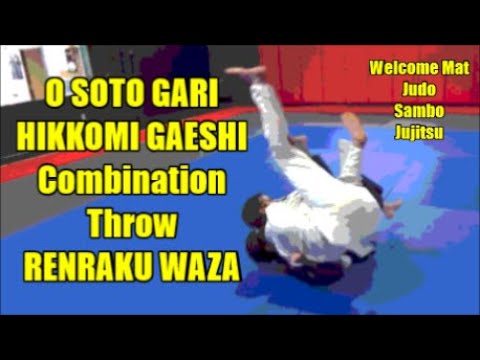
In this video, we show how to use O Soto Gari to set your opponent up and change direction to apply Hikkomi Gaeshi (Corn…
Translation: major outer reap
Counter O Soto Gari is a kaeshi-waza (counter technique) in which the defender defeats an incoming o-soto-gari by absorbing or blocking the reaping leg and then executing their own o-soto-gari against the attacker's now-vulnerable supporting leg. [1] The counter exploits the fact that an o-soto-gari attacker commits their weight forward onto one leg, creating an ideal target for a counter-reap. [1],[2] The defender either steps the targeted leg out of danger or blocks the reap, then immediately attacks the attacker's standing leg with their own reaping action. [2],[3]
Counter o-soto-gari has been part of judo's kaeshi-waza curriculum since the early Kodokan period, as practitioners quickly discovered the technique's vulnerability to counter-attack when the reap misses or is blocked. [1] The o-soto-gari versus o-soto-gari exchange is one of the most dramatic sequences in judo competition. [2],[3]
Counter o soto gari is highly effective because it exploits the attacker's committed forward lean during their own o soto gari attempt, using the opponent's momentum against them. [1] The counter timing is precise — catching the attacker mid-reap when their weight is on one leg — but when executed correctly, it produces spectacular ippon-scoring throws. [2]
Counter techniques (kaeshi-waza) for o soto gari have been part of the Kodokan syllabus since the technique's inclusion in the gokyo, with o-soto-gaeshi formally recognised as a named counter. [1]
Counter o soto gari produces dramatic reversal scores in IJF competition. [1]
No images yet for this technique.
Sign in to suggest an image.
In this video, we show how to use O Soto Gari to set your opponent up and change direction to apply Hikkomi Gaeshi (Corn…
If you want to see 3 combinations with these variations check out my video: https://youtu.be/2HFOhx2EhN8
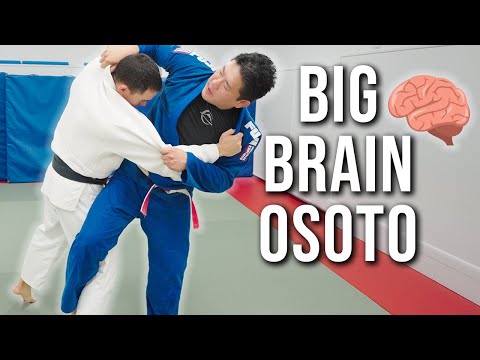
Osoto gari is a thinker's move. Use this new knowledge to out maneuver your opponents. Check out the Instructionals belo…
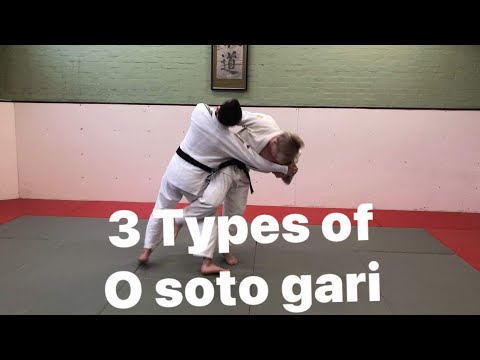
Countering o soto gari requires understanding the mechanics that make the original throw vulnerable. Shintaro Higashi emphasizes that head control via the lapel hand is the most critical overlooked detail in executing o soto gari defensively; without firm control preventing the opponent from shifting their head away, the throw loses leverage regardless of leg positioning. Higashi demonstrates that the collar hand must create tightness across the opponent's face and maintain continuous control—if the hand releases or gaps form between hand and chin, the defender can post or hook the leg to stop the throw. Blind Judo Journey with Miles Soloman addresses variations in o soto gari setup, including hopping and dabbing methods that alter entry and distance closure, each with distinct defensive vulnerabilities. Welcomematstevescott provides a counter combination—o soto gari to hikkomi gaeshi—where improper foot pointing or insufficient shoulder-to-shoulder contact during the initial throw attempt creates opportunity for the defender to reverse into a counter-throw. Across all three instructors, the consensus emerges that head control consistency and proper body positioning (shoulder-to-shoulder contact, foot angle alignment) are foundational to both executing o soto gari and recognizing when an opponent's attempt is vulnerable to counter. The instructors collectively stress that lapel-hand pressure and postural breakdown are more critical than leg mechanics alone.
Synthesized from 3 instructors
No instructional courses yet for this technique.
Sign in to suggest a course.
Risk of injury to the person this technique is applied to
O-Soto-Gari is one of judo's most dangerous throws; direct backward fall onto head/spine (Mifune 1956)
Skill level needed to execute this technique reliably
Whether this technique is allowed under major competition rule sets
Kodokan Judo — Official Nage-waza Classification
Traditional Judo throwing technique terminology (Kodokan Institute)
Official Kodokan ground technique classification system
Standard Japanese martial arts terminology (kanji/hiragana)
Established Japanese martial arts naming convention — native Japanese term (和語/漢語)
Traditional Judo throwing technique terminology (Kodokan Institute)
driving power, leg strength for the reap, upper body control
long legs for deeper reaping action
glutes, hamstrings, hip adductors, core, shoulders
Head control with your lapel hand is the most critical detail that most people overlook. Shintaro Higashi emphasizes that if your opponent can turn their head away from you, the throw becomes very difficult, so maintaining that lapel grip to control the head is the top priority.
Make sure to get shoulder-to-shoulder contact immediately so your opponent is off-balance, otherwise they can simply pick you up. Welcome Mat Steve Scott stresses getting underneath your opponent's center of gravity while keeping your base foot pointed at them so you can drive off it effectively.
Your base foot must be pointed at your opponent so you can drive off it with power—if it's not pointed at them, you won't be able to drive perfectly. Miles Soloman also emphasizes that when hopping into the throw, your toes should point toward your opponent.
Miles Soloman teaches to bring weight down on the sleeve and shoulders to break posture, and describes a 'dabbing' technique where you hold down on the sleeve while punching with your lapel hand, waiting until your opponent's shoulders pass their hips before committing to the throw.
Counter O Soto Gari is a kaeshi-waza (counter technique) in which the defender defeats an incoming o-soto-gari by absorbing or blocking the reaping leg and then executing their own o-soto-gari against the attacker's now-vulnerable supporting leg. The counter exploits the fact that an o-soto-gari attacker commits their weight forward onto one leg, creating an ideal target for a counter-reap.
Counter o-soto-gari has been part of judo's kaeshi-waza curriculum since the early Kodokan period, as practitioners quickly discovered the technique's vulnerability to counter-attack when the reap misses or is blocked. The o-soto-gari versus o-soto-gari exchange is one of the most dramatic sequences in judo competition.
IJF: legal — Legal throwing technique; IBJJF: legal — Legal at all belt levels; UWW: restricted — Legal in freestyle, banned in Greco-Roman (no leg attacks below waist); Unified MMA: legal — Legal throwing technique; ADCC: legal — Legal; FIAS Sport Sambo: legal — Legal; FIAS Combat Sambo: legal — Legal
Danger rating 7/10. Very High — O-Soto-Gari is one of judo's most dangerous throws; direct backward fall onto head/spine (Mifune 1956)
The standard setup chain: Grip Setup (Kumi-kata) → Off-Balance (Kuzushi) → Entry (Tsukuri) → Execution (Kake).
Standard counters include: Lower Centre of Gravity — bend knees and drop hips to make the throw harder to execute / Lift the Targeted Leg — raise the foot being attacked above the sweeping action / Counter-Throw — exploit the attacker's committed weight to throw them instead / Grip Break — deny the thrower their preferred gripping configuration.
Common variants: Standing reap (full commitment reap with maximum body weight behind the …); Hopping reap (hopping forward while reaping for deeper penetration); Combination reap (chaining inside and outside reaps to catch the opponent a…); Counter reap (reaping as the opponent steps forward or attacks).
Counter o soto gari produces dramatic reversal scores in IJF competition.
Top errors to watch for: Waiting too long to counter — once the reap contacts your leg with momentum, it is too late to step out / Trying to resist the reap by planting the foot harder — this makes you easier to reap because your leg is more rigid / Not using the opponent's forward momentum against them — they are leaning forward and committed / Stepping the wrong leg — you must move the leg being targeted, not the other one.
The Counter O Soto Gari is also known as O Soto Gari, O Soto Gaeshi, Counter Outer Reap, O Soto Gari Counter.