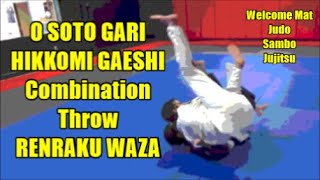
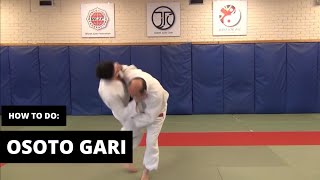
Traditional O Soto Gari Foundation
The traditional O Soto Gari relies on three core principles: maintaining a low elbow position against the hip, using the lapel hand to break posture by driving upward, and establishing full body-to-body contact. The practitioner pulls the sleeve down while sweeping the foot upward, stepping through with complete body connection to execute the throw.
Posture Breaking and Body Connection
Breaking the opponent's posture is achieved by pushing with the lapel hand while simultaneously pulling down on the sleeve. Full connectivity between bodies is essential—the practitioner must be completely engaged with the opponent to generate sufficient power and control through the entire throwing motion.
Hopping O Soto Gari Entry
The hopping variation begins from fighting stance with a rapid foot switch, moving the back foot forward while the front foot transitions back. This footwork creates dynamic entry and allows the practitioner to close distance against opponents who push away with their sleeve hand.
Hopping Variation Mechanics
The practitioner hooks behind the opponent's knee while pointing the toes to maintain connection, preventing the opponent from stepping backward. Pressure must be maintained on the sleeve and shoulders to break posture before stepping through with the hopping motion to complete the throw.
Dabbing O Soto Gari for Extended Stances
When an opponent assumes a deeply extended stance, the dabbing variation becomes more effective than traditional footwork. The practitioner controls the sleeve while repeatedly tapping downward with the lapel hand, continuously probing the opponent's balance.
Dabbing Technique and Balance Manipulation
The key to dabbing is maintaining downward pressure on the sleeve while punching with the lapel hand to drive the opponent's shoulders past their hips. Once the practitioner detects this balance break, the throw can be completed with minimal additional effort.
Tactical Advantages of Dabbing
The dabbing variation is low-commitment and allows the practitioner to read the opponent's responses without overcommitting to a full throw attempt. This measured approach creates uncertainty in the opponent while opening opportunities for combination techniques such as sasae tsurikomi ashi.
Combination Potential
O Soto Gari variations can be seamlessly combined with other techniques like sasae tsurikomi ashi, particularly when the opponent shifts their weight defensively. Understanding these combinations expands the practitioner's attacking options in competition.
"O Soto Gari Variations - 3 Essential Judo Techniques"
Key Takeaways
- •Traditional O Soto Gari Foundation
- •Posture Breaking and Body Connection
- •Hopping O Soto Gari Entry
- •Hopping Variation Mechanics
If you want to see 3 combinations with these variations check out my video: https://youtu.be/2HFOhx2EhN8
Related Techniques
Frequently Asked Questions
What does this video teach about counter o soto gari?
This video covers traditional o soto gari foundation, posture breaking and body connection, hopping o soto gari entry. It provides detailed instruction from Blind Judo Journey with Miles Soloman.
How long does it take to learn counter o soto gari?
The basic mechanics can be understood in a single session, but developing reliable execution requires consistent drilling over weeks of practice. This 8-part breakdown helps structure your training by isolating each phase of the technique.
What are the key details for finishing counter o soto gari?
The dabbing variation is low-commitment and allows the practitioner to read the opponent's responses without overcommitting to a full throw attempt. This measured approach creates uncertainty in the opponent while opening opportunities for combination techniques such as sasae tsurikomi ashi.