Standard Two-On-One Drag

Genus

ツーオンワンドラッグ(Tsū On Wan Doraggu)

Transliteration

Translation: standard two-on-one drag

Overview

The Standard Two-On-One Drag executes the fundamental two-on-one drag takedown where the attacker secures both hands on one of the opponent's arms and uses a sharp pulling motion to drag the opponent forward and past the body, creating a takedown angle. [1] The attacker controls the arm at two points, pulls it sharply while stepping offline, and follows the opponent's resulting momentum to achieve a back-take or angle position. [1],[2] The key is the simultaneous arm pull and footwork — the attacker must move their body out of the direct line while redirecting the opponent through the space they vacated. [2],[3]

Also known as
Standard Two-On-One Takedown[1]Two-On-One Drag TD[2]Double Grip Drag[3]

History & Origin

The standard two-on-one drag represents the fundamental application of two-on-one arm control for takedowns, developed across multiple wrestling traditions. [1] The technique is taught as a basic offensive tool in wrestling and grappling curricula worldwide. [2],[3]

Effectiveness

The two-on-one drag uses dual arm control to generate a pulling force that the opponent cannot match with a single arm. [1] The technique creates immediate positional advantage by pulling the opponent off balance and opening angles for takedown entries. [1]

Lineage

The standard two-on-one drag is the fundamental version of this Russian wrestling technique. [1]

Competition Record

Used regularly in freestyle and Greco-Roman competition. [1]

Images

No images yet for this technique.

Sign in to suggest an image.

Biomechanical Mechanism

Primary ActionDisruption of the opponent's base of support — bringing them from standing to the ground
Joints InvolvedAttacker's hips and legs (level change, drive), opponent's lower body (base compromised)
Force VectorForward, lateral, or lifting force combined with base removal
Takedown MechanicBreaking the opponent's balance point and driving through the resulting opening

Position & Entry

From wrestling stanceEstablish grip or tie, level change and close the distance, execute the takedown technique
From clinch exchangeDuring the clinch battle, create an angle or opening and drive through with the takedown
From opponent's attackCounter the opponent's forward movement or shot attempt with the takedown

Variants

Standard techniqueprimary execution from the most common wrestling stance or clinch
No-gi/MMA adaptationmodified for no-gi or cage fighting conditions
Gi/judo adaptationmodified for gi-based grappling with collar and sleeve grips
Counter variationapplied as a counter to the opponent's attack

Videos

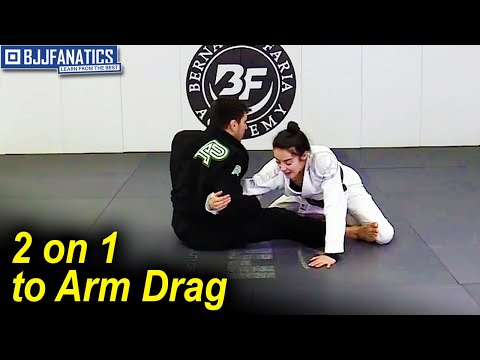
2 on 1 to Armdrag by Giancarlo Bodoni

0
Standard Two-On-One Drag·BJJ Fanatics·Added by Admin

TWO ON ONE TO ARMDRAG https://bjjfanatics.com This BJJ Training video teaches the 2 on 1 to Armdrag by Giancarlo Bodoni

1 video

Learn This Technique

No instructional courses yet for this technique.

Sign in to suggest a course.

Ratings

Danger Rating

Risk of injury to the person this technique is applied to

3
Moderate3/10

Drag/snap motion for off-balancing; low impact

Difficulty

Skill level needed to execute this technique reliably

Intermediate
Competition Legality

Whether this technique is allowed under major competition rule sets

IJF — Legal takedown technique
IJF Sport and Organisation Rules 2025, Article 27PDF
UWW — Legal in both freestyle and Greco-Roman
UWW International Wrestling Rules, January 2026PDF
Unified MMA — Legal takedown technique
Unified Rules of MMA, August 2025PDF
ADCC — Legal, scored 2-4 points in second half of match
ADCC Rules Update, April 2025PDF
FIAS Sport Sambo — Legal — all takedowns permitted
FIAS International Sambo Competition RulesPDF
FIAS Combat Sambo — Legal
FIAS Combat Sambo RulesPDF

Training Notes

Secure both hands on one arm — wrist and above the elbow is the standard placement
Pull the arm sharply past your hip while stepping to the outside and behind
The pull should be sudden and explosive, using body rotation for additional force
From behind, immediately secure a body lock or transition to a single-leg attack
Keep pulling the controlled arm even after you've created the angle — don't release until you've established the next position
Use a push-then-pull motion: push the arm one direction, then drag it the opposite way when they resist

Common Mistakes

!Gradually pulling instead of sharply snapping the arm past your body
!Not stepping behind the opponent after the drag, standing at the angle without attacking
!Releasing both hands before the next control is established — creates a gap
!Trying to drag from too far away, unable to get sufficient pulling power
!Only pulling in one direction, making it predictable — use push-pull to off-balance
!Focusing on arm control while ignoring footwork — feet create the angle, arms create the opportunity

Related Techniques

Counter Techniques

Setup Chain

1Establish Contactuse grip, tie, or clinch to control the opponent
2Create Off-Balanceuse push-pull action to disrupt the opponent's base
3Execute the Takedownapply the specific takedown mechanic with commitment
4Follow to Groundmaintain control as the opponent goes down to secure position

Sources & References

Primary Source

Japanese amateur wrestling terminology

1OtherJapanese Martial Arts Community Terminology

Japanese amateur wrestling terminology

2OtherJapanese Combat Sports Katakana Convention

Standard katakana transliteration of Western martial arts terminology (外来語) — used in Japanese MMA, boxing, and BJJ communities

3CitationJapanese amateur wrestling terminology

Standard katakana transliteration used in Japanese wrestling (レスリング)

Community

Athletics

Requires

explosive lower body power, level change ability, timing

Favours

athletic build with strong legs and quick hips

Key muscles

quadriceps, glutes, core, shoulders

Frequently Asked Questions

How does the Standard Two-On-One Drag work?

The Standard Two-On-One Drag executes the fundamental two-on-one drag takedown where the attacker secures both hands on one of the opponent's arms and uses a sharp pulling motion to drag the opponent forward and past the body, creating a takedown angle. The attacker controls the arm at two points, pulls it sharply while stepping offline, and follows the opponent's resulting momentum to achieve a back-take or angle position.

Where does the Standard Two-On-One Drag come from?

The standard two-on-one drag represents the fundamental application of two-on-one arm control for takedowns, developed across multiple wrestling traditions. The technique is taught as a basic offensive tool in wrestling and grappling curricula worldwide.

Is the Standard Two-On-One Drag legal in competition?

IJF: legal — Legal takedown technique; IBJJF: legal — Legal at all belt levels, scored as takedown (2 points); UWW: legal — Legal in both freestyle and Greco-Roman; Unified MMA: legal — Legal takedown technique; ADCC: legal — Legal, scored 2-4 points in second half of match; FIAS Sport Sambo: legal — Legal — all takedowns permitted; FIAS Combat Sambo: legal — Legal; NCAA Folkstyle: legal — Legal, scored as takedown (2 points)

How dangerous is the Standard Two-On-One Drag?

Danger rating 3/10. Moderate — drag/snap motion for off-balancing; low impact

How do I set up the Standard Two-On-One Drag?

The standard setup chain: Establish Contact → Create Off-Balance → Execute the Takedown → Follow to Ground.

How do I defend against the Standard Two-On-One Drag?

Standard counters include: Sprawl — drop hips back and drive weight down to stuff the takedown attempt / Underhook — establish inside position to control distance and prevent the takedown entry / Post and Circle — post on the attacker's head and circle away to break their angle / Level Change Defence — recognize the shot early and react with appropriate hip defence.

What are the variants of the Standard Two-On-One Drag?

Common variants: Standard technique (primary execution from the most common wrestling stance o…); No-gi/MMA adaptation (modified for no-gi or cage fighting conditions); Gi/judo adaptation (modified for gi-based grappling with collar and sleeve grips); Counter variation (applied as a counter to the opponent's attack).

How effective is the Standard Two-On-One Drag in competition?

Used regularly in freestyle and Greco-Roman competition.

What are common mistakes when doing the Standard Two-On-One Drag?

Top errors to watch for: Gradually pulling instead of sharply snapping the arm past your body / Not stepping behind the opponent after the drag, standing at the angle without attacking / Releasing both hands before the next control is established — creates a gap / Trying to drag from too far away, unable to get sufficient pulling power.

What are other names for the Standard Two-On-One Drag?

The Standard Two-On-One Drag is also known as Tsū On Wan Doraggu, Standard Two-On-One Takedown, Two-On-One Drag TD, Double Grip Drag.