Imanari Roll Tutorial
0
Imanari Roll·Varun Mehrotra
If you like this also make sure to check out my highlight and my social media HIGHLIGHT - https://youtu.be/-fniIAUQS1U …
Not yet documented
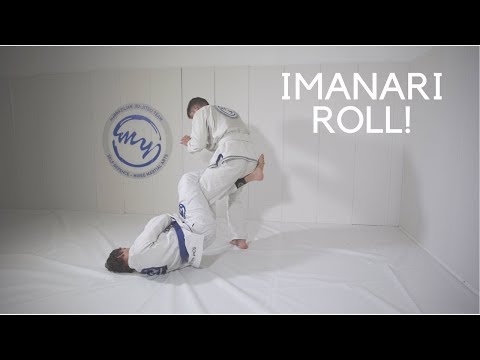
The Imanari Roll is a rolling leg lock entry named after Japanese MMA fighter Masakazu Imanari — a forward shoulder roll from standing that threads the legs around the opponent's lead leg, landing directly in inside sankaku (saddle) ashi garami for an immediate heel hook attack. [1] The Imanari Roll is the most famous and most commonly used rolling leg lock entry, demonstrated at the highest levels of MMA (Ryan Hall in the UFC), submission grappling (Eddie Cummings, Garry Tonon at EBI/ADCC), and professional grappling. [1],[2] The technique bypasses the traditional takedown-to-guard-to-submission pathway entirely — from standing, the attacker goes directly to the most dominant leg lock position in a single movement, making it both the quickest and most shocking path to a heel hook. [2],[3] The roll requires misdirection (a feinted punch, collar tie reach, or level change) to disguise the entry, precise distance management, and the ability to thread the legs around the opponent's leg during the rolling motion. [3]
The Imanari Roll was pioneered by Masakazu Imanari, a Japanese MMA fighter who competed in PRIDE, DREAM, and other Japanese MMA promotions in the early 2000s, using the rolling entry to set up heel hooks against opponents who expected traditional striking exchanges. [1] The technique gained broader adoption when the Danaher Death Squad (particularly Eddie Cummings and Garry Tonon) used it in EBI and ADCC competition from 2014 onward. [1],[2] Ryan Hall's UFC career further popularised the Imanari Roll, making it one of the most analysed and discussed techniques in modern combat sports. [2],[3]
The Imanari Roll is highly effective as a surprise technique — it bypasses the entire traditional fight sequence and goes directly to the most dominant leg lock position. [1] Ryan Hall has finished multiple UFC opponents with heel hooks entered via the Imanari Roll. [2] Eddie Cummings and Garry Tonon used rolling entries to dominate early EBI tournaments. [3]
No images yet for this technique.
Sign in to suggest an image.
If you like this also make sure to check out my highlight and my social media HIGHLIGHT - https://youtu.be/-fniIAUQS1U …
Imanari roll challenge over 100 in five minutes
No instructional courses yet for this technique.
Sign in to suggest a course.
Risk of injury to the person this technique is applied to
The Imanari Roll leads directly to inside heel hook position, which is the most dangerous submission in grappling (knee ligament damage without pain warning); additionally, a missed Imanari Roll in MMA leaves the attacker on the ground with the opponent standing above them
Skill level needed to execute this technique reliably
Whether this technique is allowed under major competition rule sets
Leg Lock Anthology (John Danaher, BJJ Fanatics)
Description sources — [1] Imanari fight record and technique analysis [2] Danaher Death Squad competition records [3] Ryan Hall UFC fights
Standard katakana transliteration of Western martial arts terminology (外来語) — used in Japanese MMA, boxing, and BJJ communities
Description sources — [1] Imanari fight record and technique analysis [2] Danaher Death Squad competition records [3] Ryan Hall UFC fights
comfort with forward rolling, precise distance judgment, quick leg dexterity (threading hooks during the roll), cardiovascular fitness
agile athletes, flexible, good spatial awareness
shoulders (absorbing roll impact), core (directing roll angle), hip flexors (threading legs), adductors (squeezing the entanglement)
Every move, in any martial art, shares a few universal traits. Mix and match below to pinpoint the right tool — or compare equivalents across styles.
The Imanari Roll is named after Masakazu Imanari, who pioneered the rolling leg lock entry in MMA and grappling. The fighter rolls forward under the opponent to entangle their legs and attack with heel hooks. A high-risk, high-reward entry that revolutionized leg lock grappling. (MMA competition records; Danaher, Enter the System)
You need to have switched stances with your opponent—if you have your right leg forward, your opponent should have their left leg forward, and vice versa. This stance mismatch is essential for the technique to work.
When you grab the ankle, point your thumb down to the floor and your pinky pointing up. This hand positioning is critical for proper control and execution.
Keep your chin tucked so you don't roll off your head, keep your knees up and ready for the next part, and close the distance by keeping your knee in rather than flared out so you can control your opponent's knee. Additionally, arch with your hips while locking the foot back to the floor.
You need to distract your opponent first, because if you go for the Imanari roll telegraphed and without setting it up, it's very easy to be stuffed and land in a bad position.
The Imanari Roll is a rolling leg lock entry named after Japanese MMA fighter Masakazu Imanari — a forward shoulder roll from standing that threads the legs around the opponent's lead leg, landing directly in inside sankaku (saddle) ashi garami for an immediate heel hook attack. The Imanari Roll is the most famous and most commonly used rolling leg lock entry, demonstrated at the highest levels of MMA (Ryan Hall in the UFC), submission grappling (Eddie Cummings, Garry Tonon at EBI/ADCC), and professional grappling.
The Imanari Roll was pioneered by Masakazu Imanari, a Japanese MMA fighter who competed in PRIDE, DREAM, and other Japanese MMA promotions in the early 2000s, using the rolling entry to set up heel hooks against opponents who expected traditional striking exchanges. The technique gained broader adoption when the Danaher Death Squad (particularly Eddie Cummings and Garry Tonon) used it in EBI and ADCC competition from 2014 onward.
IJF: legal — Legal takedown technique; IBJJF: legal — Legal at all belt levels, scored as takedown (2 points); UWW: legal — Legal in freestyle, may be restricted in Greco-Roman depending on technique; Unified MMA: legal — Legal takedown technique; ADCC: legal — Legal, scored 2-4 points in second half of match; FIAS Sport Sambo: legal — Legal — all takedowns permitted; FIAS Combat Sambo: legal — Legal; NCAA Folkstyle: legal — Legal, scored as takedown (2 points)
Danger rating 7/10. High — the Imanari Roll leads directly to inside heel hook position, which is the most dangerous submission in grappling (knee ligament damage without pain warning); additionally, a missed Imanari Roll in MMA leaves the attacker on the ground with the opponent standing above them
The standard setup chain: Feint → Identify Target Leg → Drop to Roll → Thread Legs → Land in Inside Sankaku → Secure Heel → Apply Heel Hook.
Standard counters include: Step Over — stepping over the rolling attacker / Back Step — stepping backward out of range / Sprawl — dropping hips to prevent the entanglement / Knee Strike (MMA) — timing a knee as the attacker rolls.
Common variants: Standard forward Imanari Roll (rolling forward to inside sankaku [1]); Lateral Imanari Roll (rolling to the side rather than forward); Imanari Roll to outside ashi (landing in outside ashi garami instead of inside sankaku); Imanari Roll to 50/50 (landing in 50/50 entanglement); Fake shot to Imanari (using a fake takedown level change to disguise the roll); Collar tie to Imanari (using a collar tie reach as the feint before rolling [2]).
The Imanari Roll has produced submission victories in the UFC (Ryan Hall), EBI (Eddie Cummings, Garry Tonon), and ADCC.
Top errors to watch for: Rolling without a feint — telegraphed Imanari Rolls are easily defended by stepping over or backing up / Rolling head-first — the roll must be on the SHOULDER, not the head; head-first rolling risks neck injury / Landing in the wrong position — the roll must end in a specific ashi garami; generic ground positions are useless / Not controlling the leg immediately — the moment the roll completes, the heel must be secured; any delay allows the o….
The Imanari Roll is also known as Imanari Roll Entry, Rolling Leg Lock, Flying Leg Lock Entry.