A Guide To Mat Returns in MMA
0
Standard Mat Return·Wrestling With The Narrative·Added by Admin
God Emperor Squill https://twitter.com/heeldumile https://ko-fi.com/squillthony Inspired by Jack Slack https://youtube.…
Translation: standard mat return
The Standard Mat Return is the fundamental technique where the attacker drives the opponent from standing back to the mat using a rear body lock, typically by applying forward-and-downward pressure while stepping to one side. [1] The attacker breaks the opponent's posture by pulling the hips backward while driving the chest into the upper back, collapsing the opponent's base forward. [1],[2] The technique finishes with the attacker following the opponent to the mat and establishing a dominant top position with the body lock still secured. [2] Mat returns are valued for their reliability and low energy expenditure compared to explosive lifting takedowns. [2],[3]
The standard mat return has been a scoring technique in folkstyle wrestling for over a century and is one of the first techniques taught in the par terre (ground) phase of wrestling training. [1] It became a common MMA technique through wrestlers who used it to maintain top position control. [2],[3]
The mat return is a high-percentage technique because it relies on sustained pressure and leverage rather than explosive power, making it effective even when the attacker is fatigued. [1] The technique is particularly reliable in folkstyle wrestling where returning an opponent to the mat from a standing escape attempt earns points. [1]
The standard mat return is the baseline technique taught in American folkstyle wrestling for returning an opponent from the base position. [1]
Mat returns are scored in folkstyle wrestling and are fundamental to NCAA and high school competition. [1]
No images yet for this technique.
Sign in to suggest an image.
God Emperor Squill https://twitter.com/heeldumile https://ko-fi.com/squillthony Inspired by Jack Slack https://youtube.…
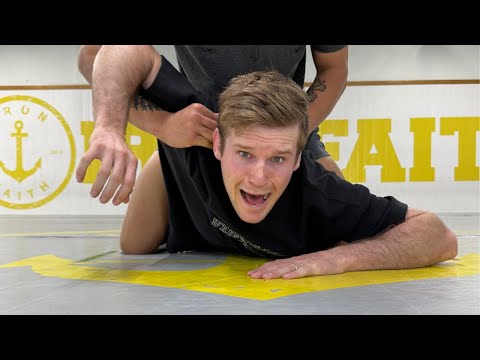
Iron Faith Merch ➡️ https://amptstudio.chipply.com/ifwc/ Join the #1 Online Wrestling Academy in the world ➡️ https://w…
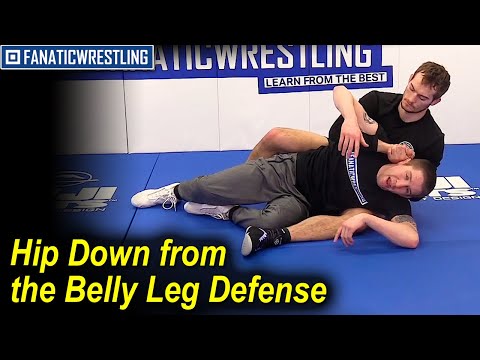
Hip Down from the Belly Leg Defense by Matt McDonough https://fanaticwrestling.com/ Learn how to defend leg riding with…
The standard mat return is a rear-body-lock takedown executed by lifting an opponent to break their base, then twisting violently to either side to force them onto their knees, forearms, or stomach in a compromised landing position. Wrestling with The Narrative emphasizes that the technique is fundamentally about precise angular positioning and controlled mechanics rather than raw strength; the attacker must reach a "J-point" angle where the opponent can no longer turn or defend effectively, then perform an explosive but brief lift followed by a jarring twist to the side. This creates a "punishment window" where the opponent must recover their base, allowing follow-up control via leg rides, wrist rides, or back-take finishing moves. The technique is most effective when performed from a position where the attacker's head is outside and rotated past the opponent's defensive reach. Iron Faith Wrestling and FANATIC Wrestling address the defensive perspective, emphasizing that wrestlers on bottom must prioritize staying off their belly, sealing off positional gaps rather than chasing hand control, and standing up to their feet (via quad-pod or tripod stance) while hooking the attacker's leg to prevent the mat return from succeeding in the first place. All instructors agree that the mat return chains effectively into continued pressure and that proper technique—not pure strength—determines success, allowing lighter grapplers to control heavier opponents through leverage and timing.
Synthesized from 3 instructors
No instructional courses yet for this technique.
Sign in to suggest a course.
Risk of injury to the person this technique is applied to
Rear body lock allows mat return/slam; spinal compression risk
Skill level needed to execute this technique reliably
Whether this technique is allowed under major competition rule sets
Japanese amateur wrestling terminology
Japanese amateur wrestling terminology
Standard katakana transliteration of Western martial arts terminology (外来語) — used in Japanese MMA, boxing, and BJJ communities
Standard katakana transliteration used in Japanese wrestling (レスリング)
upper body squeeze strength, lifting power, hip drive
thick chest and arms for tight lock, strong lower back for lifts
pectorals, biceps, erector spinae, glutes
A proper technical return starts with an explosive lift—just enough to get the opponent's feet mostly off the ground—followed by a violent jerk to either side that forces them to land awkwardly.
Beginners often focus too much on attacking hand control instead of sealing off the space between their side and tricep, and they neglect to resist what the top person is trying to do. Iron Faith Wrestling emphasizes that sealing off space before going for hand control makes a huge difference in successful escapes.
The quad pod or tripod standup is the number one way to escape bottom position, far more effective than switches, sit-outs, or granby rolls. Iron Faith Wrestling shows that high-level wrestlers like Gable Stevenson and Drake Allen consistently use this method because it's more reliable than complex scrambling techniques.
The Standard Mat Return is the fundamental technique where the attacker drives the opponent from standing back to the mat using a rear body lock, typically by applying forward-and-downward pressure while stepping to one side. The attacker breaks the opponent's posture by pulling the hips backward while driving the chest into the upper back, collapsing the opponent's base forward.
The standard mat return has been a scoring technique in folkstyle wrestling for over a century and is one of the first techniques taught in the par terre (ground) phase of wrestling training. It became a common MMA technique through wrestlers who used it to maintain top position control.
IJF: legal — Legal takedown technique; IBJJF: legal — Legal at all belt levels, scored as takedown (2 points); UWW: legal — Legal in both freestyle and Greco-Roman; Unified MMA: legal — Legal takedown technique; ADCC: legal — Legal, scored 2-4 points in second half of match; FIAS Sport Sambo: legal — Legal — all takedowns permitted; FIAS Combat Sambo: legal — Legal; NCAA Folkstyle: legal — Legal, scored as takedown (2 points)
Danger rating 6/10. High — rear body lock allows mat return/slam; spinal compression risk
The standard setup chain: Establish Contact → Create Off-Balance → Execute the Takedown → Follow to Ground.
Standard counters include: Sprawl — drop hips back and drive weight down to stuff the takedown attempt / Underhook — establish inside position to control distance and prevent the takedown entry / Post and Circle — post on the attacker's head and circle away to break their angle / Level Change Defence — recognize the shot early and react with appropriate hip defence.
Common variants: Front body lock (securing the lock face-to-face and driving laterally or b…); Rear body lock (securing from behind for mat returns or lifts); Side body lock (angled body lock for trips and throws); Body lock to trip (combining the lock with a foot trip for the finish).
Mat returns are scored in folkstyle wrestling and are fundamental to NCAA and high school competition.
Top errors to watch for: Driving straight down instead of at an angle — they base out and you stall / Feet too wide apart during the drive, reducing forward power / Letting the grip slide up to the chest during the drive, losing hip control / Not following through to the mat, ending up on your knees while they scramble up.
The Standard Mat Return is also known as Matto Ritān, Grundstellung Return, Rear Waist Return, Par Terre Return.