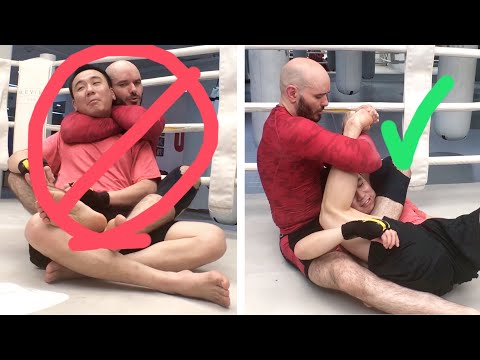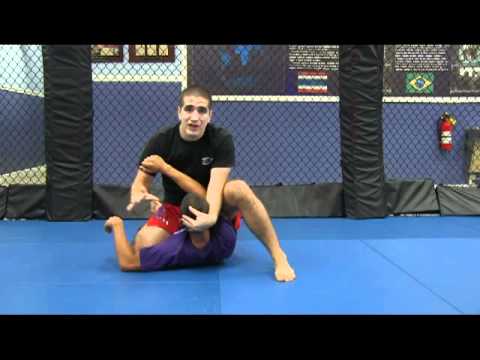
MMA BJJ Neck Crank Armbar by Avellan! FFA Technique
0
Rear Neck Crank From Back (No Hooks)·Freestyle Fighting Academy
http://www.MarcosAvellan.com Visit my website for more videos! The Neck Crank Armbar works for both Brazilian Jiu-Jitsu …
Not yet documented
The Rear Neck Crank From Back Without Hooks is a neck crank submission applied from a back-control position where the attacker does not have hooks (feet inside the opponent's thighs) — instead maintaining back position through body weight, chest-to-back pressure, or a body triangle while cranking the neck. [1] This variation occurs when standard back hooks have been stripped but the attacker maintains enough positional control to attack the neck. [1],[2]
Developed within the BJJ/grappling submission system. [1]
Used in BJJ, MMA, and submission grappling competition. [1]
No images yet for this technique.
Sign in to suggest an image.
http://www.MarcosAvellan.com Visit my website for more videos! The Neck Crank Armbar works for both Brazilian Jiu-Jitsu …
What submissions can you do from back mount besides the rear naked choke? Here are 16 of them, including triangles, arm …
The rear neck crank from back without hooks is a cervical extension technique executed from the back control position, particularly effective when the opponent tucks their chin or lowers their head to defend against a rear naked choke. Ramsey Dewey describes this as a response to defensive posturing: when the opponent's head drops below the attacker's, the traditional RNC becomes difficult to finish, making the neck crank an alternative submission vector. The technique involves breaking the opponent's posture through spinal torsion—rotating their head to create an uncomfortable, weakened position—using one or both hands to grab the opponent's shoulder or chin area and pull their face backward while simultaneously pushing their head forward with the attacker's shoulder, creating a bilateral force that snaps the neck sideways. Freestyle Fighting Academy's Marcus Allen presents a related variation from the mount position, framing it as the "neck crank armbar" set-up, where the neck crank serves as a decoy that psychologically prepares the opponent for submission (creating discomfort and breathing difficulty) while the attacker transitions to an armbar finish. Both instructors emphasize that the neck crank is a legitimate submission in itself, distinct from choking, and relies on postural breakdown rather than blood flow restriction. Allen stresses the importance of cranking with full power to create the psychological and physical distraction necessary for seamless transitions to follow-up submissions.
Synthesized from 2 instructors
No instructional courses yet for this technique.
Sign in to suggest a course.
Risk of injury to the person this technique is applied to
Chokes and neck cranks carry significant risk; blood chokes cause unconsciousness in 6-10 seconds; neck cranks can cause cervical spine damage; always tap early
Skill level needed to execute this technique reliably
Whether this technique is allowed under major competition rule sets
Jiu-Jitsu University (Saulo Ribeiro, 2008)
Description sources — [1] Choking/cranking technique curriculum [2] Competition analysis
Standard katakana transliteration of Western martial arts terminology (外来語) — used in Japanese MMA, boxing, and BJJ communities
Description sources — [1] Choking/cranking technique curriculum [2] Competition analysis
grip strength, arm positioning precision, back control ability
forearms (squeeze), biceps (compression), shoulders (positioning)
Every move, in any martial art, shares a few universal traits. Mix and match below to pinpoint the right tool — or compare equivalents across styles.
Many practitioners think just having their thigh in position is enough, but you actually need your thigh pushing in actively—your foot needs to be at an angle to create real pressure, otherwise your opponent can easily swim their arm out.
If you don't crank hard enough, you'll still have too much weight on your knee, which creates an awkward and weak armbar attempt. You need to sit back on their chest and crank firmly to transfer your weight and set up a proper finish.
Push the head down first before attempting your armbar, otherwise the head will be too high and you won't be able to get your leg over their head to complete the move.
Stay off your knee, keep the head pushed down, and avoid falling away from your opponent when you kick for the armbar—falling away allows their elbow to tuck in and gives them the opportunity to escape on top.
The Rear Neck Crank From Back Without Hooks is a neck crank submission applied from a back-control position where the attacker does not have hooks (feet inside the opponent's thighs) — instead maintaining back position through body weight, chest-to-back pressure, or a body triangle while cranking the neck. This variation occurs when standard back hooks have been stripped but the attacker maintains enough positional control to attack the neck.
This variation developed within the broader choking/cranking system of its parent technique family.
IBJJF: banned — Neck cranks and spinal locks prohibited at all belt levels; IJF: banned — Neck cranks prohibited; ADCC: legal — Legal; Unified MMA: legal — Legal — choke submissions are among the most common finishes in MMA; FIAS Sport Sambo: banned — All chokes prohibited in Sport Sambo; FIAS Combat Sambo: legal — Legal
Danger rating 8/10. High — chokes and neck cranks carry significant risk; blood chokes cause unconsciousness in 6-10 seconds; neck cranks can cause cervical spine damage; always tap early
The standard setup chain: Establish Control Position → Secure the Specific Grip → Position the Choking Surface → Apply Compression → Finish.
Standard counters include: Hand fighting — stripping the grip before the choke is set / Chin tuck — protecting the throat / Posture — creating distance to prevent the choke / Turning — turning to face the attacker.
Common variants: This is a specific variation (see parent genus/species for alternative variations).
Used in BJJ, MMA, and submission grappling competition.
Top errors to watch for: Applying too fast — gradual application is safer and often more effective / Wrong grip positioning — the specific grip variation defines this technique; incorrect grip = different technique / Not controlling posture before applying / Holding after the tap — release immediately.
The Rear Neck Crank From Back (No Hooks) is also known as Rear Crank No Hooks, Can Opener from Back, Neck Crank Back Control.