Nami, Kata & Gyaku Part II: From Guard
0
Nami Juji Jime·Higashi Canada·Added by Admin
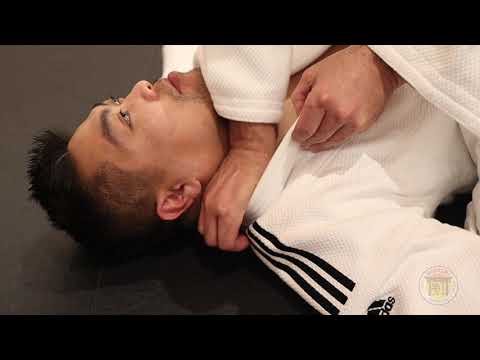
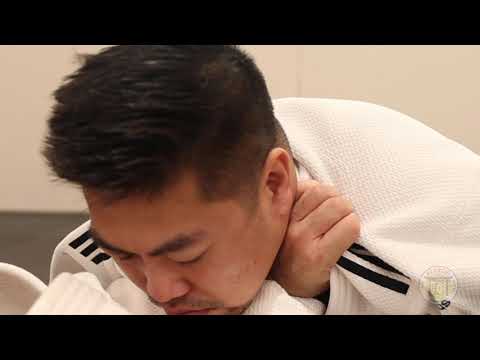
Tori: Sensei Jose Eudes Monteiro Uke: Kelvin Cheong Technique: Nami, Kata and Gyaku Juji Jime from Guard Follow us: …
Translation: normal cross strangle
Nami Juji Jime is the normal cross strangle in judo — both hands grip the opponent's lapels with the palms facing down, and the forearms cross to create a scissors-like choking pressure on both sides of the neck. [1] It is the most basic of the three cross strangles in the Kodokan curriculum (the others being Kata Juji Jime and Gyaku Juji Jime). [1] Typically applied from mount or guard position. [1]
Classified in the Kodokan Judo syllabus. [1]
Kodokan judo lineage: Jigoro Kano (1860–1938) systematized this technique as part of the Kodokan judo curriculum. Transmitted through the Kodokan instructor system to judo federations worldwide. Adopted into BJJ through Mitsuyo Maeda → Carlos Gracie → the Gracie family lineage. [1]
Recognized Kodokan judo technique. Used in IJF World Championships and Olympic judo competition. Frequency varies by weight class and era. [1]
No images yet for this technique.
Sign in to suggest an image.
Tori: Sensei Jose Eudes Monteiro Uke: Kelvin Cheong Technique: Nami, Kata and Gyaku Juji Jime from Guard Follow us: …
Tori: Sensei Jose Eudes Monteiro Uke: Kelvin Cheong Technique: Nami, Kata and Gyaku Juji Jime from Mount Follow us:…
Nami Juji Jime is a cross-collar choke performed with both palms facing downward, characterized by precise hand placement and anatomical awareness of bone structure. Both Kata & Gyaku Part II and Higashi Canada emphasize that the technique requires the practitioner to insert the thumb deep into the opponent's collar ("dip") on both sides, then relax downward pressure rather than pulling upward, which would create escape space. A critical detail both instructors stress is the use of the radius and ulna bones: the forearm's structure must be positioned correctly against the opponent's neck, often requiring hand rotation to optimize bone contact. Kata & Gyaku Part II introduces multiple positional variations—nami (palms down), kata (one palm turned), and gyaku (both palms up)—each requiring specific hand rotations and depth adjustments to close space and prevent escape. Higashi Canada provides foundational instruction from mount position, detailing the importance of blocking the armpit and maintaining elbow closure throughout the technique. Both instructors agree that space closure is paramount: any gap allows the opponent to drop their chin or shift position to survive the choke. The synthesis of their teaching suggests nami juji jime is fundamentally about anatomically efficient pressure application through bone structure rather than muscular strength.
Synthesized from 2 instructors
No instructional courses yet for this technique.
Sign in to suggest a course.
Risk of injury to the person this technique is applied to
Blood choke causes unconsciousness in seconds.
Skill level needed to execute this technique reliably
Whether this technique is allowed under major competition rule sets
Kano, J. Kodokan Judo. Kodansha International.
[1] Kano, J. Kodokan Judo. Kodansha International.
Official Kodokan ground technique classification system
Standard Japanese martial arts terminology (kanji/hiragana)
Established Japanese martial arts naming convention — native Japanese term (和語/漢語)
[1] Kano, J. Kodokan Judo. Kodansha International.
strong grip for deep collar control, upper body strength for the squeeze
forearms (grip), biceps (pulling), pectorals (crossing force)
Nami juji jime (normal cross strangle) uses both hands gripping the opposite lapels with palms facing downward. The most commonly taught cross collar choke — it is effective from mount, guard, and side control. (Kano, Kodokan Judo)
Keeping your head close eliminates space where your opponent can escape or breathe. If you give space, your opponent may be able to get their chin up or move away, so maintaining pressure by staying connected is crucial to the effectiveness of the choke.
For nami juji jime, place both thumbs in with a dipping motion, using your ulna (bone on the pinky side of your forearm) to apply pressure rather than just your hands. Turn your hands so the radial bone works properly, and keep your elbows relaxed without opening them, as this maintains the pressure needed for the choke.
You should push down using the mat for pressure, never pull up. Pulling up opens space at the neck where your opponent can drop their chin and breathe, defeating the choke.
From mount, go up high to block the opponent's armpit and apply pressure. Insert your first thumb deep with a dip, use your ulna bone to apply force, then pass your second hand under your arm to open the opponent's chin, and relax your body weight down to close all escape spaces.
Nami Juji Jime is the normal cross strangle in judo — both hands grip the opponent's lapels with the palms facing down, and the forearms cross to create a scissors-like choking pressure on both sides of the neck. It is the most basic of the three cross strangles in the Kodokan curriculum (the others being Kata Juji Jime and Gyaku Juji Jime).
Classified in the Kodokan Judo syllabus.
IJF Judo: Legal: legal — Kodokan classified technique; IBJJF: Legal {src:IBJJF Rules Book v6.0, June 2024|/sources/IBJJF: legal — Rules-v6.0-June-2024.pdf}; Unified MMA: Legal {src:Unified Rules of MMA, August 2025|/sources/Unified: legal — MMA-Rules-August-2025.pdf}; FIAS Sambo: Legal {src:FIAS International Sambo Competition Rules|/sources/FIAS: legal — Sambo-Rules.pdf}
Danger rating 7/10. High — blood choke causes unconsciousness in seconds.
The standard setup chain: From mount → grip one lapel deep → grip second lapel → cross and squeeze → From guard → pull opponent's head down → establish grips → Nami Juji Jime → Kami Shiho Gatame → slide hands to collar → transition to cross strangle.
Standard counters include: Fight the grips — strip the hands from the collar before they deepen / Posture up — create distance between the choking forearms and your neck / Tuck chin — protect the neck and make the choke harder to set / Turn to the side — change the angle to relieve pressure.
Common variants: Tight grip Nami (fingers deep in the collar for maximum leverage); Loose grip Nami (quick setup with shallower grips); Transition to Kata Juji (switch one hand to palm-up if normal grip fails).
Recognized Kodokan judo technique. Used in IJF World Championships and Olympic judo competition.
Top errors to watch for: Shallow grip — can't generate enough leverage / Crossing too wide — forearms at elbows instead of wrists / Pushing instead of pulling — the scissors effect needs inward pull / Trying to crush the windpipe instead of compressing arteries.
The Nami Juji Jime is also known as Nami Juji Jime, Nami-Juji-Jime, Normal Cross Choke, Namijujijime, Standard Cross Collar Choke.