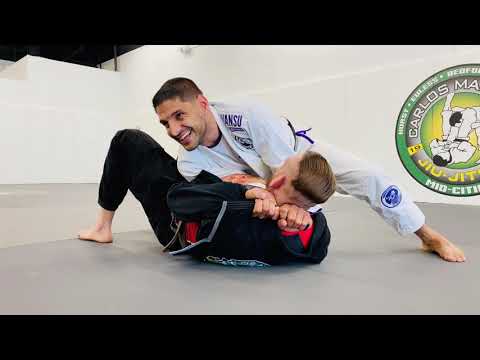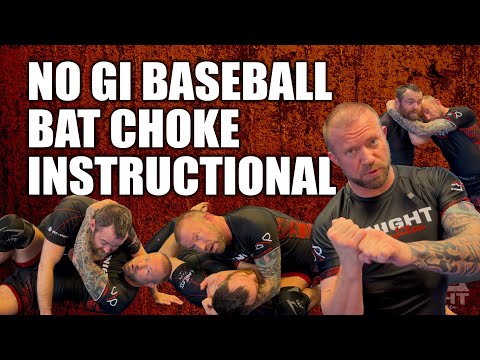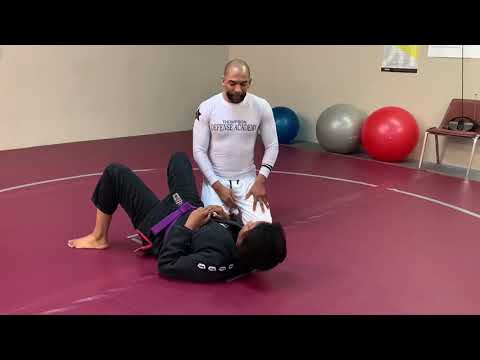
Setting up The Baseball Bat Choke
0
Standard Baseball Bat Lapel Choke from Double Hook·Thompson Defense Academy·Added by Admin
http://www.thompsondefenseacademy.com
Translation: Standard Cross-Grip Lapel Choke from Back Control with Hooks
The attacker secures back control using double hooks and seatbelt grip. One lapel is fed under the opponent's chin to the far hand, while the other hand crosses over gripping the opposite lapel. By rotating the wrists in a baseball bat motion and pulling the hands apart (which forces the elbows to pinch together) while driving the chest into the opponent's back, the attacker compresses both carotid arteries with the forearm blades through the lapel fabric.
Adapted from classical judo baseball bat choke (yakyū batto-jime), later adapted in BJJ specifically from back control positions for higher control and finish rate. Popularized in gi grappling competitions.
The double-hook variation provides maximum control stability for the baseball bat choke, as both hooks prevent the opponent from rotating out of the choking position. [1]
The standard baseball bat from double hook back control combines the baseball bat grip with traditional back control hooks. [1]
This standard finishing position is used in gi BJJ competition at IBJJF events. [1]
No images yet for this technique.
Sign in to suggest an image.
http://www.thompsondefenseacademy.com
@BernardoFariaBJJFanatics says "I Have NEVER Seen Anyone Breaking Arms Bars Using The Lapel, and It Works Very Well! Th…
The No Gi Baseball Bat Choke is a powerful and deceptive choke with a variety of uses and combinations. This video shows…
The standard baseball bat lapel choke from double hook is executed with the defender mounted or in knee-on-belly position, utilizing the opponent's collar as the primary strangling weapon. Thompson Defense Academy emphasizes the importance of controlling the near-side arm before attempting lapel entry, recommending that the attacking athlete keep their foot grounded during knee-on-belly to maintain base stability, pin the defending arm with their elbow to prevent the opponent from defending the neck, and only then rotate the fist inside the lapel to establish the grip. Renzo Gracie Jiu Jitsu DFW stresses that the hands must remain close together—with pinky and pointer finger touching—to maintain pressure analogous to holding a baseball bat, and that the thumb should be placed deep in the back of the collar while fingers extend far into the front past the shoulder to access the meat of the collar where maximum pressure is available. The grip is finished by pulling the collar apart from itself, which causes the elbows to pinch together and forces the forearm blade across the carotids. Knight Jiu-Jitsu provides detailed no-gi adaptations using the S-grip (interlaced fingers, palms parallel), which allows superior wrist flexibility; the instructor recommends positioning the knee diagonally across the opponent's bicep to cut off defensive hand movements before rotating and connecting the elbows. All three instructors agree that the choke becomes progressively tighter as the opponent attempts to improve their position or escape, making it particularly effective during positional transitions when the defender is committed to advancing their own objectives.
Synthesized from 3 instructors
No instructional courses yet for this technique.
Sign in to suggest a course.
Risk of injury to the person this technique is applied to
Extremely high risk; rapid unconsciousness possible in under 3–5 seconds if fully applied
Skill level needed to execute this technique reliably
Whether this technique is allowed under major competition rule sets
Japanese BJJ community standard terminology; ベースボールチョーク (Baseball Choke) from Yahoo知恵袋 BJJ community
Japanese Q&A community — BJJ technique name verification
Mixed Japanese-Western terminology — combines traditional Japanese terms with katakana loanwords
Japanese terminology sourced from Japanese BJJ community standard terminology; ベースボールチョーク (Baseball Choke) from Yahoo知恵袋 BJJ community
grip or squeeze strength, positional control
strong upper body for sustained compression
forearms, biceps, pectorals, core stabilisers
Every move, in any martial art, shares a few universal traits. Mix and match below to pinpoint the right tool — or compare equivalents across styles.
Known as a “hidden blade” from the back — opponents often don’t see it coming due to familiar lapel hand fighting.
According to Professor Jason Yousef at Renzo Gracie Jiu Jitsu DFW, you should grip into the meat of the shoulder past the logo rather than right at the collar itself, which is impossible to grip effectively. You need to reach behind and go as far as possible into that shoulder area for a solid grip.
Thompson Defense Academy emphasizes pinning your opponent's near-side arm with your knee on belly before you finish the choke, since your opponent will naturally try to prevent your hands from connecting around their neck. Keep your weight over your knee and your foot on the ground to maintain control while you work the lapel grip.
Professor Jason Yousef explains that if your opponent grabs your hands to defend the choke grip, that's when you apply knee on belly and pull them into you—giving them the choice between defending the choke or defending the knee pressure. When they push away the knee, you can drop and transition to another attack.
Professor Jason Yousef notes that you pull both hands back away from each other, which causes your elbows to pinch inward and drives your forearm blade across the opponent's carotids. Keeping your palm down and maintaining elbow connection is key to finishing the choke.
The attacker secures back control using double hooks and seatbelt grip. One lapel is fed under the opponent's chin to the far hand, while the other hand crosses over gripping the opposite lapel.
Adapted from classical judo baseball bat choke (yakyū batto-jime), later adapted in BJJ specifically from back control positions for higher control and finish rate. Popularized in gi grappling competitions.
10/10 — Extremely high risk; rapid unconsciousness possible in under 3–5 seconds if fully applied
The standard setup chain: Control the Arm → Position the Hips → Pinch Knees → Extend for the Finish.
Standard counters include: Clasp Hands — grip own wrist to prevent arm extension / Stack — drive forward to compress the attacker and relieve elbow pressure / Hitchhiker Escape — rotate the thumb toward the mat and roll to extract the arm.
Common variants: Standard Baseball Bat Lapel Choke from Back; Baseball Bat Collar Twist from Turtle; Inverted Baseball Bat Lapel from Backpack Position.
This standard finishing position is used in gi BJJ competition at IBJJF events.
Top errors to watch for: Loose lapel grips; losing hooks before tightening choke; allowing opponent to rotate.
The Standard Baseball Bat Lapel Choke from Double Hook is also known as Yakyū Batto-jime — Hooks, Standard Rear Baseball Bat Choke, Classic Baseball Bat from Back.