Introduction: The Baseball Bat Choke Setup Problem
The baseball bat choke from knee on belly is a reliable submission, but accessing the lapel grip often presents defensive challenges. When the opponent defends their neck actively and maintains tight lapel control, reaching in becomes difficult. This instructional segment addresses how to systematically overcome these common defensive barriers.
Establishing Knee on Belly Base
The instructor keeps the bottom foot planted on the mat rather than lifting it, maintaining a lower center of gravity and stable base. This grounded position prevents the opponent from destabilizing the position if they shift their weight. Keeping weight directly over the knee maximizes pressure while maintaining positional control.
Hand Entry and Forearm Pressure
When reaching for the lapel, the instructor slides the hand in with the thumb leading while maintaining forearm pressure against the opponent's neck. Whether placing the hand down or punching the floor for base, keeping the forearm engaged ensures the choke mechanics remain intact. This simultaneous pressure and hand positioning prevents the opponent from fully escaping the threatening position.
Elbow Control to Prevent Arm Defense
The instructor closes the space between their elbow and the opponent's body rather than posting far out to the side. This tight positioning prevents the opponent's knee from coming up and eliminates opportunities for sweep attempts. Maintaining a compressed distance keeps the opponent reactive rather than proactive in their defense.
Pinning the Arm with Elbow and Weight
The instructor uses their elbow to pin the opponent's arm to their body while driving weight through the knee on belly. This dual-pressure approach creates discomfort on the wrist and prevents the arm from defending the lapel entry. The goal is maintaining arm control for as long as possible using consistent, weighted pressure.
Getting the Fist Inside the Lapel
With the arm successfully pinned, the instructor rotates slightly to insert their fist into the lapel opening. This rotation creates the necessary angle to position the hand for the baseball bat grip configuration. Once the fist is seated inside the lapel, the choking mechanics become imminent.
Maintaining Control During Arm Defense
As the opponent's arm rises to defend, the instructor uses their elbow to redirect and continue controlling that limb. Whether using elbow or knee to maintain pressure, the priority remains keeping the arm pinned to the body. This sustained control allows the instructor to execute the turn and secure the final grip without interruption.
Lapel Inspection and Grip Adjustment
Before committing to the attack, the instructor assesses the available slack in the lapel. If slack is readily available, the choking arm slides in more easily. If the lapel is tight, more deliberate arm pinning becomes necessary to create the required space for hand entry.
Setting up The Baseball Bat Choke
Key Takeaways
- •Introduction: The Baseball Bat Choke Setup Problem
- •Establishing Knee on Belly Base
- •Hand Entry and Forearm Pressure
- •Elbow Control to Prevent Arm Defense
http://www.thompsondefenseacademy.com
Frequently Asked Questions
What does this video teach about standard baseball bat lapel choke from double hook?
This video covers introduction: the baseball bat choke setup problem, establishing knee on belly base, hand entry and forearm pressure. It provides detailed instruction from Thompson Defense Academy.
How long does it take to learn standard baseball bat lapel choke from double hook?
The basic mechanics can be understood in a single session, but developing reliable execution requires consistent drilling over weeks of practice. This 8-part breakdown helps structure your training by isolating each phase of the technique.
What are the key details for finishing standard baseball bat lapel choke from double hook?
As the opponent's arm rises to defend, the instructor uses their elbow to redirect and continue controlling that limb. Whether using elbow or knee to maintain pressure, the priority remains keeping the arm pinned to the body. This sustained control allows the instructor to execute the turn and secure the final grip without interruption.
Related videos

The No Gi Baseball Bat Choke Complete Guide
Knight Jiu-Jitsu
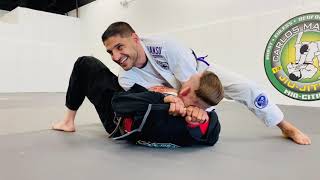
Baseball Choke Using Lapel with Options by Professor Jason Yousef at www.MidCitiesJiuJitsu.com
Renzo Gracie Jiu Jitsu DFW

Standing Choke Baseball Choke for self defense
Central Coast Self Defense
Standing Choke Baseball Choke for self defense
Central Coast Self Defense
Standing Choke Baseball Choke for self defense
Central Coast Self Defense