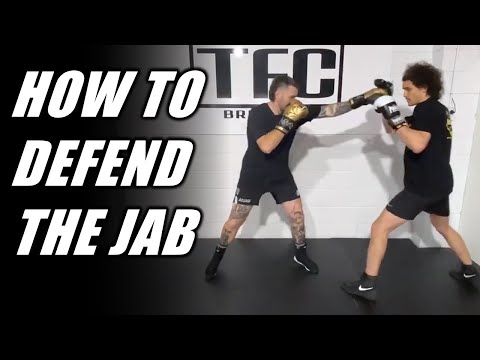
The retreating jab is thrown while stepping backward, used as a defensive counter-punching technique to score while creating distance. [1] The technique was a hallmark of the classical boxing counterfighter, with Muhammad Ali perfecting the retreating jab during his career, throwing accurate jabs while circling away from opponents. [2] Dempsey noted that the retreating jab sacrifices forward momentum (and therefore power) for defensive safety, making it primarily a scoring and range-management tool. [1] The retreating jab became increasingly important in modern boxing as the emphasis on defence and points scoring grew. [3]
Country of origin· shown in random order
🇬🇧EnglandBoxing
🇬🇷GreeceBoxing
🇧🇷BrazilMMA
🇺🇸USAMMA, Kickboxing
🇯🇵JapanKickboxing
🇨🇳ChinaSanda
Effectiveness
The retreating jab is thrown while moving backward, maintaining distance and scoring. [1]
When retreating from jabs, how should I move my shoulders to defend effectively?
Move your shoulders with the incoming jab as you retreat—the momentum of turning your shoulders back helps you naturally slip the punch while maintaining distance. The Fight Centre emphasizes this shoulder movement is key to escaping follow-up strikes.
What should I do with my footwork after I counter with a cross-hook while retreating?
Stay on your toes even after landing your counter-strike, because your opponent may come in again and you'll need to move once more. The Fight Centre notes that keeping light footwork allows you to peel off and reset if needed.
How do I maintain distance to pick off an aggressive opponent's jabs?
Retreat to a distance where you have the opportunity to pick your opponent off, slip, catch, or react to their strikes. The Fight Centre explains that this distance advantage is especially effective against opponents who lack precision and rely purely on pressure.
How does the Retreating Jab work?
A jab thrown while stepping backward, used to maintain distance, score points, and discourage opponents from pursuing aggressively.
Where does the Retreating Jab come from?
The retreating jab is thrown while stepping backward, used as a defensive counter-punching technique to score while creating distance. The technique was a hallmark of the classical boxing counterfighter, with Muhammad Ali perfecting the retreating jab during his career, throwing accurate jabs while circling away from opponents.
Is the Retreating Jab legal in competition?
Unified MMA: legal — Legal striking technique; WBC/Boxing: legal — Legal — punches are the core technique of boxing; WKF: legal — Legal, jodan/chudan punch scores 1 point (yuko) — controlled contact required; Kyokushin: restricted — Body punches legal at full power, head punches banned; WT: restricted — Punches to trunk only (1 point), punches to head banned; ITF: legal — Legal — hand techniques to head and body both permitted; WAKO: legal — Legal in Full Contact and Low Kick formats; K: legal — 1/GLORY — Legal — full power punches to head and body; IFMA: legal — Legal
How dangerous is the Retreating Jab?
Danger rating 5/10. High — jab/cross; fundamental striking tool, cumulative brain trauma risk
How do I set up the Retreating Jab?
The standard setup chain: Fighting Stance → Weight Transfer → Extend → Snap Back.
How do I defend against the Retreating Jab?
Standard counters include: Slip — move the head off the centre line to evade the punch / Parry — deflect the incoming punch with a quick hand redirection / Counter Cross — time a straight punch over the incoming attack.
What are the variants of the Retreating Jab?
Common variants: Standard jab (quick, straight lead-hand punch from orthodox stance); Power jab (stepping into the jab with more body weight for increased…); Double jab (two rapid jabs to set up a follow-up power shot); Body jab (targeting the midsection instead of the head).
How effective is the Retreating Jab in competition?
Used by out-fighters in boxing and MMA.
What are common mistakes when doing the Retreating Jab?
Top errors to watch for: Retreating in a straight line only — you become easy to cut off; circle as you retreat / Moving the feet without actually throwing the jab, wasting the opportunity to punish pursuit / Leaning too far back and losing your base, which makes you unable to plant and counter if needed / Retreating too fast and getting out of range before the jab lands — timing must sync with distance.
What are other names for the Retreating Jab?
The Retreating Jab is also known as Bakku Suteppu Jabu, Pull-Back Jab, Backstep Jab, Defensive Jab.