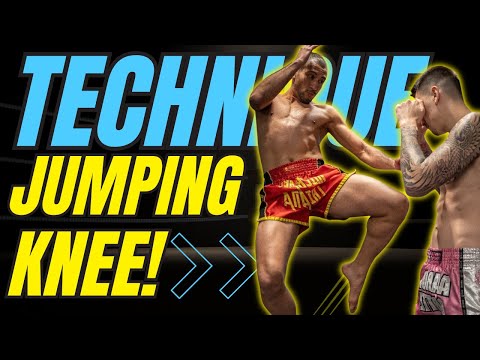
MUAY THAI Flying Knee - Jumping Knee
0
Khao Loi·Ironboy Experience
MUAY THAI Flying Knee - Jumping Knee JOIN Channel & Access SUPER FAN perks: https://www.youtube.com/channel/UCLcv92gYm8…
Translation: flying knee
Khao Loi (เข่าลอย), literally 'floating knee' in Thai, is the traditional Muay Thai name for the flying knee strike. [1] Kraitus and Rennehan document Khao Loi as one of the most revered techniques in the Muay Thai tradition, considered a 'fight-ending' weapon that demonstrates both courage and technical mastery. [1] The technique was a signature move of legendary Muay Thai fighters in the golden era of stadium fighting (1980s-1990s), and its successful execution was considered a mark of elite skill. [2] Delp notes that Khao Loi requires precise timing and explosive athleticism, as the fighter must launch the entire body weight behind the knee strike. [2]
Khao loi (flying knee) is one of the most dramatic and devastating techniques in Muay Thai. [1]
A traditional Muay Thai flying technique. [1]
The flying knee has produced iconic finishes in Muay Thai and MMA. [1]
No images yet for this technique.
Sign in to suggest an image.
MUAY THAI Flying Knee - Jumping Knee JOIN Channel & Access SUPER FAN perks: https://www.youtube.com/channel/UCLcv92gYm8…
No instructional courses yet for this technique.
Sign in to suggest a course.
Risk of injury to the person this technique is applied to
Airborne knee strike; devastating KO potential (numerous UFC finishes)
Skill level needed to execute this technique reliably
Whether this technique is allowed under major competition rule sets
Muay Thai: The Art of Fighting (Yod Ruerngsa, Khun Kao Charuad & James Cartmell, 2002)
Alias sources — [1] Muay Thai Unleashed (Delp, 2006) [2] Muay Thai: The Art of Fighting (Kraitus & Kraitus, 1988) [3] Dynamic Karate (Nakayama, 1966)
History sources — [1] Muay Thai: The Art of Fighting (Kraitus & Rennehan, 2002) [2] Muay Thai Unleashed (Delp, 2006)
Standard katakana transliteration of Western martial arts terminology (外来語) — used in Japanese MMA, boxing, and BJJ communities
Alias sources — [1] Muay Thai Unleashed (Delp, 2006) [2] Muay Thai: The Art of Fighting (Kraitus & Kraitus, 1988) [3] Dynamic Karate (Nakayama, 1966)
History sources — [1] Muay Thai: The Art of Fighting (Kraitus & Rennehan, 2002) [2] Muay Thai Unleashed (Delp, 2006)
hip flexion power, clinch control ability, close-range comfort
long thigh for greater leverage, strong hip flexors
hip flexors, quadriceps, core, grip (for clinch)
Every move, in any martial art, shares a few universal traits. Mix and match below to pinpoint the right tool — or compare equivalents across styles.
Leaning back is the biggest error—it causes you to lose balance and fall backwards. Instead, keep your head between your legs and extend your hip forward to maintain control in the air.
Use a teardrop bag if possible, make sure you have enough ceiling height, and most importantly, land with control and balance to avoid injuring yourself on the landing.
The flying knee uses the same knee technique as a regular knee strike, but you're performing it while airborne. Switch your legs mid-air, point your foot, and extend your hip as much as possible while keeping your chin down.
The classic Muay Thai flying knee strike where the fighter leaps off one or both feet and drives the knee upward into the opponent's head or body at the peak of the jump.
Khao Loi (เข่าลอย), literally 'floating knee' in Thai, is the traditional Muay Thai name for the flying knee strike. Kraitus and Rennehan document Khao Loi as one of the most revered techniques in the Muay Thai tradition, considered a 'fight-ending' weapon that demonstrates both courage and technical mastery.
Unified MMA: restricted — Knees to standing opponent legal, knees to head of grounded opponent banned; WBC/Boxing: banned — All knee strikes prohibited; WKF: banned — Prohibited in sport karate; Kyokushin: legal — Legal to body; WT: banned — Prohibited; ITF: banned — Prohibited; WAKO: banned — Prohibited in most formats; K: restricted — 1/GLORY — One clinch knee allowed before referee break; IFMA: legal — Legal — knees are a core Muay Thai weapon, clinch knees highly scored
Danger rating 8/10. Very High — airborne knee strike; devastating KO potential (numerous UFC finishes)
The standard setup chain: Assume Fighting Stance → Generate Power → Execute Strike → Recover to Guard.
Standard counters include: Block — absorb the strike with a protective guard position / Evasion — move the target out of the strike's path / Counter-Attack — time an offensive response during the recovery phase of the strike.
Common variants: Straight knee (driving the knee straight upward into the body or head); Curved knee (round knee) (swinging the knee from the side in a circular path); Flying knee (leaping forward and driving the knee at the apex of the jump); Clinch knee (pulling the opponent into the knee from Muay Thai plum po…).
The flying knee has produced iconic finishes in Muay Thai and MMA.
Top errors to watch for: Leaping without committing — a half-jump produces a weak, floating knee / Not pulling the opponent's head into the knee when gripping is possible — the collision doubles the force / Jumping straight up instead of forward — horizontal momentum is the key to the khao loi's power / Landing flat-footed after the leap, jarring the body and preventing follow-up.
The Khao Loi is also known as Kao Roi, Flying Knee, Jumping Knee Strike, Hiza Geri Tobi.