Flying Knee: Tips and Tricks
0
Flying Knee·Martial Arts Unlimited Victoria
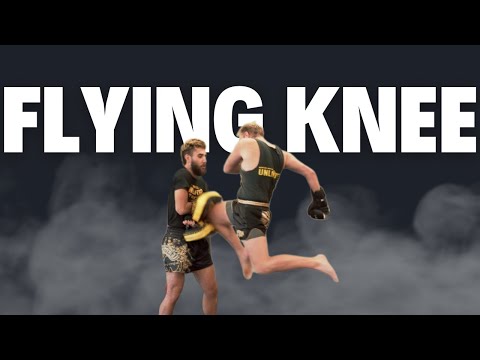
#muaythai #kickboxing #boxing Let us know what you think! www.martialartsunlimited.ca Instagram - @martialartsunlimi…
Translation: flying knee
The flying knee is one of the most spectacular techniques in combat sports, with historical roots in both Southeast Asian and East Asian martial traditions. [1] In Muay Thai, the flying knee (khao loi) has been documented since the Muay Boran era, where it was considered a decisive finishing technique in ceremonial and competitive bouts. [2] Rebac traces flying knee techniques to the Ayutthaya period (1351-1767) of Siamese history, where warriors trained aerial knee strikes as part of the military martial arts curriculum. [2] In Japanese martial arts, tobi hiza-geri (jumping knee kick) appears in traditional karate kata, though it received less tactical emphasis than in Thai systems. [3] The flying knee became internationally prominent in the MMA era, where it has produced numerous high-profile knockouts. [1]
The flying knee is found in Muay Thai (khao loi) and has been adopted into MMA. [1]
The flying knee has produced spectacular knockouts in MMA; Jorge Masvidal's 5-second flying knee KO of Ben Askren at UFC 239 is the fastest KO in UFC history. [1]
No images yet for this technique.
Sign in to suggest an image.
#muaythai #kickboxing #boxing Let us know what you think! www.martialartsunlimited.ca Instagram - @martialartsunlimi…
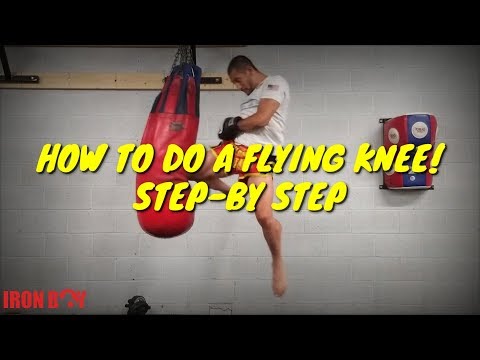
How to do a flying knee or jumping knee! Lets break down one of the most aggressive and powerful knee attacks in Muay Th…
No instructional courses yet for this technique.
Sign in to suggest a course.
Risk of injury to the person this technique is applied to
Airborne knee strike; devastating KO potential (numerous UFC finishes)
Skill level needed to execute this technique reliably
Whether this technique is allowed under major competition rule sets
Muay Thai: The Art of Fighting (Yod Ruerngsa, Khun Kao Charuad & James Cartmell, 2002)
Alias sources — [1] Muay Thai: The Art of Fighting (Kraitus & Kraitus, 1988) [2] Muay Thai Unleashed (Delp, 2006)
History sources — [1] Muay Thai Unleashed (Delp, 2006) [2] Muay Boran: The Ancient Art of Muay Thai (Rebac, 2008) [3] Dynamic Karate (Nakayama, 1966)
Official karate technique names (和語/漢語)
Established Japanese martial arts naming convention — native Japanese term (和語/漢語)
Alias sources — [1] Muay Thai: The Art of Fighting (Kraitus & Kraitus, 1988) [2] Muay Thai Unleashed (Delp, 2006)
History sources — [1] Muay Thai Unleashed (Delp, 2006) [2] Muay Boran: The Ancient Art of Muay Thai (Rebac, 2008) [3] Dynamic Karate (Nakayama, 1966)
hip flexion power, clinch control ability, close-range comfort
long thigh for greater leverage, strong hip flexors
hip flexors, quadriceps, core, grip (for clinch)
Every move, in any martial art, shares a few universal traits. Mix and match below to pinpoint the right tool — or compare equivalents across styles.
The flying knee combines a leaping entry with a knee strike — it is one of the most spectacular and devastating finishes in MMA. Jorge Masvidal's 5-second flying knee KO of Ben Askren (UFC 239, 2019) is the fastest KO in UFC history. (UFC records)
Martial Arts Unlimited Victoria recommends setting it up with a jab and a hook to create and eliminate distance while working off angle, rather than throwing it blind which has a low percentage of landing. The technique works best when your opponent is stationary and ready to trade shots, not moving or cutting angles.
According to Ironboy Experience, the two main secrets are keeping your chin forward and maintaining balance between your head and legs throughout the movement. Keeping your chin down prevents you from losing balance in midair and when you land the strike.
Martial Arts Unlimited Victoria emphasizes using a scarf position with your elbow in front for protection, pointing your toes, and exploding as quickly as possible while shooting your lead leg back fast. Ironboy Experience adds that you should land solid but controlled, tucking your legs and maintaining balance throughout.
A knee strike delivered while jumping or leaping toward the opponent, using the entire body's airborne momentum to drive the knee into the target with devastating force.
The flying knee is one of the most spectacular techniques in combat sports, with historical roots in both Southeast Asian and East Asian martial traditions. In Muay Thai, the flying knee (khao loi) has been documented since the Muay Boran era, where it was considered a decisive finishing technique in ceremonial and competitive bouts.
Unified MMA: restricted — Knees to standing opponent legal, knees to head of grounded opponent banned; WBC/Boxing: banned — All knee strikes prohibited; WKF: banned — Prohibited in sport karate; Kyokushin: legal — Legal to body; WT: banned — Prohibited; ITF: banned — Prohibited; WAKO: banned — Prohibited in most formats; K: restricted — 1/GLORY — One clinch knee allowed before referee break; IFMA: legal — Legal — knees are a core Muay Thai weapon, clinch knees highly scored
Danger rating 8/10. Very High — airborne knee strike; devastating KO potential (numerous UFC finishes)
The standard setup chain: Clinch or Frame → Pull Opponent In → Drive the Knee.
Standard counters include: Hip Check — push the opponent's hips away to create distance and kill the knee angle / Clinch Control — control the opponent's head and posture to prevent knee generation / Step Back — create distance to escape the knee's effective range.
Common variants: Straight knee (driving the knee straight upward into the body or head); Curved knee (round knee) (swinging the knee from the side in a circular path); Flying knee (leaping forward and driving the knee at the apex of the jump); Clinch knee (pulling the opponent into the knee from Muay Thai plum po…).
The flying knee has produced spectacular knockouts in MMA; Jorge Masvidal's 5-second flying knee KO of Ben Askren at UFC 239 is the fastest KO in UFC history.
Top errors to watch for: Jumping too high instead of driving forward — the power is in the horizontal momentum, not vertical height / Not driving the knee upward through the target — the knee must extend fully, not just float / Landing heavily and off-balance, unable to follow up or defend / Throwing the flying knee from too far away and falling short.
The Flying Knee is also known as Tobi Hiza-geri, Khao Loi, Jumping Knee.