How To | Outside Low Leg Kick with TJ Dillashaw
0
Switch Outside Low·TjDillashaw
Low leg kicks are the most common kicks in MMA. With proper technique and blocking they are a safe option that can do a …
Translation: switch outside low
The Switch Outside Low Kick is an outside leg kick preceded by a rapid switch step, converting the lead leg into the kicking leg with enhanced power derived from the momentary rear-position loading. [1] The switch step creates a timing disruption that makes the kick harder to anticipate, and the stance change engages the full hip rotation and weight transfer normally associated with rear-leg kicks. [1],[2] The switch low kick is effective as a lead technique or counter, exploiting the opponent's forward movement with an unexpected leg attack. [2],[3]
The switch outside low kick uses a stance switch to throw from the lead side. [1]
A Muay Thai technique. [1]
Used in Muay Thai and MMA. [1]
No images yet for this technique.
Sign in to suggest an image.
Low leg kicks are the most common kicks in MMA. With proper technique and blocking they are a safe option that can do a …
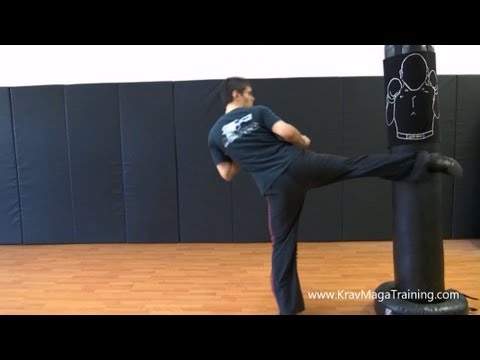
This video covers the following: 1. Reasons why Switch Kicks are taught in Krav Maga. 2. How Switch Kicks compare to …
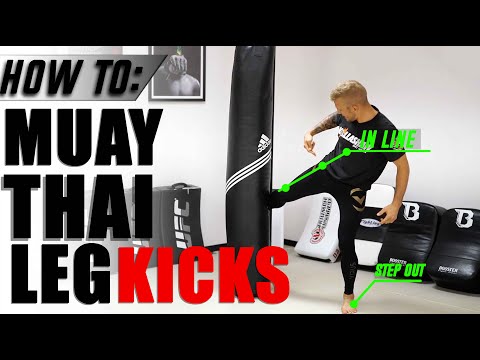
The switch outside low kick combines footwork mechanics with hip rotation to deliver a powerful strike to an opponent's leg. TJ Dillashaw emphasizes the fundamental structure: beginning from a fighting stance with hands up and chin down, the practitioner steps out on the ball of the front foot to open the hips and move off the centerline, then rotates the rear leg kick downward in a chopping motion, landing on the middle of the shin with the knee, hip, and belly button aligned toward the target. Dillashaw stresses the importance of this lateral step and hip rotation to avoid telegraphing and to maintain defensive integrity against counters and takedowns. He recommends targeting above the knee in actual combat for maximum effect, while practicing on the middle thigh when training with partners. Krav Maga Worldwide – Fort Lauderdale frames the switch kick within a compound striking context: the initial kick should be fast and light, functioning as a setup rather than a power strike, while the second kick carries the force. The instructor advises keeping the jump relatively low to the ground to avoid vulnerability during airtime, comparing the technique's structure to a boxing jab-cross combination. Both instructors agree on the importance of controlled mechanics and proper sequencing, though Dillashaw focuses on single-kick execution while the Krav Maga source addresses multi-strike combinations.
Synthesized from 2 instructors
No instructional courses yet for this technique.
Sign in to suggest a course.
Risk of injury to the person this technique is applied to
Most common KO kick; generates ~1,000N force to head (Falco et al. 2009)
Skill level needed to execute this technique reliably
Whether this technique is allowed under major competition rule sets
Karate-Do Kyohan: The Master Text (Gichin Funakoshi, 1935)
Alias sources — [1] Muay Thai Unleashed (Delp, 2006) [2] Muay Thai: The Art of Fighting (Kraitus & Kraitus, 1988) [3] Muay Thai: A Living Legacy (Vail, 2014)
Effectiveness sources — [1] Muay Thai Unleashed (Delp, 2006)
Mixed Japanese-Western terminology — combines traditional Japanese terms with katakana loanwords
Alias sources — [1] Muay Thai Unleashed (Delp, 2006) [2] Muay Thai: The Art of Fighting (Kraitus & Kraitus, 1988) [3] Muay Thai: A Living Legacy (Vail, 2014)
Effectiveness sources — [1] Muay Thai Unleashed (Delp, 2006)
hip flexibility, rotational hip power, balance on support leg
long legs for reach, flexible hips for high kicks
hip flexors, glutes, quadriceps, obliques, calves
According to TJ Dillashaw, you should load your hips by stepping out with your front leg, rotate your body to get your head and body out of the way, and keep your knee, hip, and belly button in line with your opponent. Land the kick with the middle of your shin, which generates the most speed and power.
TJ Dillashaw emphasizes keeping your rear hand up for defense while your front hand blocks your opponent's face, creating a 'stiff arm' to prevent counters and blind your opponent from seeing the incoming kick.
TJ Dillashaw recommends aiming just above the knee in a real fight for maximum damage, but when practicing in the gym with a partner, aim for the middle of the leg to be less damaging and take care of your training partner.
TJ Dillashaw suggests practicing on a heavy bag in the gym or garage, which allows you to develop endurance, strength, power, and technique without having a partner stand and absorb repeated kicks.
The Switch Outside Low Kick is an outside leg kick preceded by a rapid switch step, converting the lead leg into the kicking leg with enhanced power derived from the momentary rear-position loading. The switch step creates a timing disruption that makes the kick harder to anticipate, and the stance change engages the full hip rotation and weight transfer normally associated with rear-leg kicks.
Switch low kicks evolved within Muay Thai as fighters developed the switch mechanism to add power and deception to lead-leg kicks. The technique has become a staple of modern Muay Thai, kickboxing, and MMA competition, used by fighters at all levels.
Unified MMA: legal — Legal striking technique; WBC/Boxing: banned — All kicks prohibited in boxing; WKF: legal — Legal, chudan (body) kick scores 2 points, jodan (head) kick scores 3 points; Kyokushin: legal — Legal at full power to body and head; WT: legal — Legal, body kick 2 points, head kick 3 points, spinning body 4 points, spinni…; WAKO: legal — Legal in Full Contact and Low Kick formats; K: legal — 1/GLORY — Legal; IFMA: legal — Legal — kicks are a core Muay Thai technique
Danger rating 6/10. High — most common KO kick; generates ~1,000N force to head (Falco et al. 2009)
The standard setup chain: Assume Fighting Stance → Generate Power → Execute Strike → Recover to Guard.
Standard counters include: Check (Shin Block) — raise the shin to intercept the kick before it lands / Catch and Sweep — catch the kicking leg and sweep the standing leg / Step Inside — close distance inside the kick's effective range to smother it.
Common variants: Standard variation (primary execution of the strike from the most common stance); Power variation (modified mechanics for maximum force generation); Speed variation (minimised telegraph for a faster, harder-to-read attack); Counter variation (timed to exploit the opponent's offensive commitment).
Used in Muay Thai and MMA.
Top errors to watch for: Making the switch too large and landing off-balance before the kick even fires / Not committing to the kick after switching — standing in the opposite stance without purpose / Switching and kicking at a flat angle instead of chopping downward — the switch provides forward momentum that should… / Dropping the guard during the hop — the brief airborne moment is when you are most vulnerable.
The Switch Outside Low is also known as Suitchi Soto Rō, Switch Leg Kick, Switch Low Round Kick, Lead-Leg Low Kick.