Beginner's MMA Crash Course: Lesson 1 Basics
0
Standard Body Kick·fightTIPS
Are you interested in MMA, but don't know where to begin? Here is a beginner's crash course, starting from lesson 1 with…
Translation: standard body kick
The Standard Body Kick is the fundamental midsection roundhouse kick, executed by pivoting on the lead foot, rotating the hips fully, and driving the shin into the opponent's ribcage or abdomen with a full hip-through motion. [1] The kick strikes with the lower third of the tibia (shin), and the kicker rotates completely through the target, allowing the hip to turn over for maximum power transfer. [1],[2] This is the most frequently thrown kick in Muay Thai and kickboxing competition. [2],[3]
The standard body kick is the bread-and-butter technique of Muay Thai, and its execution methodology — emphasising full hip rotation and shin impact — was refined through generations of Thai ring fighting. [1] The technique is the single most-thrown kick in professional Muay Thai and kickboxing competition worldwide. [2],[3]
The body kick (mid-level roundhouse) delivers heavy impact to the torso, targeting the floating ribs, liver (right side), and solar plexus with the shin, which distributes force over a larger area than a punch while generating substantially more force due to the longer lever arm. [1] Body kicks can cause rib fractures, liver trauma, and progressive damage that accumulates even when partially blocked. [1]
The body kick is one of Muay Thai's fundamental weapons and has been central to the art for centuries, with Thai fighters traditionally conditioning their shins through progressive impact training to deliver and absorb these strikes. [1]
Mirko Cro Cop's left body kick was a devastating weapon during his PRIDE Fighting Championship career (2001-2006), contributing to numerous stoppage victories. [1] In Muay Thai, Samart Payakaroon is considered one of the greatest body kickers in the sport's history, using mid-level roundhouse kicks to win four Lumpinee Stadium titles in different weight classes during the 1980s. [2]
No images yet for this technique.
Sign in to suggest an image.
Are you interested in MMA, but don't know where to begin? Here is a beginner's crash course, starting from lesson 1 with…
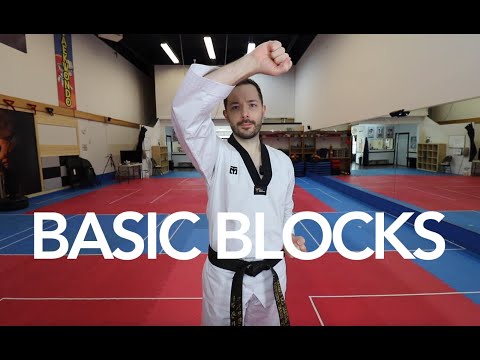
Day one on the Taekwondo mats... Here are the three blocks you would learn! High block, Middle block, and Down/Low block…
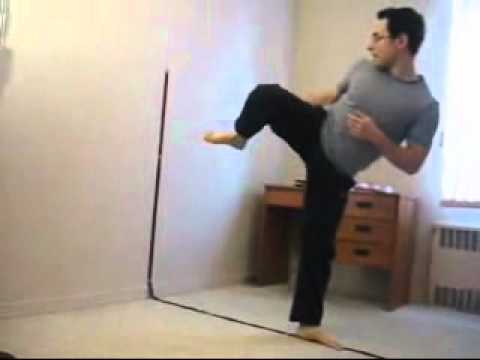
Martial Arts SIDE KICK Correction Part 1 Tutorial How To do a Side Kick correctly Martial Arts Technique
The standard body kick, as taught across martial arts disciplines, targets the torso with a roundhouse motion that prioritizes hip rotation and proper chamber technique. fightTIPS emphasizes the fundamental mechanics: a cheat step at 45 degrees opens the hips, the knee aims past the target to ensure penetration, and the leg extends while the non-kicking arm swings across the body for balance and to obscure the opponent's vision. The instructor stresses practicing full 360-degree rotations during shadow boxing to build comfort with the motion. MartialArtsKicking addresses common technical errors in related circular kicks, noting that heel alignment is critical—the heel must travel in a straight line relative to the body, not wandering away from the centerline, which would dissipate power. That instructor also highlights the importance of proper chamber positioning (45 degrees rather than parallel to the ground) and the role of hip weight shift, explaining that the supporting leg sits slightly forward over the hip as weight transfers backward during extension. Both instructors agree that hip torque, not arm strength alone, generates power and speed. TaekwondoShawn's coverage of blocking techniques provides complementary insights on body mechanics: hip rotation amplifies power in any striking motion, twisting at the end of movements creates snap, and maintaining proper elbow positioning relative to the body centerline preserves structural integrity. While TaekwondoShawn focuses on defensive techniques, the blocking principles—particularly regarding body rotation and the dual-arm pulling motion for balance—parallel the offensive mechanics described by the kicking instructors.
Synthesized from 3 instructors
No instructional courses yet for this technique.
Sign in to suggest a course.
Risk of injury to the person this technique is applied to
Most common KO kick; generates ~1,000N force to head (Falco et al. 2009)
Skill level needed to execute this technique reliably
Whether this technique is allowed under major competition rule sets
Muay Thai: The Art of Fighting (Yod Ruerngsa, Khun Kao Charuad & James Cartmell, 2002)
Alias sources — [1] Muay Thai: The Art of Fighting (Kraitus & Kraitus, 1988) [2] Dynamic Karate (Nakayama, 1966) [3] Muay Thai Unleashed (Delp, 2006)
Effectiveness sources — [1] Muay Thai: The Art of Fighting (Kraitus & Kraitus, 1988)
Standard katakana transliteration of Western martial arts terminology (外来語) — used in Japanese MMA, boxing, and BJJ communities
Alias sources — [1] Muay Thai: The Art of Fighting (Kraitus & Kraitus, 1988) [2] Dynamic Karate (Nakayama, 1966) [3] Muay Thai Unleashed (Delp, 2006)
Effectiveness sources — [1] Muay Thai: The Art of Fighting (Kraitus & Kraitus, 1988)
hip flexibility, rotational hip power, balance on support leg
long legs for reach, flexible hips for high kicks
hip flexors, glutes, quadriceps, obliques, calves
According to TaekwondoShawn, your wrist should always be straight (as if punching), positioned higher than your elbow, and kept close to your body throughout the movement. Common mistakes include bending the wrist or allowing the elbow to wander away from the body line, which causes loss of power.
TaekwondoShawn recommends keeping your fist one fist length away from your forehead, with your wrist straight and higher than your elbow, positioned above your head. Think of it like an umbrella protecting you from punches to the face and attacks from above, including hooks.
TaekwondoShawn emphasizes keeping your back straight and strong, starting the block on top of your shoulder and moving down the arm while staying close to your body line. If the block wanders away from your body line, you will lose power.
The Standard Body Kick is the fundamental midsection roundhouse kick, executed by pivoting on the lead foot, rotating the hips fully, and driving the shin into the opponent's ribcage or abdomen with a full hip-through motion. The kick strikes with the lower third of the tibia (shin), and the kicker rotates completely through the target, allowing the hip to turn over for maximum power transfer.
The standard body kick is the bread-and-butter technique of Muay Thai, and its execution methodology — emphasising full hip rotation and shin impact — was refined through generations of Thai ring fighting. The technique is the single most-thrown kick in professional Muay Thai and kickboxing competition worldwide.
Unified MMA: legal — Legal striking technique; WBC/Boxing: banned — All kicks prohibited in boxing; WKF: legal — Legal, chudan (body) kick scores 2 points, jodan (head) kick scores 3 points; Kyokushin: legal — Legal at full power to body and head; WT: legal — Legal, body kick 2 points, head kick 3 points, spinning body 4 points, spinni…; WAKO: legal — Legal in Full Contact and Low Kick formats; K: legal — 1/GLORY — Legal; IFMA: legal — Legal — kicks are a core Muay Thai technique
Danger rating 6/10. High — most common KO kick; generates ~1,000N force to head (Falco et al. 2009)
The standard setup chain: Stance and Range → Chamber the Leg → Execute the Kick → Recover.
Standard counters include: Check (Shin Block) — raise the shin to intercept the kick before it lands / Catch and Sweep — catch the kicking leg and sweep the standing leg / Step Inside — close distance inside the kick's effective range to smother it.
Common variants: Standard roundhouse (rear leg) (full hip rotation, shin strikes the target); Lead leg roundhouse (switch kick) (switch-step to generate power from the lead side); Low roundhouse (leg kick) (targeting the thigh to damage the opponent's base); Head kick (high roundhouse targeting the temple or jaw).
Mirko Cro Cop's left body kick was a devastating weapon during his PRIDE Fighting Championship career (2001-2006), contributing to numerous stoppage victories. In Muay Thai, Samart Payakaroon is considered one of the greatest body kickers in the sport's history, using mid-level roundhouse kicks to win four Lumpinee Stadium titles in different weight classes during the 1980s.
Top errors to watch for: Not stepping forward before kicking, which leaves you too far away and forces you to lean back for reach / Bending the kicking knee too much, turning the roundhouse into a knee or a chambered kick with less range / Swinging the arms wildly instead of using controlled counter-rotation — excessive arm movement slows recovery / Landing with the instep or toes, which risks fracture and delivers less force than the shin.
The Standard Body Kick is also known as Sutandādo Bodi Kikku, Tee Lam Tua, Chudan Mawashi Geri, Standard Mid Kick.