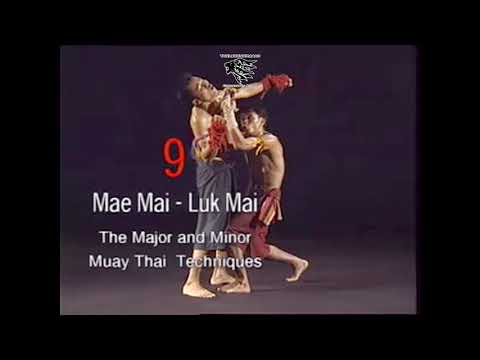
Muay Thai - Mae mai -luk mai techniques
0
Mae Mai Muay Thai·coach Wahid GYM
Translation: Mae Mai Muay Thai
The Mae Mai (แม่ไม้, 'mother techniques') of Muay Thai elbow strikes represent the foundational elbow techniques from which all advanced Muay Thai elbow work is derived — the core curriculum of Thailand's 'Art of Eight Limbs' elbow system. [1] The Mae Mai elbows comprise the fundamental striking angles that cover every direction of attack: horizontal (sok tat), diagonal (sok chieng), uppercut (sok ngad), downward (sok sab), and reverse/spinning (sok klap). [1],[2] These techniques are considered sacred in Thai boxing tradition — they are the 'mother' from which all 'child' techniques (luk mai) are born, and their mastery is what separates Thai stadium fighters from casual practitioners. [2],[3] The Mae Mai elbow system is unique to Muay Thai and represents the most systematised elbow-striking curriculum in any martial art. [3]
The Mae Mai elbow system is part of Muay Thai's traditional technical curriculum, passed down through generations of Thai boxing teachers (kru muay). [1] The word 'Mae Mai' (แม่ไม้) literally translates as 'mother techniques' — these are the foundational movements from which all advanced techniques (luk mai, 'child techniques') derive. [1],[2] Elbow strikes have been central to Thai boxing for centuries, with the sharp elbow considered one of the defining characteristics that distinguishes Muay Thai from other kickboxing styles. [2],[3] The Mae Mai system was formalised in traditional Muay Thai training manuals and is taught in Thai boxing camps across Thailand as the standard elbow curriculum. [3]
Mae Mai elbows are among the most effective striking techniques in all of combat sports — in Thai stadium fights, elbow cuts are one of the most common methods of fight stoppage. [1] The sok tat (horizontal elbow) has ended more fights by doctor stoppage than any other single technique in Muay Thai history. [2] In MMA, Muay Thai-style elbows have become a fight-ending weapon, with fighters like Jon Jones, Tony Ferguson, and Valentina Shevchenko demonstrating their effectiveness from multiple positions. [3]
No images yet for this technique.
Sign in to suggest an image.
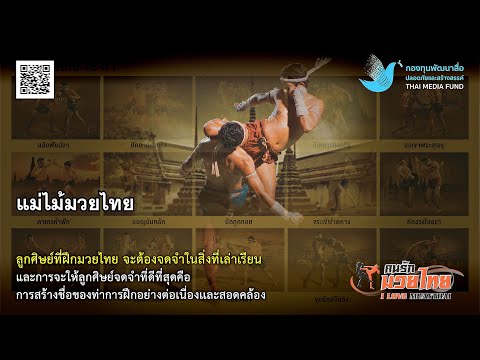
Muay Thai Lovers Episode 6 : “Mae Mai” Muay Thai Disciples who practice Muay Thai will remember what they learned. The …
No instructional courses yet for this technique.
Sign in to suggest a course.
Risk of injury to the person this technique is applied to
Mae Mai elbows are designed to cut, concuss, and finish fights; the sok tat (horizontal elbow) is the most common cause of cuts in Thai boxing, frequently causing doctor stoppages; the sok sab (downward elbow) can cause skull fractures and severe lacerations; these are among the most dangerous legal techniques in any combat sport
Skill level needed to execute this technique reliably
Whether this technique is allowed under major competition rule sets
Muay Thai: The Art of Eight Limbs (Kraitus & Kraitus, 1988)
Description sources — [1] Muay Thai: The Art of Eight Limbs (Kraitus, 1988) on Mae Mai system [2] Thai boxing training tradition [3] Muay Thai stadium fight records
History sources — [1] Traditional Mae Mai curriculum [2] Thai boxing historical tradition [3] Lumpinee and Rajadamnern stadium records
Description sources — [1] Muay Thai: The Art of Eight Limbs (Kraitus, 1988) on Mae Mai system [2] Thai boxing training tradition [3] Muay Thai stadium fight records
History sources — [1] Traditional Mae Mai curriculum [2] Thai boxing historical tradition [3] Lumpinee and Rajadamnern stadium records
close-range comfort, hip rotation mechanics, elbow conditioning
sharp elbow prominence (anatomically), strong hip rotation, clinch ability
hip rotators (power), shoulders (driving the elbow), core (connecting hip to shoulder), deltoids (raising the elbow for sok ngad and sok sab)
Every move, in any martial art, shares a few universal traits. Mix and match below to pinpoint the right tool — or compare equivalents across styles.
Chawa Sad Hok (Javanese Throws a Spear) is a long-range thrusting technique using the elbow or fist driven forward like a spear. [1] The fighter steps deep and drives the weapon forward with full body commitment. [1] Named after the Javanese warriors' spear-throwing technique. [1]
Inao Taeng Krit (Inao Thrusts His Dagger) uses a close-range upward elbow thrust to the chin, mimicking a dagger thrust. [1] Named after the Thai literary hero Inao, this technique targets the exposed chin from below. [1]
Mon Yan Lak (Mon Warrior Supports the Pillar) uses a straight push kick (teep) to the opponent's midsection to maintain distance and control range. [1] Named after the Mon people's pillar-bracing technique, it represents structural control. [1]
Paksa Waeg Rang (Bird Looking Back) involves a deceptive body turn that lures the opponent, followed by a spinning elbow or back fist to the face. [1] The fighter appears to turn away, then explodes with a reverse strike as the opponent advances. [1] It teaches the principle of deception through apparent vulnerability. [1]
Salab Fan Pla (Cross-Switch/Fish Teeth) is the first Mae Mai, involving a cross-step evasion followed by a counter-strike to the exposed side. [1] The fighter steps diagonally across the opponent's attack line, evading and positioning for a devastating counter. [1] Named after the interlocking pattern of fish teeth, it represents the principle of angles in Muay Thai. [1]
This Mae Mai involves a powerful straight knee thrust to the body, driven forward with full commitment like a javelin piercing an elephant. [1] It represents maximum forward commitment in a knee attack. [1]
Yo Khao Phra Sumen (Raise the Sumeru Mountain) involves lifting the opponent's leg catch into a throw or delivering a rising knee while lifting. [1] Named after the mythical Mount Sumeru, it represents overwhelming upward force. [1]
The Mae Mai (แม่ไม้, 'mother techniques') of Muay Thai elbow strikes represent the foundational elbow techniques from which all advanced Muay Thai elbow work is derived — the core curriculum of Thailand's 'Art of Eight Limbs' elbow system. The Mae Mai elbows comprise the fundamental striking angles that cover every direction of attack: horizontal (sok tat), diagonal (sok chieng), uppercut (sok ngad), downward (sok sab), and reverse/spinning (sok klap).
The Mae Mai elbow system is part of Muay Thai's traditional technical curriculum, passed down through generations of Thai boxing teachers (kru muay). The word 'Mae Mai' (แม่ไม้) literally translates as 'mother techniques' — these are the foundational movements from which all advanced techniques (luk mai, 'child techniques') derive.
Unified MMA: legal — Legal — all elbow strikes permitted; WBC/Boxing: banned — All elbow strikes prohibited in boxing; WKF: banned — Elbow strikes not a legal technique in sport karate; Kyokushin: banned — Elbow strikes prohibited; WT: banned — Prohibited; ITF: banned — Prohibited; WAKO: banned — Prohibited in all kickboxing formats; K: banned — 1/GLORY — Prohibited — key difference from Muay Thai; IFMA: legal — Legal — elbows are a core Muay Thai weapon (art of eight limbs)
Danger rating 9/10. Very high — Mae Mai elbows are designed to cut, concuss, and finish fights; the sok tat (horizontal elbow) is the most common cause of cuts in Thai boxing, frequently causing doctor stoppages; the sok sab (downward elbow) can cause skull fractures and severe lacerations; these are among the most dangerous legal techniques in any combat sport
The standard setup chain: Enter Clinch Range → Establish Clinch or Close Position → Load the Hip → Fire the Elbow → Follow Up → Reset or Maintain.
Standard counters include: Distance — stepping out of elbow range completely neutralises the threat / Clinch Defence — securing tight double underhooks or body lock prevents elbow-generating rotation / Lean Back — pulling the head backward from close range makes elbows fall short / Cover and Clinch — covering the head with arms while securing a tighter clinch reduces the arc available for elbows.
Common variants: Sok tat (horizontal elbow) (the standard cutting elbow; driven horizontally across th…); Sok chieng (diagonal elbow) (angled downward slash; versatile angle that is difficult …); Sok ngad (uppercut elbow) (driven upward from below targeting the chin; devastating …); Sok sab (downward/smashing elbow) (driven straight down onto the top of the opponent's head …); Sok klap (spinning elbow) (full 360-degree rotation; the most spectacular and danger…); Sok klap koo (double spinning elbow) (two spinning elbows in sequence); Sok fan nah (spearing elbow) (driving forward with the point of the elbow); Sok ku (double elbow) (driving both elbows simultaneously into the opponent from…).
Mae Mai elbows are the signature weapon of Thai stadium Muay Thai, with elbow cuts being one of the most common fight-ending methods. Thai champions like Samart Payakaroon, Dieselnoi, and Yodsanklai were renowned for their elbow mastery.
Top errors to watch for: Arm-only elbows without hip rotation — elbows without hip drive are weak push-like motions; the hip must rotate fully… / Throwing elbows from too far away — elbows are close-range weapons; from punching distance, the forearm lands instead… / Not cutting at the correct angle — the elbow must land perpendicular to the skin surface to cause a laceration; paral… / Telegraphing spinning elbows — pausing or winding up before the spin gives the opponent time to react.
The Mae Mai Muay Thai is also known as Mē Mai Mue Tai, Mae Mai Elbow, Mother Elbow Techniques, Fundamental Muay Thai Elbow.