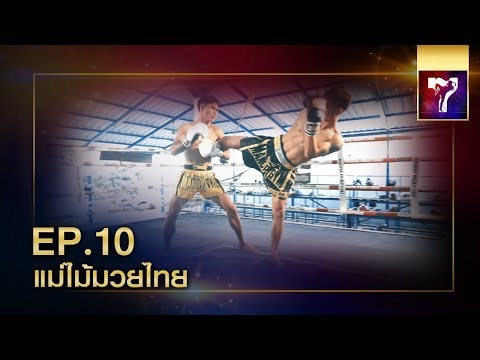
Muay Thai EP.10 | Mae Mai Muay Thai
0
Paksa Waeg Rang·Bugaboo.TV
Mae Mai Muay Thai means the most important posture of Muay Thai art and It is the basis of using Muay Thai. Muay Thai tr…
Translation: Bird peering through the nest
Paksa Waeg Rang (Bird Looking Back) involves a deceptive body turn that lures the opponent, followed by a spinning elbow or back fist to the face. [1] The fighter appears to turn away, then explodes with a reverse strike as the opponent advances. [1] It teaches the principle of deception through apparent vulnerability. [1]
Mae Mai techniques represent centuries of refined combat principles; Paksa Waeg Rang embodies a specific tactical principle that remains effective in modern Muay Thai. [1]
Traditional Muay Boran → Modern Muay Thai Mae Mai curriculum. [1]
Used in Muay Thai stadium competition (Lumpinee, Rajadamnern)
No images yet for this technique.
Sign in to suggest an image.
Mae Mai Muay Thai means the most important posture of Muay Thai art and It is the basis of using Muay Thai. Muay Thai tr…
No instructional courses yet for this technique.
Sign in to suggest a course.
Risk of injury to the person this technique is applied to
Master-level technique with significant combat application
Skill level needed to execute this technique reliably
Whether this technique is allowed under major competition rule sets
Muay Thai: The Art of Fighting (Ruerngsa, Charuad & Cartmell)
description, historyOrigin: sourced from Ruerngsa, Y
description, historyOrigin: sourced from Ruerngsa, Y
Requires comprehensive Muay Thai foundation
Good timing and distance management
Paksa waeg rang is a traditional Muay Thai mae mai technique. The mae mai are the foundational techniques of Muay Thai — traditionally 15 master techniques that form the art's technical core. (Kraitus, Muay Thai: The Art of Fighting)
Paksa Waeg Rang (Bird Looking Back) involves a deceptive body turn that lures the opponent, followed by a spinning elbow or back fist to the face. The fighter appears to turn away, then explodes with a reverse strike as the opponent advances.
Paksa Waeg Rang is one of the 15 Mae Mai (Master Tricks) of Muay Thai, preserved from the traditional Muay Boran curriculum. The Mae Mai represent the highest-level tactical principles of Thai boxing, each named after Thai mythology, literature, or cultural references.
Unified MMA: legal — Legal — all elbow strikes permitted; WBC/Boxing: banned — All elbow strikes prohibited in boxing; WKF: banned — Elbow strikes not a legal technique in sport karate; Kyokushin: banned — Elbow strikes prohibited; WT: banned — Prohibited; ITF: banned — Prohibited; WAKO: banned — Prohibited in all kickboxing formats; K: banned — 1/GLORY — Prohibited — key difference from Muay Thai; IFMA: legal — Legal — elbows are a core Muay Thai weapon (art of eight limbs)
Danger rating 7/10. Master-level technique with significant combat application
The standard setup chain: Read opponent → Apply Paksa Waeg Rang principle → Execute technique → Follow up.
Standard counters include: Specific to each Mae Mai technique.
Common variants: Classical Paksa Waeg Rang; Competition adapted Paksa Waeg Rang.
Used in Muay Thai stadium competition (Lumpinee, Rajadamnern)
Top errors to watch for: Attempting without understanding the tactical principle / Over-committing.
The Paksa Waeg Rang is also known as Paksa Waeg Rang, Bird Looking Back, Parrot's Broken Wing.