Everything Elbow Related | Making 12-6 Elbows Work For You
0
Standard Twelve-Six Elbow·hard2hurt·Added by Admin
Ringside Double End Bag (Amazon Affiliate Link): https://amzn.to/2YjYbRG Check out my online course: http://hard2hurt.t…
Translation: standard twelve-six elbow
The Standard Twelve-Six Elbow executes the classic vertical downward elbow strike in which the striker raises the arm directly overhead and drives the point of the elbow straight down onto the target. [1] The motion follows a strictly linear vertical path with no lateral or diagonal component, maximising the gravitational contribution to force generation. [1],[2] In MMA, this technique results in an immediate foul under the Unified Rules, but it remains a legal and effective weapon in Muay Thai, Lethwei, and self-defence contexts where it is used against downed or bent-over opponents. [2],[3]
The standard twelve-to-six elbow has been practised in various striking arts for centuries, though it gained its modern designation through MMA regulations that specifically identified and banned the vertical trajectory. [1] The technique is commonly trained in Krav Maga and military combatives as a ground-and-pound weapon against a downed adversary. [2],[3]
The twelve-six elbow was banned under the Unified Rules of MMA. [1]
No images yet for this technique.
Sign in to suggest an image.
Ringside Double End Bag (Amazon Affiliate Link): https://amzn.to/2YjYbRG Check out my online course: http://hard2hurt.t…
This video is directed toward one of my newer adaptive self defense clients, Nathan. I am demonstrating here some of the…
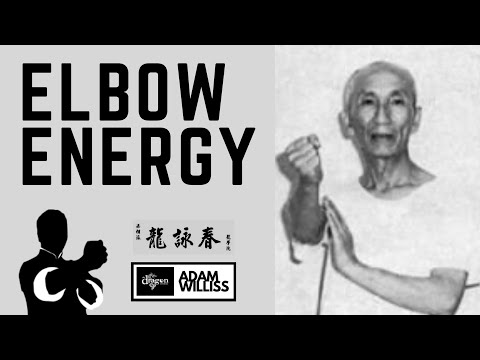
Wing Chun elbow energy (power) consists of two important priorities. In this Wing Chun lesson, I break down exact what t…
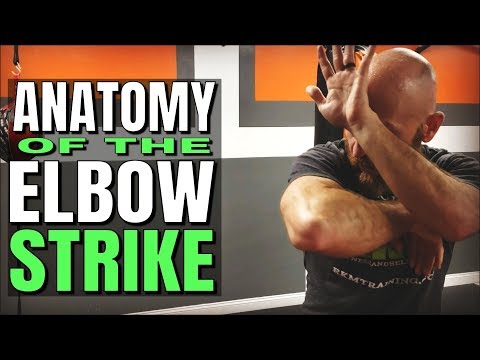
The standard twelve-six elbow is a vertical downward striking technique employing the front of the elbow—the area where the forearm musculature protrudes forward—as the primary striking surface, according to hard2hurt. This surface selection avoids the vulnerable tricep tendon and olecranon bursa found on the back of the elbow. hard2hurt emphasizes that practitioners should develop the technique through shadow boxing and double-end bag work rather than heavy bags, which provide misleading feedback and encourage forearm-smashing mechanics. The strike requires a rotational motion: the feet, hips, and torso twist together to generate power, while the hands remain relaxed and positioned defensively—one guarding the head, the other supporting the striking arm's mechanics. In sport contexts, the technique targets the forehead and upper face to maximize cutting and knockdown potential, though self-defense applications may prioritize different targets. JingShenKuoshu and Sifu Adam Williss both stress that elbow power originates in shoulder mechanics: the scapula must be tucked, shoulders depressed, and the armpit closed to create proper rootedness. Forward energy flows from the elbow driving through the target rather than from hand-leading mechanics. While hard2hurt notes the twelve-six elbow's legal restrictions in professional MMA, practitioners can execute a similar downward angle legally by striking with the front of the elbow rather than the point, maintaining an angled trajectory.
Synthesized from 3 instructors
No instructional courses yet for this technique.
Sign in to suggest a course.
Risk of injury to the person this technique is applied to
12-6 elbow; extremely dangerous downward strike
Skill level needed to execute this technique reliably
Whether this technique is allowed under major competition rule sets
Muay Thai: The Art of Fighting (Yod Ruerngsa, Khun Kao Charuad & James Cartmell, 2002)
Alias sources — [1] Unified Rules of MMA (ABC, 2001) [2] Muay Thai Unleashed (Delp, 2006) [3] Muay Thai: The Art of Fighting (Kraitus & Kraitus, 1988)
Effectiveness sources — [1] Unified Rules of Mixed Martial Arts (ABC, 2001)
Standard katakana transliteration of Western martial arts terminology (外来語) — used in Japanese MMA, boxing, and BJJ communities
Alias sources — [1] Unified Rules of MMA (ABC, 2001) [2] Muay Thai Unleashed (Delp, 2006) [3] Muay Thai: The Art of Fighting (Kraitus & Kraitus, 1988)
Effectiveness sources — [1] Unified Rules of Mixed Martial Arts (ABC, 2001)
close-range proficiency, hip rotation, sharp elbow point
dense bone structure at the olecranon, strong rotational core
core rotators, deltoids, trapezius, biceps
According to hard2hurt, the heavy bag provides too much feedback and causes most people to inadvertently convert the technique into a forearm smash instead of a proper elbow strike. Practice shadow boxing with open space instead to develop the correct slashing motion.
hard2hurt explains that the point of the elbow—where it connects to the forearm—is the best striking surface because there's minimal structural damage risk compared to the back of the elbow, which has the tricep tendon running close by. Keep your hand relaxed rather than in a fist to allow maximum rotation and travel.
Sifu Adam Williss emphasizes that your shoulder is part of your root and is critical for elbow power—don't mistake rootedness as coming from the legs alone. The elbow itself acts as the engine generating forward energy, similar to the engine in the back of a boat.
hard2hurt recommends the double end bag over a heavy bag for elbow training, as it provides better feedback and won't encourage the bad habit of forearm smashing that heavy bags tend to create.
The Standard Twelve-Six Elbow executes the classic vertical downward elbow strike in which the striker raises the arm directly overhead and drives the point of the elbow straight down onto the target. The motion follows a strictly linear vertical path with no lateral or diagonal component, maximising the gravitational contribution to force generation.
The standard twelve-to-six elbow has been practised in various striking arts for centuries, though it gained its modern designation through MMA regulations that specifically identified and banned the vertical trajectory. The technique is commonly trained in Krav Maga and military combatives as a ground-and-pound weapon against a downed adversary.
Unified MMA: legal — Legal — all elbow strikes permitted; WBC/Boxing: banned — All elbow strikes prohibited in boxing; WKF: banned — Elbow strikes not a legal technique in sport karate; Kyokushin: banned — Elbow strikes prohibited; WT: banned — Prohibited; ITF: banned — Prohibited; WAKO: banned — Prohibited in all kickboxing formats; K: banned — 1/GLORY — Prohibited — key difference from Muay Thai; IFMA: legal — Legal — elbows are a core Muay Thai weapon (art of eight limbs)
Danger rating 8/10. Very High — 12-6 elbow; extremely dangerous downward strike
The standard setup chain: Close Distance → Hip Rotation → Strike with Elbow Point.
Standard counters include: Lean Back — pull the head out of elbow range to avoid the short-range strike / Clinch Tie-Up — close to body-to-body range to smother elbow strikes / Push Kick (Teep) — maintain distance to prevent elbow range from being established.
Common variants: Horizontal elbow (swinging the elbow horizontally at head level); Uppercut elbow (rising elbow from below targeting the chin); Downward elbow (chopping the elbow straight down (Muay Thai sok tat)); Spinning elbow (full rotation before driving the elbow into the target).
The twelve-to-six elbow is banned under the Unified Rules of Mixed Martial Arts, adopted in 2000-2001 by the New Jersey State Athletic Control Board. Jon Jones was disqualified for using a twelve-to-six elbow against Matt Hamill at TUF 10 Finale (2009), which remains his only official loss.
Top errors to watch for: Adding a lateral or diagonal component, which technically makes it a different (legal) elbow strike / Not controlling the opponent's movement, so they shift before the elbow lands / Using the forearm or the back of the arm instead of the point of the elbow / Not engaging the core and shoulder — driving only with the arm produces a fraction of the potential force.
The Standard Twelve-Six Elbow is also known as Sutandādo Tuerubu Shikkusu Erubō, Standard 12-6 Elbow, Straight Downward Elbow, Vertical Drop Elbow.