Introduction to Rolling Elbow Fundamentals
The rolling elbow technique serves as a versatile defensive and offensive system, particularly valuable for practitioners with limited range of motion or those training in close-quarters combat. This method emphasizes continuous elbow-driven striking combined with pushing mechanics, creating a flowing, adaptable defense suitable for both unarmed and weapons-based scenarios.
Center Line Principle and Guard Structure
Successful rolling elbow execution requires maintaining control of the center line while keeping elbows tucked to protect vital areas. The practitioner should focus on covering the face and head with minimal exposure, drawing from Wing Chun principles to ensure defensive integrity throughout all movements.
Horizontal Cross-Side Cut
The first fundamental movement involves executing a horizontal cut across the center line without overextending past the body's midline. The elbow remains bent and supported by core rotation, allowing the strike to roll fluidly while maintaining cheek coverage and defensive posture throughout the technique.
Rising Strike with Reinforced Block
The rising strike incorporates an upward elbow movement that covers the temple and back of the head while simultaneously moving the body forward. This can be reinforced with a crossed-hand block structure, providing additional defense before transitioning into hammer fist or palm heel strikes.
Overhead Downward Drive
The downward driving motion originates from above, dragging through the live hand while maintaining high guard coverage of the forehead. This technique can transition directly into overhead strikes or lateral movements, preserving center line control throughout the descent and follow-through.
Combination Transitions and Flow
Effective rolling elbow practice involves chaining multiple strikes—hammer fist, elbow, and palm heel—in continuous sequences while walking forward and closing distance. The key to mastery is developing loose shoulders and smooth transitions, allowing the practitioner to adapt seamlessly between defensive and offensive applications.
Rolling Elbows - Adaptive Self Defense & Devestating Close Combat Training
Key Takeaways
- •Introduction to Rolling Elbow Fundamentals
- •Center Line Principle and Guard Structure
- •Horizontal Cross-Side Cut
- •Rising Strike with Reinforced Block
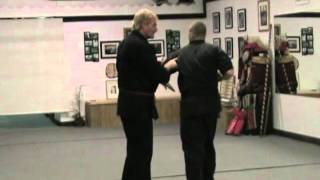
This video is directed toward one of my newer adaptive self defense clients, Nathan. I am demonstrating here some of the Jing Shen Kuoshu "Rolling Elbow" striking techniques used for Close Quarters Combat. This is a very effective method of striking where you overwhelm your opponents with elbow strikes, hammer fists and palm smashes. It has proven to be very effective for individuals having difficulties throwing standard punches because of physical restrictions. At the same time, it's an amazing method of closing in on someone to grappling range.
Frequently Asked Questions
What does this video teach about standard twelve-six elbow?
This video covers introduction to rolling elbow fundamentals, center line principle and guard structure, horizontal cross-side cut. It provides detailed instruction from JingShenKuoshu.
How long does it take to learn standard twelve-six elbow?
The basic mechanics can be understood in a single session, but developing reliable execution requires consistent drilling over weeks of practice. This 6-part breakdown helps structure your training by isolating each phase of the technique.
What are the key details for finishing standard twelve-six elbow?
The downward driving motion originates from above, dragging through the live hand while maintaining high guard coverage of the forehead. This technique can transition directly into overhead strikes or lateral movements, preserving center line control throughout the descent and follow-through.