Square Stance Position
0
Square Stance·Adams Athletics Training
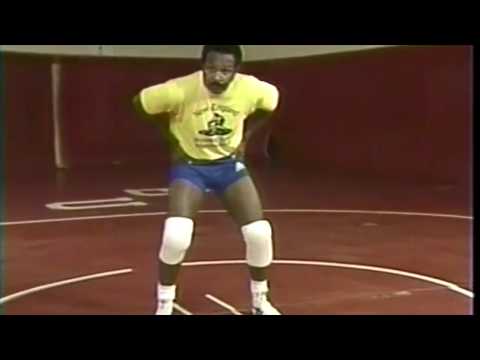
When you assume the square stance position your feet should remain a little more than shoulder width apart. Also turn yo…
Translation: square stance
The Square Stance subfamily covers the fighting stance where both feet are approximately even, with the body facing the opponent more directly rather than being turned sideways. [1] The square stance provides equal access to techniques from both sides and is commonly used in Muay Thai, where the fighter needs to check kicks from both legs and throw kicks without switching stances. [1],[2] While the square stance sacrifices some power generation on rear-hand punches, it provides greater defensive symmetry and versatility. [2],[3]
The square stance is common in kickboxing, Muay Thai, and wrestling, where equal-side mobility is prioritised. [1]
Square stances are used in Muay Thai, kickboxing, and MMA competition. [1]
No images yet for this technique.
Sign in to suggest an image.
When you assume the square stance position your feet should remain a little more than shoulder width apart. Also turn yo…
Understanding how your body's position correctly set in as a square stance works relative to its alignment with respect …
No instructional courses yet for this technique.
Sign in to suggest a course.
Risk of injury to the person this technique is applied to
Standing positions are pre-engagement stances; minimal direct risk
Skill level needed to execute this technique reliably
Whether this technique is allowed under major competition rule sets
Brazilian Jiu-Jitsu: Theory and Technique (Renzo Gracie & Royler Gracie, 2001)
Alias sources — [1] Kodokan Judo (Kano, 1986) [2] Mastering Jujitsu (Gracie & Danaher, 2003) [3] UWW Wrestling Rules [4] Championship Fighting (Dempsey, 1950)
Effectiveness sources — [1] Muay Thai Unleashed (Delp, 2006) [2] Wrestling Physical Conditioning Encyclopedia (Petrov, 1977)
Standard Japanese martial arts terminology (kanji/hiragana)
Established Japanese martial arts naming convention — native Japanese term (和語/漢語)
Alias sources — [1] Kodokan Judo (Kano, 1986) [2] Mastering Jujitsu (Gracie & Danaher, 2003) [3] UWW Wrestling Rules [4] Championship Fighting (Dempsey, 1950)
Effectiveness sources — [1] Muay Thai Unleashed (Delp, 2006) [2] Wrestling Physical Conditioning Encyclopedia (Petrov, 1977)
balance, lower body stability, quick directional change
well-proportioned build with strong base
calves, quadriceps, core, hip stabilisers
Every move, in any martial art, shares a few universal traits. Mix and match below to pinpoint the right tool — or compare equivalents across styles.
Your knees should be flexed at all times and point in the same direction as your toes—avoid turning them inward or outward. For your hips, turn them up as if sitting on a chair rather than sticking your rear out, which helps you curl your back and maintain good posture (Adams Athletics Training).
Keep your arms in close to the sides of your body at all times. When your arms drift away from your body, you give your opponent a chance to attack your legs. Both hands should stay inside your feet whether you're stationary or moving (Adams Athletics Training).
Keep your head up rather than down so you can look across and see exactly what your opponent is doing. This allows you to stay aware and reactive during the engagement (Adams Athletics Training).
Hand position is largely personal preference—some wrestlers prefer hands turned down, some up. A middle position is considered optimal by many instructors, but the exact orientation does not make much practical difference (Adams Athletics Training).
The Square Stance subfamily covers the fighting stance where both feet are approximately even, with the body facing the opponent more directly rather than being turned sideways. The square stance provides equal access to techniques from both sides and is commonly used in Muay Thai, where the fighter needs to check kicks from both legs and throw kicks without switching stances.
The square stance is the traditional stance in Muay Thai and many traditional martial arts, where the symmetrical positioning allows equal use of all limbs. It represents a different philosophical approach to stance than the bladed boxing stance.
Unified MMA: legal — Legal; IBJJF: legal — Legal; IJF: legal — Legal; WBC/Boxing: legal — Legal — stance and footwork are fundamental; WKF: legal — Legal; UWW: legal — Legal
Danger rating 2/10. Low — standing positions are pre-engagement stances; minimal direct risk
The standard setup chain: Achieve Position → Stabilize → Maintain → Attack.
Standard counters include: Hand Fight — grip-fight the choking hand to prevent the rear naked choke / Shoulder Walk — walk shoulders to the mat to escape back control / Turn into Guard — rotate to face the attacker and recover guard position.
Common variants: Standard variation (primary positioning for control and attack); Offensive variation (configured for submission or striking opportunities); Transitional variation (positioned for quick movement to the next position); Defensive variation (prioritising stability and control over attack).
Square stances are used in Muay Thai, kickboxing, and MMA competition.
Top errors to watch for: Using a square stance in a primarily wrestling-based matchup — the stance is vulnerable to takedowns; stagger when fa… / Standing flat-footed in the square stance — stay on the balls of the feet even in the square stance / Relying on the square stance exclusively — it should be part of a stance repertoire, not the only stance / Not adjusting the square stance for range — at long range, a staggered stance provides better mobility.
The Square Stance is also known as Shōmen Kamae, Square Stance, Parallel Stance, Even Stance, Shizen-Tai (自然体).